Marrakech – On Morocco’s northern Atlantic coast, Asilah stands apart by choice. While many seaside towns chase expansion and spectacle, Asilah has built its identity around culture, restraint, and continuity. The result is a city that feels intentional, calm, cultivated, and deeply rooted.
For decades, Asilah has positioned itself as a cultural capital rather than a tourist playground. Its internationally recognized cultural festival has welcomed artists, writers, and intellectuals from across the world, turning the city into a living laboratory for creative exchange.
Here, art is not decorative; it is structural. Murals are renewed annually, public spaces are curated, and cultural institutions are treated as civic pillars.
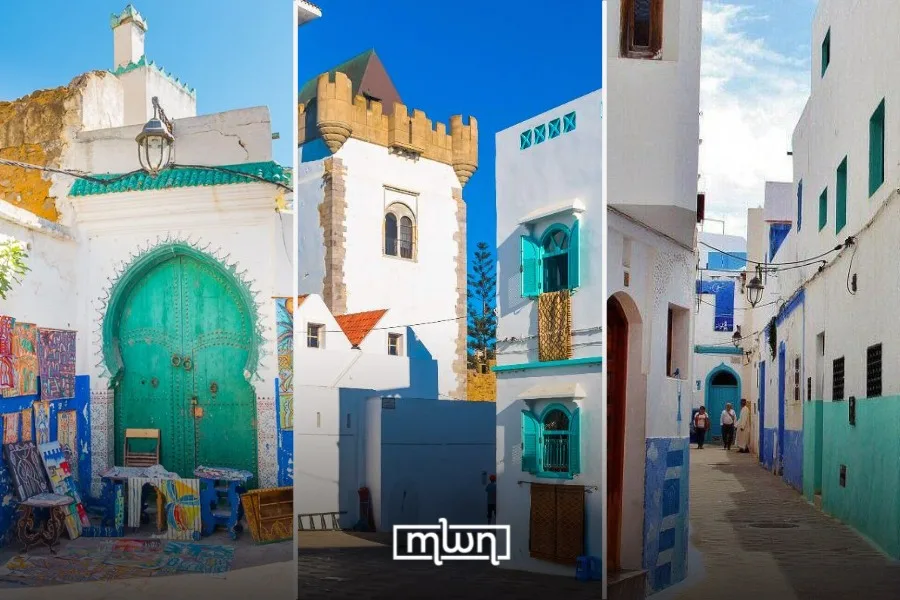
The medina itself reflects this philosophy. Whitewashed walls, blue and green doors, and carefully preserved architectural lines reveal Andalusian and Portuguese influences without excess.
Unlike more congested historic centers, Asilah’s medina breathes. Its simplicity is deliberate, offering visual harmony and a rare sense of spatial calm.
Beyond its walls, the Atlantic defines the city’s rhythm. Asilah’s coastline remains largely untouched, with wide beaches and open horizons free from intrusive development.
The ocean here is not framed by resorts or concrete barriers but experienced in its raw, expansive form — a constant reminder of scale, time, and silence.
Culture in Asilah extends beyond festivals and galleries. Libraries, cultural centers, and small discussion spaces anchor everyday life, attracting a community of thinkers and creatives who return year after year.
This intellectual continuity has helped the city preserve its character while remaining globally connected.
Even its gastronomy follows the same understated logic. Fresh seafood, sourced locally and prepared without embellishment, reflects a respect for product over performance. Meals are unhurried, conversations unforced.
Strategically located near Tangier and within reach of Europe, Asilah benefits from proximity without surrendering to pressure. Development exists, but it is measured. Growth is present, but not dominant.
Asilah’s greatest luxury is not found in infrastructure or scale, but in atmosphere. It offers space to think, to walk, to observe.
In a region — and a world — increasingly shaped by noise and acceleration, Asilah stands as a reminder that cities can still choose depth over display.