Fez — The ninth edition of the National Street Arts Festival officially opened Thursday evening in Fez, bringing together artistic groups from across Morocco for a celebration of performance rooted in public space and everyday life.
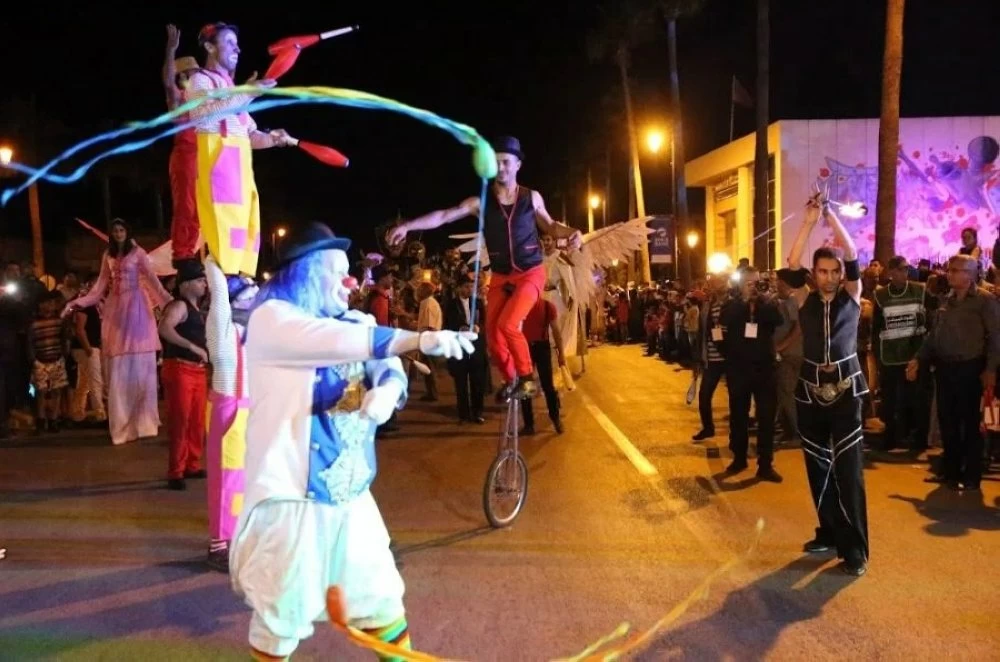
Held under the High Patronage of King Mohammed VI, the opening ceremony featured a wide range of street art disciplines, including theater, circus arts, breakdance, rap music, and live graffiti, transforming the city into an open stage accessible to all.
A theatrical opening grounded in place
The evening began with a theatrical performance titled “The theater was born here,” presented by actors Hamza El Hinda and Nisrine Lamnaja. The piece set the tone for the festival by linking street performance to collective memory and shared cultural space, drawing the audience directly into the narrative.
From there, the program unfolded as a sequence of performances reflecting both traditional and contemporary expressions of street art.
Circus, rap, and urban expression
The Casablanca-based troupe Casa Acrobat followed with a series of circus performances that blended physical skill with visual storytelling, showcasing new creations that were met with strong audience response.
Rapper Toxic then took the stage with multiple musical performances, bringing urban rhythms and spoken expression into the festival’s lineup. A brass fanfare added another layer to the evening, delivering a choreographed musical performance that encouraged direct interaction with the crowd.
Visual street art also had a prominent presence. Graffiti artist Youssef Zourkan from Meknes created a live artwork using rapid-drawing techniques, allowing spectators to witness the creative process as it unfolded in real time.
Culture as proximity and dialogue
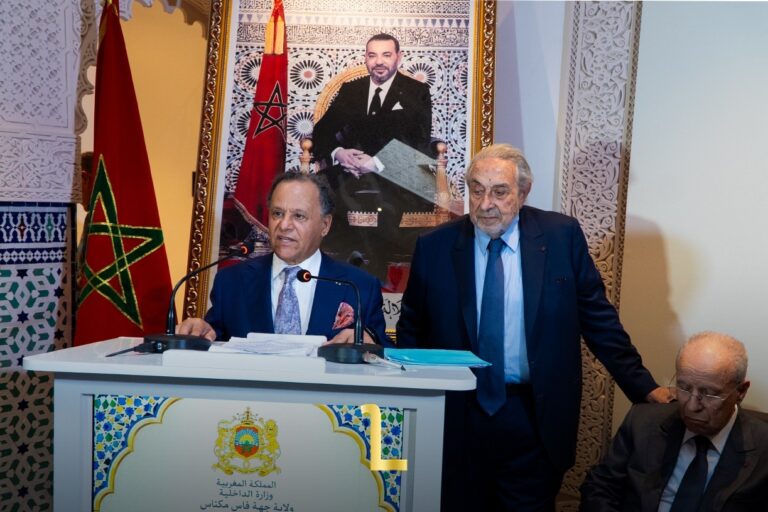
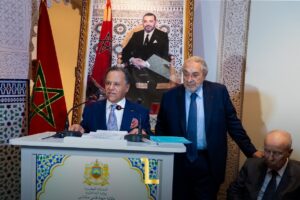
In remarks delivered on his behalf by the regional director of culture for Fez-Meknes, Minister of Youth, Culture, and Communication Mohamed Mehdi Bensaid said the festival reflects the ministry’s commitment to proximity-based cultural action that remains open to diverse forms of artistic expression.
He emphasized the role of culture in building the individual and reinforcing values of citizenship, openness, and dialogue. He added that the festival, organized through coordination between the regional departments of culture and youth, gives street arts the recognition they deserve as authentic expressions of society and mirrors of its social and aesthetic transformations.
Bensaid also noted that the festival offers an opportunity to promote the richness and diversity of street arts, support contemporary creation, and give particular attention to young talents by providing them with spaces for performance, exchange, and artistic growth.
Fez as a natural host
For his part, Ismail Hamraoui, regional director of the youth department in Fez-Meknes, said the festival highlights the growing importance of street arts as an artistic form close to citizens and capable of turning public space into a site of positive interaction and cultural dialogue.
He added that Fez-Meknes, with its deep cultural heritage and young creative energy, provides an ideal setting for national cultural events that encourage free and responsible expression while helping discover and refine emerging talents.
A partnership and a national showcase
The opening ceremony also included the signing of a partnership agreement between the regional departments of culture and youth, aimed at jointly implementing cultural and youth-focused programs across the region.
This year’s edition features national troupes specializing in circus arts, halqa and storytelling, heritage performance, theater, children’s shows, and contemporary urban arts, offering audiences a broad and inclusive portrait of Morocco’s street art scene.
As performances continue, the festival positions street arts not on the margins, but at the center of Morocco’s evolving cultural life.