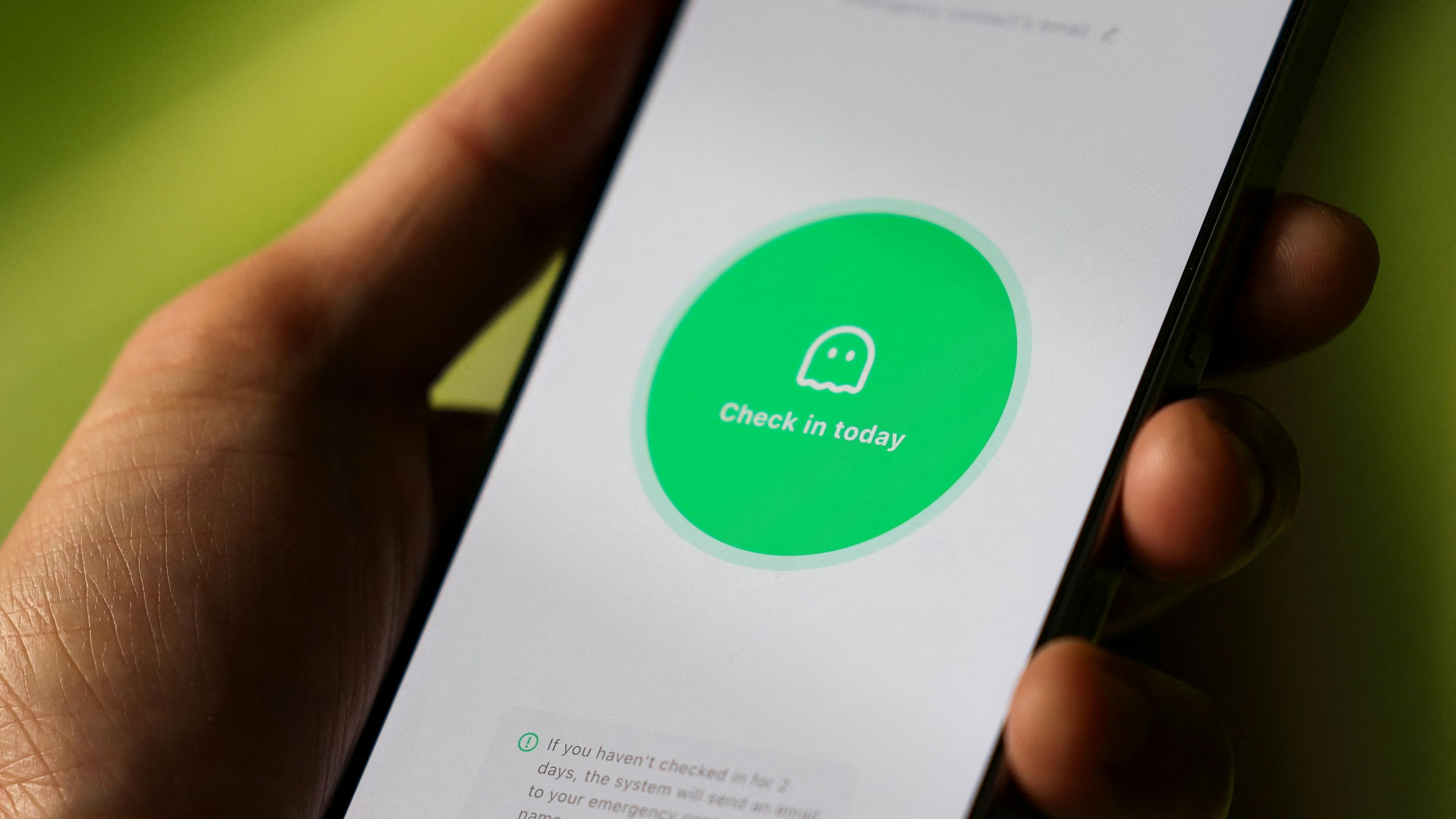
Fez — A morbidly titled smartphone app asking users “Are You Dead?” is emerging as an unlikely safety tool for young singles who live alone and fear something happening to them without anyone noticing.
The app, which has recently gained viral attention after coverage by US and international media, functions as a digital check-in system. Users are prompted to regularly confirm they are alive by tapping a button. If they fail to respond within a set time frame, an alert is automatically sent to a designated emergency contact.
Despite its unsettling name, the app has struck a nerve with a growing demographic of young adults living solo in major cities. Many users say it offers reassurance in an era where traditional safety nets — roommates, close-by family, or tight-knit neighborhoods — are increasingly absent.
The popularity of the app reflects broader social trends. In many countries, rising housing costs, delayed marriage, and career mobility have led to a surge in one-person households. For some, especially those with limited daily social interaction, the fear is not just dying, but dying alone and undiscovered.
While supporters frame the app as a simple, low-cost panic button, critics have questioned its tone and psychological impact. Some argue that the branding capitalizes on anxiety and normalizes fear, while others point out potential issues such as false alarms or overreliance on technology for personal safety.
Still, the app’s success highlights a deeper reality: loneliness is no longer only an emotional concern, but a practical one. As solo living becomes more common, digital tools like this are stepping in to fill gaps once covered by human proximity.
Whether seen as morbid, pragmatic, or quietly comforting, the app underscores how technology is increasingly being used to manage not just convenience — but existential fear in modern urban life.