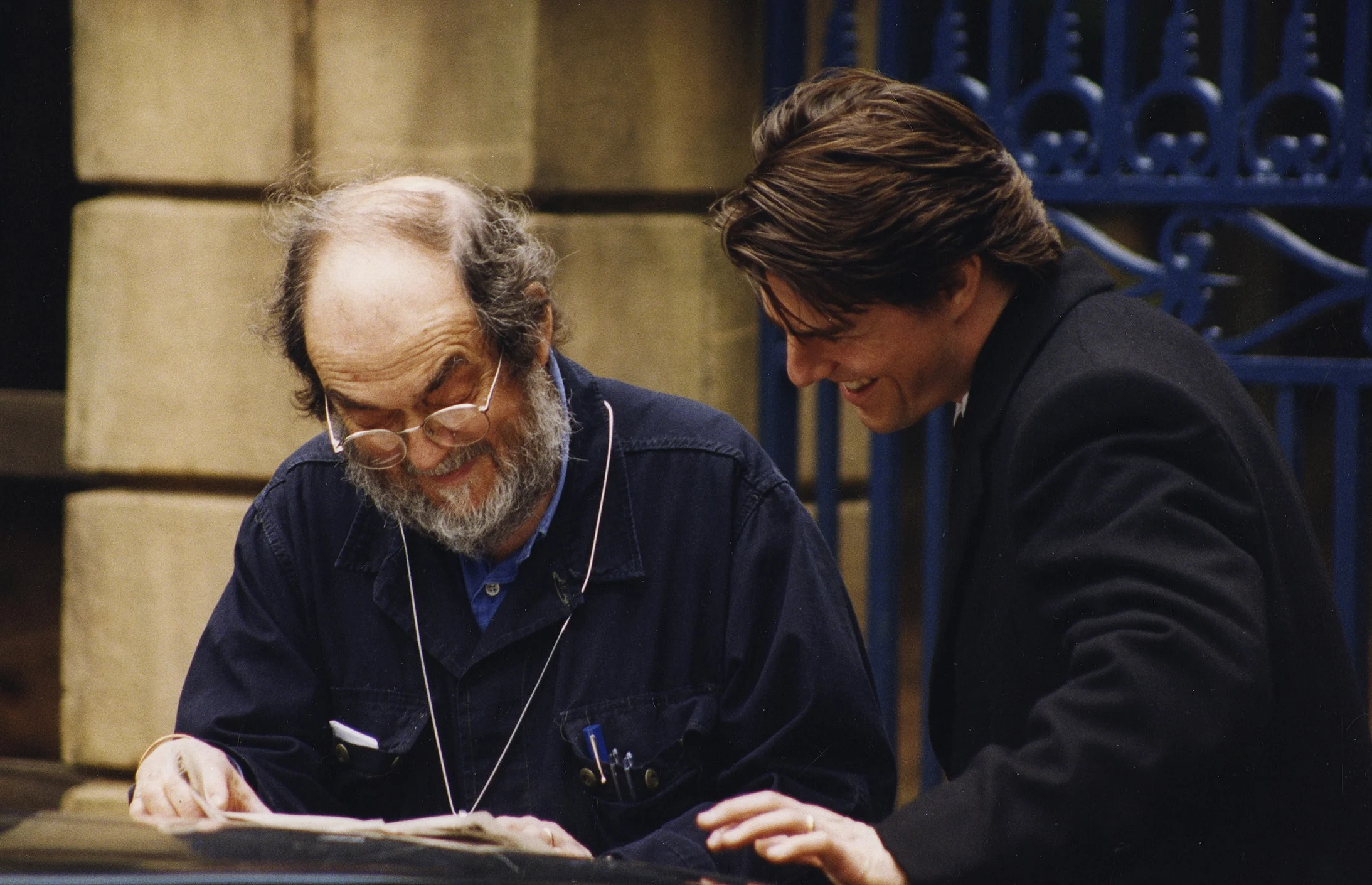
Fez — Released in 1999, “Eyes Wide Shut” stands as the final cinematic statement of Stanley Kubrick, a filmmaker whose work consistently interrogated human rationality, violence, and control. Far from a conventional erotic thriller, the film unfolds as a dense philosophical parable on desire, power, and the illusions that sustain social order.
Adapted loosely from Arthur Schnitzler’s 1926 novella “Traumnovelle,” the film transposes fin-de-siècle Vienna to late-20th-century New York, a shift that allows Kubrick to explore bourgeois marriage under modern capitalism.
The narrative follows Dr. Bill Harford, played by Tom Cruise, whose nocturnal odyssey begins after his wife’s (Nicole Kidman) confession of a past sensual fantasy destabilizes his sense of masculine authority. What follows is less a plot-driven journey than a descent into symbolic space, where reality, dream, and ritual blur.
Desire as a philosophical rupture
At its core, “Eyes Wide Shut” treats desire not as fulfillment but as disturbance. Kubrick frames erotic longing as a force that fractures the illusion of stability upon which social roles depend. Bill’s medical profession, wealth, and marital status offer no protection against this rupture. Instead, they expose how identity is sustained by denial, habit, and performance.

Kubrick’s camera reinforces this tension through symmetrical compositions, slow tracking shots, and ritualized blocking.
Characters move through spaces that feel simultaneously familiar and alien, suggesting a world governed by codes that remain largely invisible to those who obey them. Desire, in this sense, becomes a philosophical event: it reveals the limits of self-knowledge.
Masks, power, and secret orders
The film’s most discussed sequence, the masked ceremony, operates less as provocation than as allegory. Kubrick presents power as theatrical, ritualized, and self-perpetuating.

The masks do not conceal individual identity so much as reveal its irrelevance within hierarchical systems. Participants are interchangeable, governed by rules they neither question nor fully understand.
This vision aligns with Kubrick’s lifelong skepticism toward institutions, visible from “Paths of Glory” to “A Clockwork Orange.” In “Eyes Wide Shut,” authority is not violent in an overt sense; it is cold, procedural, and absolute. The threat lies not in punishment but in exclusion and silence.
Marriage, truth, and survival
Despite its ominous atmosphere, the film concludes not with revelation but with accommodation. Kubrick resists moral resolution, offering instead a fragile truce between knowledge and ignorance.
The final exchange between husband and wife suggests that survival within intimacy may depend less on truth than on shared fictions carefully maintained.
This conclusion reflects Kubrick’s broader worldview. Human beings, in his cinema, rarely achieve enlightenment. They endure by negotiating uncertainty, by learning which questions to suppress.
“Eyes Wide Shut” thus becomes less a story about sex than about epistemology: what can be known, what must remain hidden, and what illusions are necessary to keep life intact.
More than two decades after its release, the film continues to invite academic readings across philosophy, psychoanalysis, and political theory.
As Kubrick’s final work, it functions as a quiet summation of his career: a cinema of precision, ambiguity, and profound distrust of appearances. In refusing closure, “Eyes Wide Shut” leaves viewers where Kubrick always placed them — uneasy, alert, and aware that seeing is never the same as knowing.