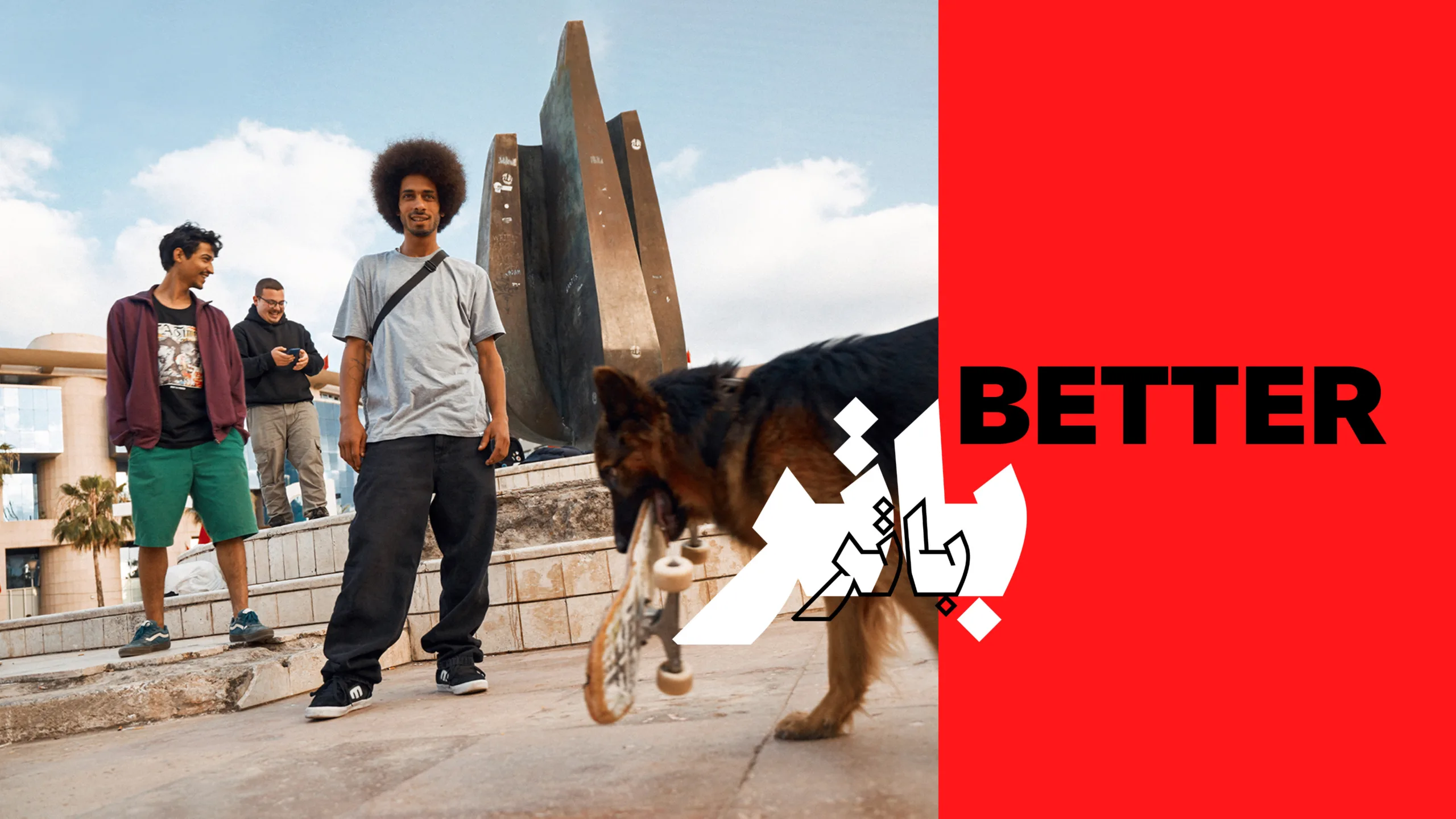
Fez — Casablanca is set to host the premiere of the documentary “BETTER,” directed by Moroccan filmmaker Kamal Ourahou, with an advance screening scheduled for January 21 at the Cinema Lutetia at 7:30 p.m.
The film will later reach a wider audience through a national television broadcast on 2M on January 25.
ROJO Y VERDE Productions produced “BETTER,” which is both an intimate coming-of-age story and a broader social portrait, rooted in the early 2000s streets of Rabat. The film opens in Hay Riad, on a large public square nicknamed the White Spot, where a group of teenagers began skating long before Morocco had a single skatepark.
A story born on the pavement
At the heart of the documentary is the friendship between Ourahou and Nassim Lachhab, who grew up skating together in Rabat. With no dedicated infrastructure, they transformed benches, steps, and curbs into improvised training grounds, shaping a self-taught skate culture in plain sight yet largely ignored.
Lachhab’s trajectory would eventually break new ground. Leaving Morocco, he settled first in France, then in Barcelona, widely regarded as Europe’s skateboarding capital.
In 2020, he became the first professional skateboarder from Morocco and Africa, earning a signature board with Blind, an iconic U.S. skate brand.
Between exile, success, and friendship
“BETTER” follows this journey closely, not as a tale of overnight success, but as a layered reflection on exile, individual achievement, and loyalty.
Filmed close to the ground, the documentary captures the physical intensity of skateboarding alongside the emotional weight of leaving home and building a life abroad.
Beyond Lachhab’s personal rise, the film sheds light on a Moroccan skate scene that long existed on the margins. It documents how a tight-knit community stretched from Rabat to Europe, sustained by shared passion rather than institutional support.
An intimate debut feature
For Ourahou, “BETTER” marks his first feature-length documentary and the realization of a long-held adolescent dream. Revisiting the White Spot years later, he reflects on how a local story, once confined to a Rabat square, found resonance on an international stage.
The film also raises broader questions about identity, social class, and visibility, portraying skateboarding as both an escape and a form of self-definition for Moroccan youth navigating limited public space.
From cinema screen to national television
After its Casablanca premiere, “BETTER” will air on 2M as part of the documentary program “Histoires et des Hommes” (“Stories and Men”) on Sunday, January 25, at 9:25 p.m., bringing the story to viewers across Morocco.
“BETTER” stands as a rare cinematic record of the emergence of Moroccan skateboarding, capturing a generation that invented its own spaces of freedom and, in doing so, secured a place in the global history of the discipline.