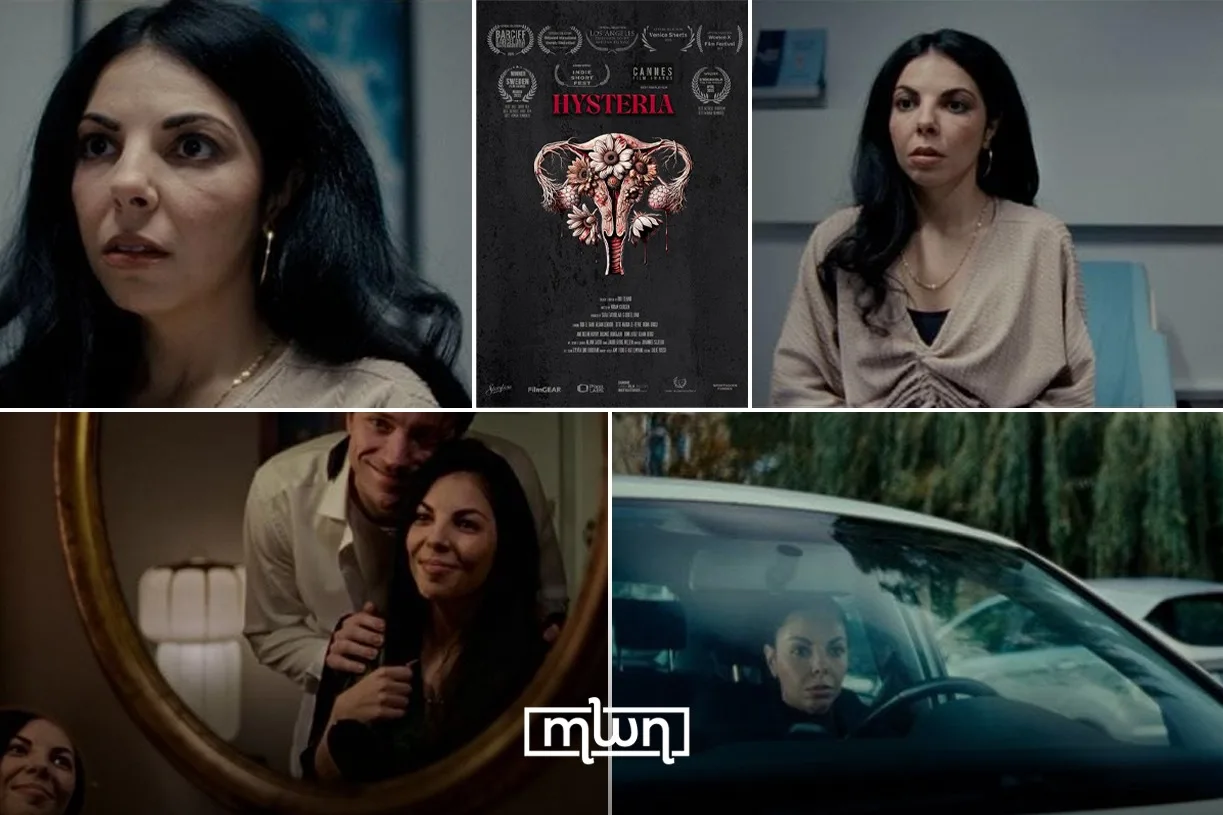
Fez — A new short drama film titled “HYSTERIA” is gaining international attention for its unflinching portrayal of gender bias and structural racism within healthcare systems, a reality its creator says remains widespread across Europe and North America.
Created by Ibbi (Ibtihal) El Hani, a Danish-Moroccan actress, writer, producer, and midwife, the film tells the story of Houda, a woman whose chronic pelvic pain is repeatedly dismissed by doctors as “just period pain.” As the pain intensifies, Houda’s physical and mental health deteriorate, while her isolation deepens in a system that refuses to believe her.
“As a filmmaker and midwife, I decided to write a story from a different perspective,” El Hani told Morocco World News. “The perspective of the women who rarely get to express their voice.”
A film rooted in lived experience
Directed by Miriam Carlsen, the short film has been praised for its emotional depth and carefully composed cinematography, which shows Houda’s isolation and inner turmoil. The film translates invisible pain into a powerful cinematic experience, making it both a deeply touching story and a compelling artistic work.
El Hani said “HYSTERIA” was born from both professional observation and personal conviction. The film highlights how gender bias and ethnic prejudice intersect, leaving many women — particularly women of color — undertreated or ignored.
“Everyone who seeks medical help must be taken seriously by the healthcare system, regardless of gender, age, ethnicity, sexuality, religious beliefs, disability, or social background,” she said, calling the issue universal rather than region-specific.
The film has already received significant recognition on the festival circuit, winning Best Actress at the Stockholm City Film Festival and Sweden Film Awards, Best Female Filmmaker at both the Stockholm City Film Festival and the Cannes Film Awards, as well as Best Drama and Best Short Film at Indie Short Fest in Los Angeles and the Sweden Film Awards. It also earned Best Foreign-Language Short of the Season at Indie Short Fest in LA.
Breaking silence, challenging stereotypes
Beyond healthcare, El Hani’s work is deeply connected to questions of representation. She said her ambition is to create space for women, especially those from MENA backgrounds, who are rarely given the opportunity to tell their own stories.
“We need more diverse and representative stories of women of color, especially women from MENA countries,” she said. She also added, “…they were never depicted or represented, when I grew up in Denmark, unless the story was about submissive wives or terrorism.”
The filmmaker’s journey into artistic expression
El Hani’s journey into storytelling was not without resistance. She recalled that when she first told her father she wanted to become an actress at the age of 11, he reacted violently and accused her of wanting to become a sex worker. Despite this, she said she persisted, driven by a desire to tell stories about strong women who looked like her, stories she never saw growing up in Denmark.
“Today, I can proudly say I am an actress, writer, producer, and midwife,” she said. “My films will be my legacy.”
How to watch and support
El Hani hopes “HYSTERIA” will help spark broader conversations about women’s health and systemic inequality, particularly for women of color. She is encouraging viewers to watch, rate, and share the film widely to help amplify its message.
“I hope “HYSTERIA” can start a new wave of change in how women are treated in health care,” she said. “The statistics are horrifying.”
“HYSTERIA” is currently available to watch on Ekko Film, where viewers can also rate the film and help amplify its message by giving it a rating and sharing it within their networks. El Hani encouraged audiences to engage with the platform, saying that visibility is essential to spreading awareness about women’s health and systemic inequality.