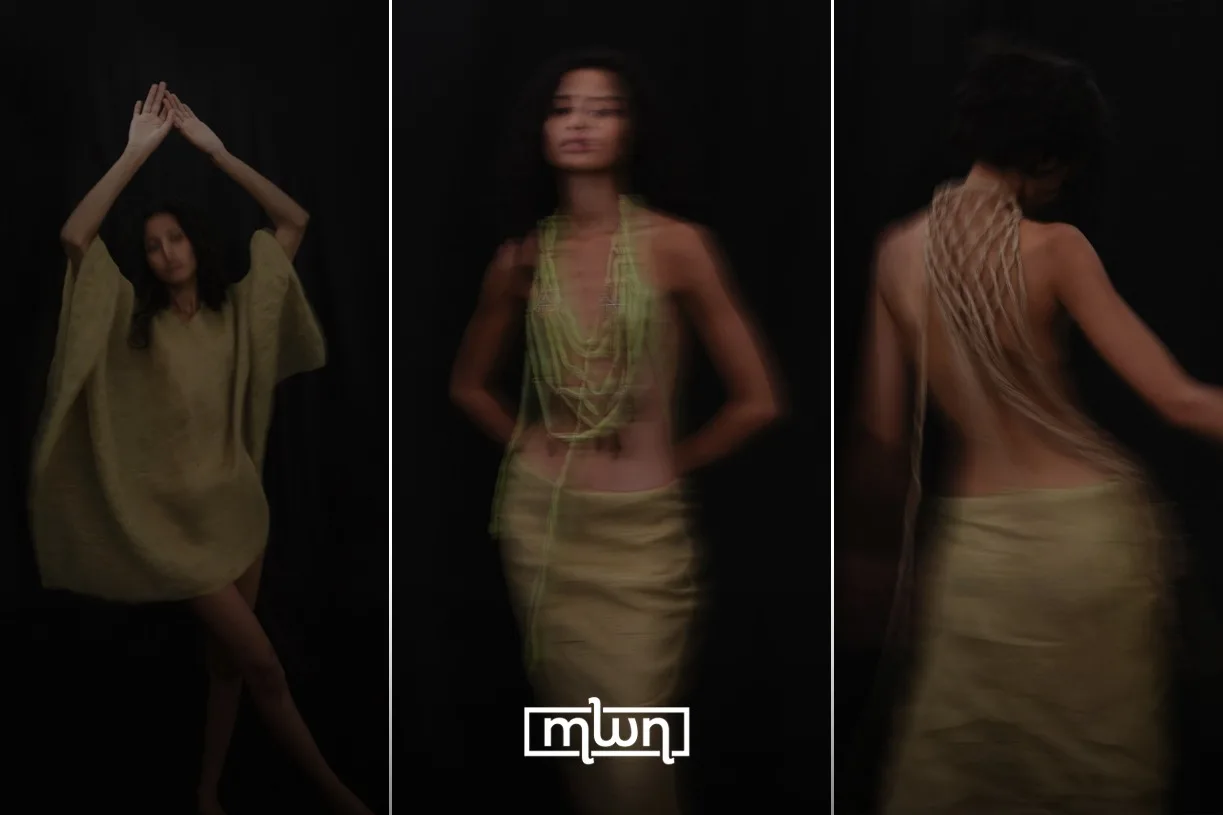
Marrakech – Presented at Atelier Hanout as part of the 1-54 Contemporary African Art Fair Marrakech OFF programme, “Shifting Lights” is a multidisciplinary exhibition conceived by Meriem Nour that interrogates how the female body is portrayed.
The exhibit is “not about showing clothes,” the artist explains, “but about revealing how the female body is looked at, framed and negotiated in contemporary Arab societies.”
Opening on February 7 and running until March 31, the project positions fashion not as spectacle, but as a critical language, one that shapes visibility, power and social meaning.
Founder and creative director of the Hanout fashion house, Meriem Nour joins the 1-54 Marrakech “What’s On” program with a proposition that sits at the intersection of textile creation, photography, video and spatial installation.
Rather than presenting clothing as a product, “Shifting” Lights deploys garments as cultural instruments, examining their role in constructing identity and regulating perception.
The exhibition unfolds as a continuous experiential journey structured in three interconnected acts: video, photography and installation.
The opening video functions as a perceptual threshold. Eschewing linear narration, the film builds a sensory environment shaped by movement, light and bodily rhythm.
It operates as a recalibration of the gaze, inviting visitors to slow down and attune themselves before entering the exhibition space, an intentional pause that frames what follows.
The photographic series, titled The Surface of the Gaze, extends this inquiry through images displayed on a radical black wall.
Blur, fragmentation and bodily discontinuity destabilize fixed readings of the female form, exposing the porous boundary between intimate identity and public representation.
Textile appears as a narrative material in its own right, often rendered in undyed canvas, affirming clothing as a symbolic surface rather than a decorative layer.
For this series, Meriem Nour collaborated with Moroccan photographer Yasmine Hatimi.
Known for her poetic visual language and contemporary engagement with Moroccan culture, Hatimi subtly dismantles dominant stereotypes through nuance and restraint.
Her contribution brings intensity and depth to the photographic narrative, reinforcing the exhibition’s refusal of reductive imagery.
At the heart of the scenography lies the installation Materiality and Presence.
Six female silhouettes form a cartography of states; the sensual, the intellectual, the punk, the spiritual, the poetic and the figure of power, each oriented toward a central seated presence, white and deliberately stripped of assigned identity.
Together, they articulate modes of being: ways of inhabiting space, asserting presence, protecting oneself or choosing withdrawal.
These states are expressed through variations of a single iconic Hanout garment, transforming clothing into a sculptural and spatial object.
Suspended between absence and embodiment, the installation reads as a constellation of presences, quiet yet charged.
The exhibition proposes the female body as a contested territory shaped by cultural, social and symbolic constructions, questioning how clothing actively participates in the production of visible identities.
The project also reinforces Atelier Hanout’s evolving role as an art space. Beyond its function as a working production studio, the upper floor of Atelier Hanout is periodically transformed into an exhibition venue dedicated to art and craftsmanship, with fashion as an underlying thread.
Following La Fatna, the inaugural exhibition concluded in January 2025 and dedicated to master embroiderer La Fatna Maaroufi, Shifting Lights confirms the space’s curatorial ambition and long-term cultural positioning.