Fez — Moroccan visual artist Abdelilah Ennassef has opened a new exhibition at the Bab Rouah National Gallery in Rabat that reimagines how audiences interact with contemporary art.
Titled “The Vitality of Africa and the Resilience of Its Cultural Heritage,” the exhibition presents a large-scale digital installation composed of 54 individual works, each representing an African country.
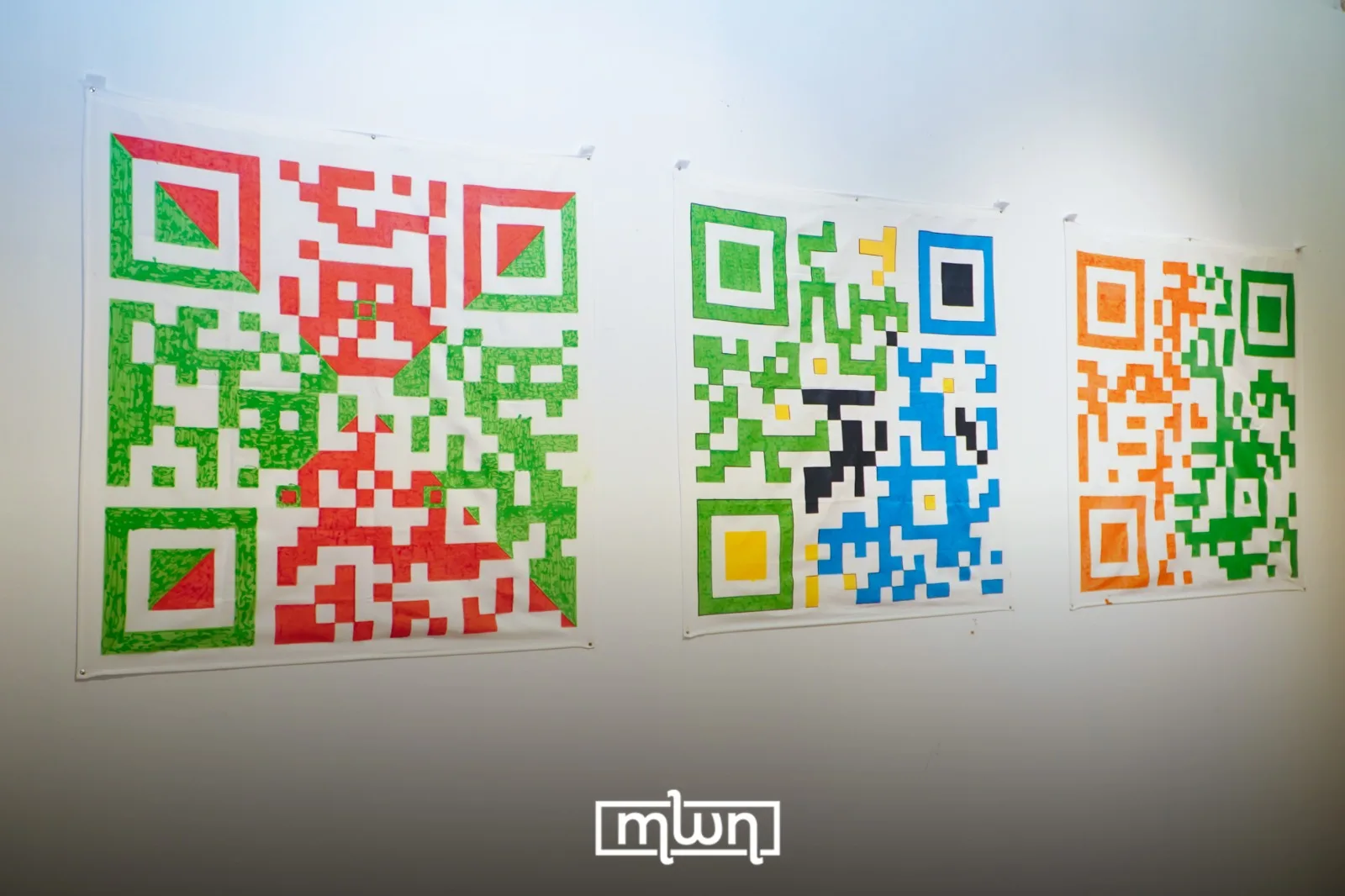
Rather than traditional paintings or sculptures, Ennassef’s pieces are built around QR-code structures rendered through color and geometric composition. Each work functions as both an image and an entry point into digital content, encouraging visitors to move beyond passive viewing.
An installation built around Africa
Ennassef explained that the exhibition is conceived as a single installation rather than a collection of separate artworks. “This collection of art, of pieces that I have here — installation I call it — is 54 pieces and each piece represents a country, an African country,” he told Morocco World News (MWN).

The works are arranged across the gallery walls, visually echoing flags, symbols, and color systems associated with the continent, while maintaining a unified graphic language. The approach places Africa at the center of the exhibition, not as a theme in abstraction, but as a structured and intentional framework.
Digital interaction at the core
What sets the exhibition apart is its interactive dimension. Ennassef said every piece is designed to be scanned by visitors using their smartphones. “All of the pieces are digital. The moment you scan the piece, it takes you to a YouTube that explains to you what that country is known for,” he said.

The digital experience also includes sound. “It also plays for you the national anthem of that country,” Ennassef added, noting that each scan activates both visual and auditory information linked to the represented nation.
This layered structure turns the exhibition into a hybrid space, where physical presence and digital exploration coexist.
Changing how viewers engage with art
According to the artist, the goal is not only to present information, but to challenge conventional gallery behavior. “The viewer’s experience at this exhibition changes,” Ennassef explained. “Instead of looking at the artwork, you start looking at your phone.”
Rather than seeing this shift as a distraction, Ennassef frames it as a deliberate artistic choice. The act of scanning becomes part of the artwork itself, prompting questions about attention, mediation, and how contemporary audiences process culture and knowledge.
Dialogue and future conversations
Ennassef, who has lived in the United States since the early 1980s and previously taught critical thinking and creativity at Union Theological Seminary, described the Rabat exhibition as an opportunity to reconnect with Moroccan audiences.
“I’m delighted to be able to share some of my creativity with the Moroccan audience,” he said, adding that he hopes the installation will lead to broader discussions. “I hope that I will have more conversations with people here in Morocco about art and creativity.”
Running through February 17, “The Vitality of Africa and the Resilience of Its Cultural Heritage” positions Bab Rouah as a space where digital media, African narratives, and contemporary art practices intersect, inviting visitors to rethink both content and form.