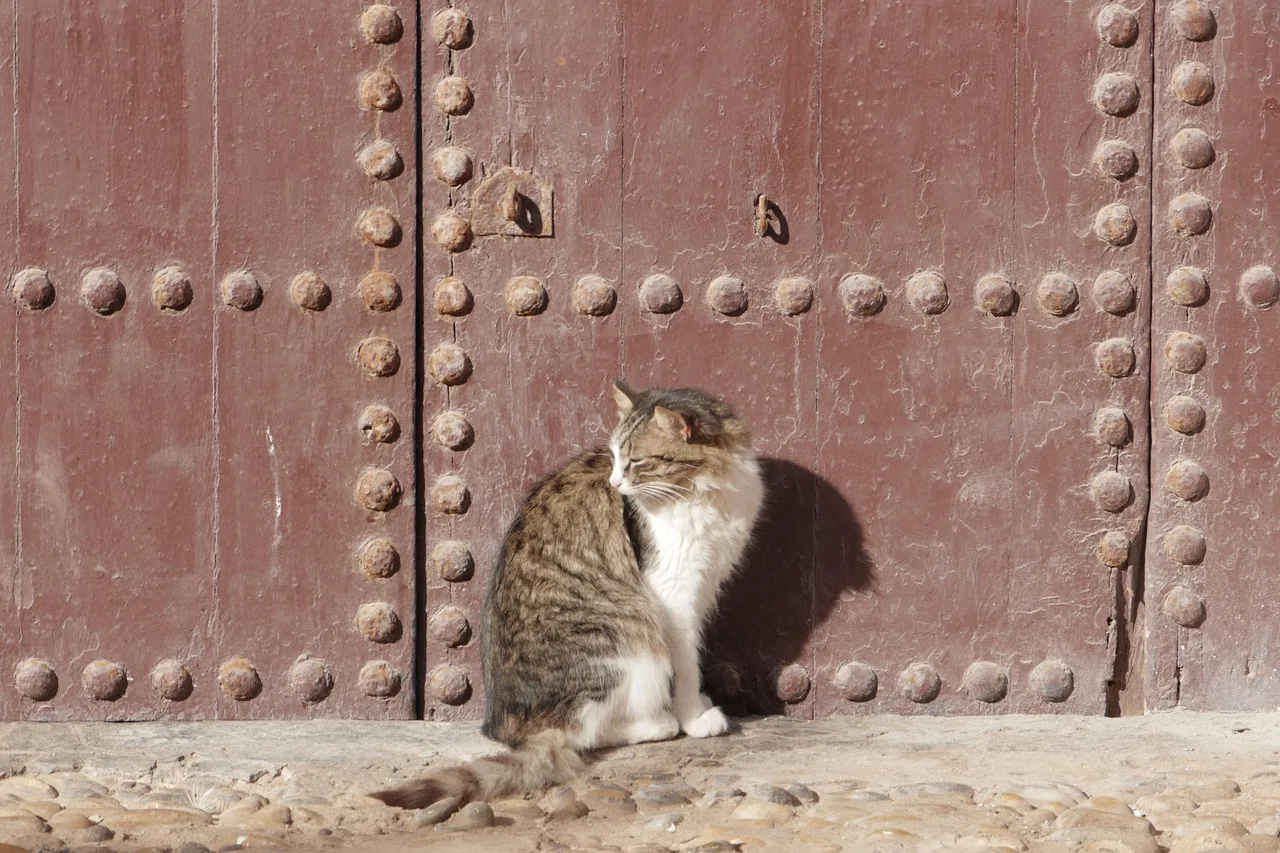
Rabat – In Moroccan streets and lanes, free cats are quiet companions of daily life, sharing the streets in common and ordinary ways.
At the same time, many locals offer small acts of care, such as leaving out water andfood, or simply petting them. This quiet coexistence shows how cats have become an essential part of Moroccan daily life.
Cats are everywhere
In busy markets, cats often stay close to vegetable stalls, bakeries, and especially, butchers where food is nearby and people pass all day. Near the fishing port, some can be seen waiting along the edges, watching the daily work of fishermen. These spaces provide both shelter and routine.
In residential streets and cafés, cats sleep under tables, on steps, or near doorways. They choose spots that are warm, quiet, and familiar. Over time, these places seem to become part of their daily routes.
Unlike stray cats in some other places, these free cats here are not only unafraid of strangers, but will even actively rub against those who come to them.
Perhaps to cats, humans are the guests who are visiting their streets.
For many visitors, street cats are among the first details they notice when exploring Moroccan cities. When I first visited Casablanca, I was captivated by the cats on the streets and jokingly nicknamed it “Catsablanca”, because there were so many adorable cats and they really welcomed me.
People who are taking care of the cats
Many owners leave bowls of water outside their houses. Others place small amounts of food nearby, like bread, crumbs or leftovers. These actions are done quietly and kindly.
This little habit helps the cats remain visible and accepted. This is like an unspoken rule for Moroccans and animals living in the same habitat: to take care of each other, respect, and love each other.
In fact, this lifestyle is closely related to local traditional culture. Cats are unique among animals here, often considered to represent “pureness, divine protection, or good fortune.” And in Fez, many people see cats as “the guardians of the medina.”
It goes without saying that this food also attracted many birds, who chirped and flew over in small groups to share the food with the cat while it wandered off to other places. As for the cats, how could they possibly mind giving such a small favor?
From day to night
During the day, cats are often seen resting languidly, sleeping in the sun or hiding in shaded corners.
At night, the medina changes from bustling to peaceful, and so do the cats, showing a different kind of warmth. As shops close and the streets grow quieter, cats begin to move more freely. They stroll around gracefully, through empty alleys and sit under streetlights, reclaiming the space after dark.
You can encounter more cats more easily during the evening, wherever you are. Under the dim light, they seemed even more like the masters of the land.
This is a view that belongs only at night: on the wet brick streets during the rainy season, their hair was shiny like Cinderella’ crystal shoes, warm and full of life at this moment.
Challenges and ongoing actions
Traditionally, many people believe that the cats don’t need a shelter, as they can feed themselves, and people will help them. This is why free-roaming cats on the street are so normal.
Despite this, some observed the challenges of food, sickness, accidents and environment. This has broken the hearts of cat lovers and has led more and more people to pay attention to the other side of cats’ cuteness.
At present, care for street cats is community shared rather than organized in some cities. In the absence of formal systems, everyday habits and shared routines quietly shape how animals and people coexist in the city. Through small acts of care and growing awareness, contributing a gradual shift in how shared public spaces are managed.
Recent reporting and growing awareness around animal welfare point to slow but ongoing change. Cats and humans are working together to maintain this home in a better way.