Marrakech – IZZA Marrakech is redefining boutique hospitality through its integration of contemporary art and cultural programming. The distinctive hotel, located within the historic Medina’s maze-like lanes, currently hosts “État(s) de Passage,” a group exhibition featuring 13 artists born between 1985 and 2000.
“This exhibition, curated by Achraf Remok, brings together artists from the same generation whose practices are deeply shaped by mobility, circulation, and multiple identities,” Aicha Benazzouz, IZZA’s creative director, told Morocco World News (MWN). The exhibition opened February 6 as part of the 1-54 art fair’s VIP program.
Neither fully moored here nor entirely displaced elsewhere, these artists inhabit what Deleuze and Guattari theorize as “deterritorialization.” Their practices resist the grammar of fixed belonging, unfolding instead through fluid itineraries that redraw cultural space itself.
In this emerging cartography, Rabat, Casablanca, Tetouan, Marrakech, Paris, Brussels, Marseille, and Zurich cease to function as points of origin or destination, becoming zones of passage – sites where identities are tested, forms are unsettled, and creation is continually re-negotiated.
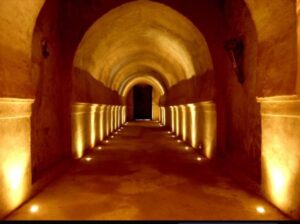
Set across seven interlinked riads, IZZA combines refined Moroccan hospitality with contemporary design and cultural immersion. The hotel, therefore, places contemporary art at the heart of the guest experience.
The property offers 14 uniquely styled rooms, lush courtyards, rooftop terraces, a spa and hammam, and multiple pools that create both refuge and discovery for visitors.
Built on the spirit of community and creative exchange, IZZA bills itself as a “House of Friends” where traditional architectural elements and modern luxury coalesce in intimate spaces.
What truly sets IZZA apart is its role as a living art destination. The hotel hosts a Museum in the Medina with more than 300 contemporary and digital works displayed throughout guest rooms and public areas. This focus blurs the line between accommodation and gallery, placing art at the heart of the experience.
The collection features pieces from emerging Moroccan and international artists, large-scale photography, generative and NFT art, and works by figures such as Leila Alaoui.
This reflects a commitment to creative dialogue and cross-cultural engagement that positions IZZA not just as accommodation, but as a dynamic hub of artistic energy within Marrakech’s evolving creative scene.
The current exhibition represents IZZA’s third collaboration with the Institut Français du Maroc within the 1-54 framework. “We did not seek to define a fixed sense of belonging, but rather to observe zones of transition, how these artists navigate between cities, cultures, and contexts, and how these passages become the very driving force of their creation,” Benazzouz explained.
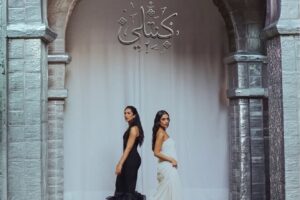
The exhibition gathers multiple practices, including experimental cinema, documentary photography, digital arts, installation, painting, and embroidery. This porous interplay between disciplines is a defining signature of the generation on view.
Creative geographies are drawn differently for each artist. Some trained across multiple European cities anchor their practice in Morocco. Others develop their work simultaneously in France, Switzerland, and Morocco. Still others choose Massa, Jerada, or Tetouan as territories of creation, sketching new centralities beyond expected metropolises.
Featured artists include Hiba Baddou, Sabrine Lahrach, Yasmine Hadni, Margaux Derhy, Hind Moumou, Rida Tabit, Amina Azreg, Zineb Mezzour, Samy Snoussi, Kamil Bouzoubaa-Grivel, Hanane El Farissi, Joséphine Vallé Franceschi, and Maïssane Alibrahimi.
Curator Achraf Remok designed the exhibition to observe the passages themselves: how forms circulate, how belongings are negotiated, how modes of creation are reinvented in a post-globalized context.
“This exhibition offers a hybrid image of the contemporary world through photographic, digital, experimental cinema, and painting creations. The exhibition features a porosity between disciplines that strongly characterizes this generation,” Benazzouz noted.
“État(s) de Passage” does not advance a collective identity so much as it bears witness to a generation that resists imposed classifications while fully inhabiting the complexity of its layered inheritances.
Presented within the framework of 1-54, the exhibition emerges at a moment when contemporary African art commands unprecedented international attention. Yet it deliberately displaces the gaze: rather than pursuing an “African” or “Moroccan” essence, it traces how these artists carve out creative territories that elude reductive geographic and cultural taxonomies.
The exhibition runs through February 26. The project represents a partnership between the Institut Français du Maroc, the Embassy of France, and IZZA’s Associates Artists Program.
This collaboration within the Institut Français du Maroc’s cultural season indicates how art-forward hospitality models can support emerging artists while creating meaningful cultural programming that asserts Morocco’s position in global art discourse.
It also testifies that Marrakech’s ancient medina is not merely a site of heritage, but a living incubator for some of the most forward-looking currents in contemporary artistic expression.