Rabat – This month marks Chinese New Year, a cultural significant event for Chinese communities around the world.
The traditional Chinese Calendar is based on ancient agricultural experience and science, different from the rather simple solar and lunar calendars. It is a complex calculation combining the two. This is why the accurate dates of every year are not the same in the Gregorian Calendar. The Chinese New Year for this calendar year, the Year of the Horse, will fall on February 17.
The meaning and customs of Chinese New Year
Each Chinese new year is also associated with 1 zodiac sign from 12 animals: Rat, Ox, Tiger, Rabbit, Loong (Chinese Dragon), Snake, Horse, Sheep, Monkey, Rooster, Dog and Pig. Every zodiac sign has different, but positive, cultural meanings for Chinese.
In Chinese culture, the horse has long symbolized motion, vitality, and the courage to move forward. The horse represents action: travel, labor, work, and the willingness to pursue something new. In the context of the Chinese New Year, especially the Year of the Horse, this symbolism feels particularly matching: a reminder to begin again with energy and purpose.
The Chinese New Year is considered a vital time to reunite with family and ancestor worship activities. Unlike many festivals that last only a single day, Chinese New Year unfolds over an extended period of celebration. Preparations often begin weeks in advance, as households clean, decorate, paste Spring Festival couplets, and plan family gatherings.
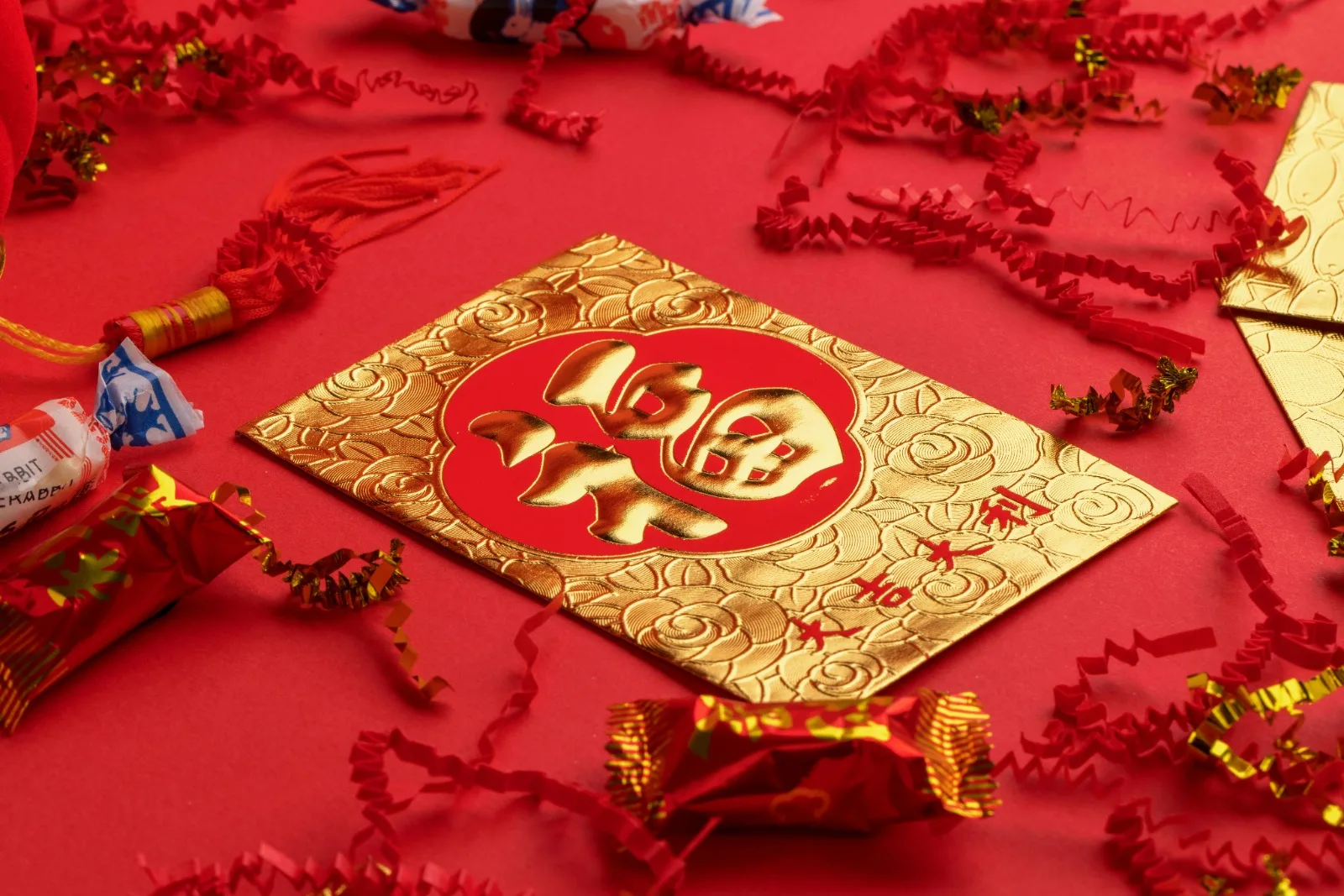
Some well-known festival customs include setting off firecrackers, giving red envelopes, and visiting relatives and friends. It is also an occasion to enjoy traditional food with loved ones. People often gather with family for wonderful feasts, with rituals such as putting coins in dumplings to mark a blessing for the future of whomever finds them. Additionally, families gather to watch festival galas on CCTV as well as other channels together as another tradition.
In China, the occasion is marked by a statutory public holiday that typically lasts a week or longer. Even after the official break ends, the festive atmosphere lingers, with daily routines gradually resuming only about two weeks later.
Chinese New Year in Morocco
Beyond its customs and symbols, Chinese New Year has increasingly become a moment of cultural sharing beyond national borders. As Chinese communities and cultural institutions engage with local societies worldwide, the festival is no longer confined to private family spaces. Instead, it appears in public celebrations, performances, and cross-cultural exchanges gradually, reshaped by the places in which it is celebrated.
Many activities have been held to celebrate the upcoming Chinese New Year in Rabat and Tangier recently. The Embassy of the People’s Republic of China in Morocco and local cultural institutions collaborated to organize events that attracted active participation and share happiness with both locals and Chinese.
On February 4 in Rabat, a vibrant variety of artistic performances are hosted by the Mohammed V Theater in Rabat, including traditional Chinese dances and shows, which have the theme “Happy Chinese New Year and Wonders of the Silk Road”. Around 1,500 people participated in the event, including some notable personalities, officials and representatives of Moroccan and Chinese institutions. The event was widely appreciated because of the joyful and festive performances, recognized as a bridge for dialogue between cultures.
Following this celebration, on February 6, the festivities continued in Tangier. Beyond the traditional Chinese dances, instruments, acrobatic acts and other various cultural and arts performances, “Marsoul El Hob”, the well-known song by Abdelwahab Doukkali, was reimagined through traditional Chinese instruments, creating a blend of Moroccan and Chinese musical traditions.
From February 7-8, the Chinese Cultural Center held temple fairs in Tangier to celebrate this annual exciting moment from the 7th to 8th. The fairs offered an opportunity to take a try of Chinese food, paintings, calligraphy, and a traditional craft workshop.