Rabat – Moroccan Chaabi music first burst onto the scene back in the 1930s, amidst the French protectorate era. It was a time when social vibes heavily flavored the tunes.
Since many Chaabi artists were not educated in the European system, they sang mostly in Darija, or Moroccan Arabic.
Because of its accessibility, Chaabi was able to strike a deep chord with viewers from a wide range of socioeconomic backgrounds, becoming a uniting force in Moroccan culture.
Since there was no radio available when Chaabi was first developing, musicians had to write their works using instruments found in the area, which led to a sound that was minimally influenced by the current musical movements coming out of Syria and Egypt.
At its heart, Chaabi is a musical narrative of Moroccan life; its joys, sorrows, and everything in between. It is characterized by its raw authenticity and emotive storytelling.
It speaks directly to the people, tackling themes of love, social justice, and the challenges faced by regular Moroccans, with lyrics sung in the regional Arabic dialect.
Chaabi music is characterized by a bright sound that combines the hypnotic beat of the bendir drum, the rhythmic clapping of hands, and the captivating melodies of the violin.
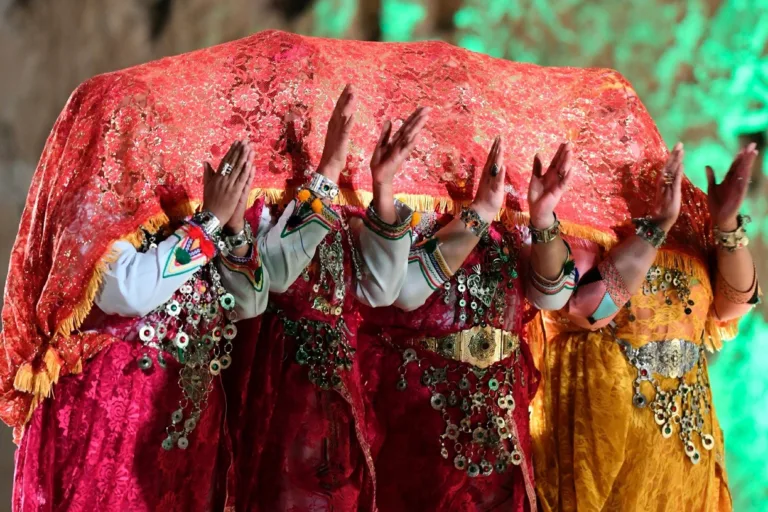
Chaabi influences have made their way into customs, festivals, and social events, becoming an integral part of Moroccan culture.
Chaabi is the soundtrack to life’s most memorable events, from street festivals to weddings, adding passion, happiness, and a feeling of shared history.
Chaabi music in modern times
Contemporary sounds and classic melodies have been used by artists to produce a new and exciting interpretation of this cherished genre in recent years.
The current wave of Chaabi is just as dynamic and varied as the nation itself, incorporating pop beats and rap elements.
Chaabi music has undergone a remarkable transformation, embracing modern influences while remaining deeply rooted in its traditional heritage.
A new chapter in Chaabi music history is represented by musicians like Lamia Zaidi, who symbolizes this progression.
Singer Manal Benchlikha has been at the forefront of this movement; her contemporary sensibilities and soulful voice have won her a devoted audience both at home and abroad.
Despite being a Moroccan pop singer-songwriter, some see her music, particularly the song “Makhelaw Magalou,” as the contemporary equivalent of Chaabi.
Manal is changing the definition of what it means to be a Chaabi musician in the twenty-first century with songs that address topics like social justice, gender equality, and identity.
Artists in this new wave of Chaabi are pushing the genre into unexplored terrain while retaining a profound appreciation for its origins by pushing limits and defying norms.
Moroccan DJ Soufian Az has created a distinctive musical mashup that combines the deep rhythms of Chaabi with American rap sounds.
Three years ago, the DJ unveiled his groundbreaking creation to the world, a remix video seamlessly blending the soulful essence of Chaabi with Drake’s hit song “Tooslie.”
It was an unlikely combination that has been making waves and winning people over.
Chaabi unites hearts and minds across countries and generations as it continues to change and adapt to the times, inspiring and uplifting Moroccans worldwide.
The next time you’re taking a stroll around Morocco, keep your ears open for the sounds of Chaabi drifting through the air.
Who knows? Perhaps you will find yourself dancing under the North African stars to the melodic beats of Chaabi.