Fez — In the hillside village of Bhalil, the most striking experience is not found in a monument or a museum. It begins with a simple door set into stone.
At first glance, it looks like an ordinary wooden entrance painted in soft blues or greens. But once it opens, the illusion shifts. Instead of stepping into a conventional house, you step into the mountain itself.
A home shaped by earth
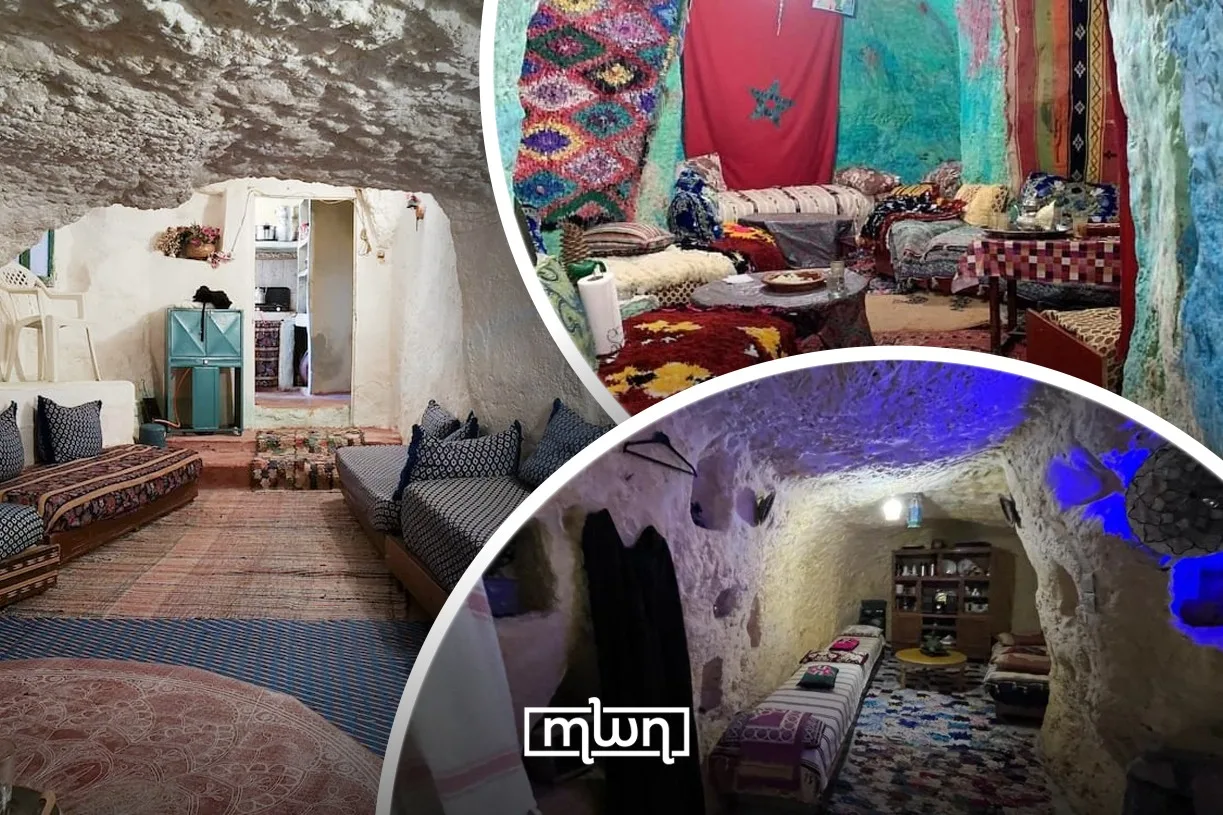
Bhalil’s cave houses are partially or entirely carved into limestone rock. The walls are not plastered; they curve naturally, sculpted by hand over generations. Ceilings arch organically, following the contours of the hillside.
Inside, the temperature changes immediately. Even in the height of summer, the air is cool and steady. In winter, the stone retains warmth. The cave regulates itself without modern systems, turning geology into architecture.
Rooms unfold one after another, often circular or oval rather than square. Light enters through modest openings, creating a soft glow against the pale rock. Shadows move slowly across curved walls throughout the day.
Sound, silence, and stillness
What surprises most visitors is the silence.
Stone absorbs sound. Voices soften. Footsteps feel muted. There is a sense of enclosure that is not claustrophobic but grounding.
The cave does not feel primitive. It feels intimate. Protected.
Cooking areas are often integrated into the rock itself. Carpets and cushions line the floors, adding warmth to the mineral surroundings. Family photographs hang against stone walls, blending modern life with ancient shelter.
A living tradition, not a relic
These cave homes are not tourist reconstructions. Some families still live in them today. Generations have expanded chambers gradually, digging deeper into the hillside when space was needed.
In many homes, you might find a conventional façade built at the front, while the main living quarters extend inward underground. The exterior may look modest; the interior feels unexpectedly expansive.
The experience challenges assumptions about comfort and permanence. In Bhalil, the mountain is not an obstacle to build against — it is the structure itself.
Why it feels different
Unlike cave sites preserved as archaeological attractions, Bhalil’s dwellings remain woven into daily life. Children run between chambers. Tea is poured inside carved rooms. Television screens flicker against stone backdrops.
The contrast is powerful: contemporary life unfolding inside ancient rock.
To sit in one of these homes, even briefly, is to feel Morocco differently. The cave does not impress through scale. It impresses through closeness — to earth, to silence, to continuity.
In Bhalil, the most unforgettable experience is simple: entering a door and realizing you are no longer inside a house, but inside the land itself.