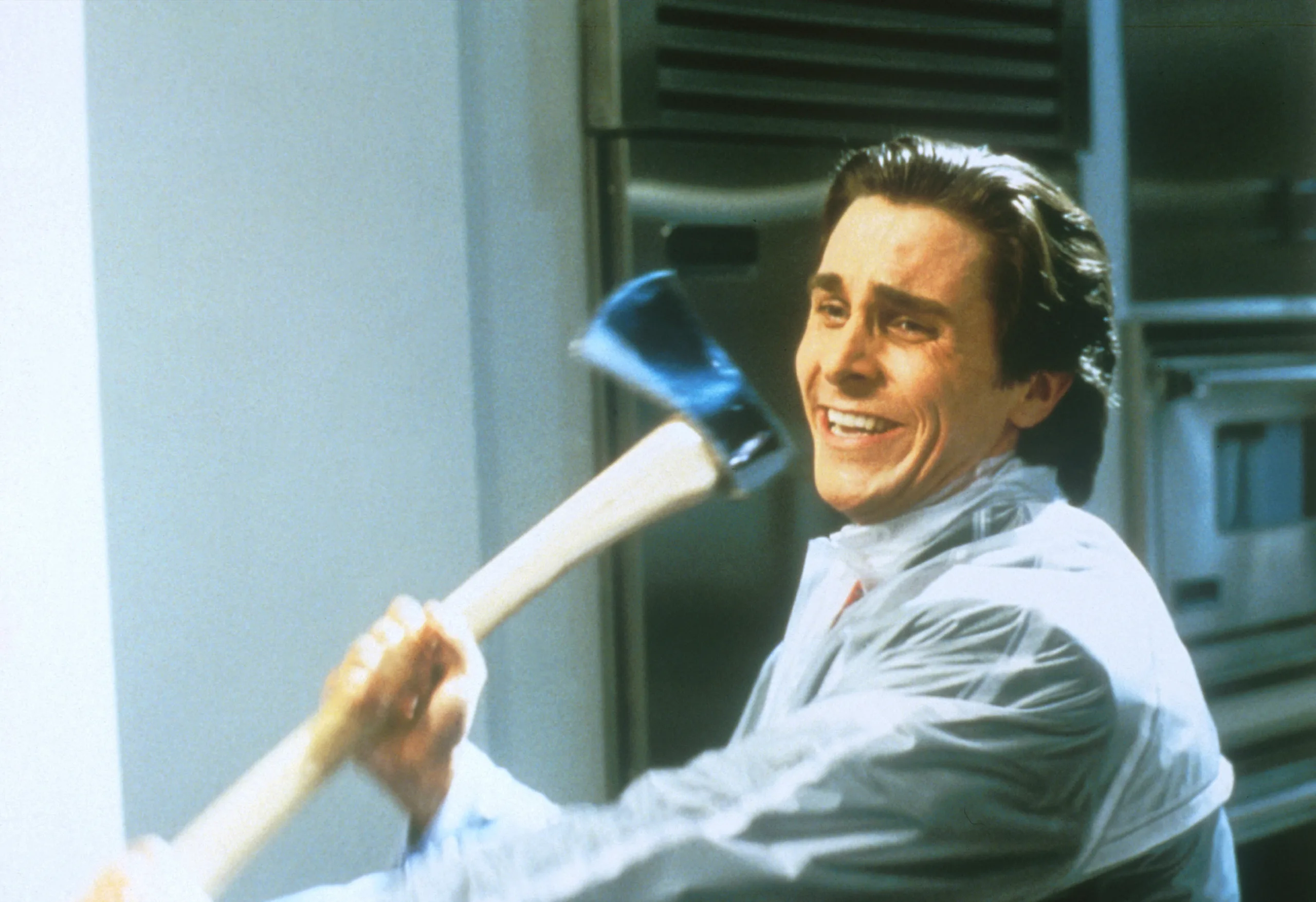
Fez — When “American Psycho” premiered in 2000, it was received as a dark, satirical thriller anchored by a chilling performance from Christian Bale. Directed by Mary Harron and adapted from Bret Easton Ellis’s controversial 1991 novel, the film dissected 1980s Wall Street excess through the lens of Patrick Bateman, an investment banker whose obsession with status, grooming, and control masks something far more sinister.
At the time, few could have predicted that Bateman would one day become a meme.
The transformation from cult psychological horror to viral internet currency did not happen overnight. Instead, it unfolded gradually, shaped by shifting cultural conversations around masculinity, capitalism, and identity in the digital age.
A satire that aged into relevance
“American Psycho” was always meant to be satire. Harron has repeatedly emphasized that the film critiques toxic masculinity and consumer capitalism rather than celebrating them. Bateman is hollow, insecure, and deeply ridiculous beneath his polished surface. His obsession with business cards and restaurant reservations is as central to the horror as his violence.
Yet satire often lives a double life.
In the 2010s, as social media platforms amplified short clips and visual fragments, scenes from the film began circulating widely. The business card comparison scene became shorthand for competitive corporate anxiety. Bateman’s morning skincare monologue evolved into a punchline about self-optimization culture. The “Hip to Be Square” sequence turned into a remixable template for dark humor.
In a digital environment built on irony, “American Psycho” proved endlessly adaptable.
The rise of the “sigma male” edit
The film’s meme resurgence intensified during the COVID-19 pandemic. TikTok, YouTube Shorts, and Instagram Reels became incubators for short-form edits of Bateman walking through Manhattan in a long coat, headphones on, face expressionless. These edits were often paired with moody music and labeled “sigma male grindset.”
The “sigma male” archetype, an internet-born concept describing a lone, hyper-disciplined, emotionally detached man, found a ready-made aesthetic in Bateman. His tailored suits, rigid routines, and aloof demeanor fit perfectly into a culture obsessed with curated self-image.
This reinterpretation, however, often stripped the satire away.
Bateman was written as a parody of hollow ambition. Online, he was reframed as aspirational. The irony became layered: users embraced him both sincerely and sarcastically, blurring the line between critique and admiration.
Meme culture loves exaggeration
Part of what makes “American Psycho” so meme-friendly is its heightened tone. The film operates on exaggeration. Dialogue is stiff and performative. Facial expressions are controlled, then suddenly manic. Bale’s performance walks a thin line between comedy and horror.
Meme culture thrives on that tension.
A single raised eyebrow, a slow smirk, or an awkward laugh can be looped and detached from its original narrative. Once removed from context, the meaning shifts. Bateman’s chilling calm can become deadpan humor. His vanity becomes relatable absurdity.
The internet excels at fragmentation. Scenes are no longer consumed as part of a two-hour story but as six-second emotional beats. In that ecosystem, “American Psycho” offers a treasure trove of instantly recognizable reactions.
Capitalism, aesthetics, and Gen Z irony
The film’s renewed popularity also coincided with broader online conversations about late-stage capitalism. Younger audiences, facing economic instability and corporate burnout, began revisiting 1980s excess with a mix of horror and dark amusement.
Bateman’s obsession with brands, status, and appearance mirrors the influencer economy’s fixation on aesthetics. His world of surface-level competition feels less like a relic and more like a distorted reflection of modern professional life.
At the same time, Gen Z internet culture operates heavily through irony. To post a Bateman clip can mean admiration, mockery, or both. The ambiguity is part of the joke.
This layered interpretation keeps the film culturally alive. It becomes a mirror for whichever anxiety dominates the moment: corporate rivalry, masculine identity, or performative success.
The danger of misreading satire
The meme-ification of “American Psycho” has not been without controversy. Some critics argue that turning Bateman into an aspirational figure risks undermining the film’s core message. When violence and narcissism are aestheticized without context, satire can be lost.
Yet others suggest that this very misreading reinforces the film’s point.
Bateman himself is obsessed with image over substance. The fact that audiences can project contradictory meanings onto him reflects the emptiness at the heart of his character. He is a surface. That surface is infinitely reusable.
Moreover, the internet rarely engages with media in a purely literal way. Irony, exaggeration, and remixing are its native languages. In this environment, meaning is fluid rather than fixed.
A cult film reborn in the algorithm era
Unlike some early-2000s films that faded into niche nostalgia, “American Psycho” has found a second life precisely because it fits algorithm-driven culture. Its visuals are clean, symmetrical, and stylish. Its monologues are concise and intense. Its central character is instantly recognizable.
Christian Bale’s performance, once controversial, now feels iconic.
The film’s journey from divisive adaptation to meme staple illustrates how media evolves beyond its creators’ intentions. In the streaming era, older films are not rediscovered through critical essays alone but through viral clips and edits.
Two decades later, “American Psycho” is no longer just a satire of 1980s greed. It is a case study in how the internet reshapes cultural artifacts. Patrick Bateman has become a symbol, stripped down and rebuilt through thousands of remixes.
Whether viewers interpret him as cautionary tale, dark joke, or exaggerated fantasy, the result is the same: the film remains alive in digital circulation.
In the end, perhaps that is the most fitting outcome. A story about image, repetition, and hollow performance has become one of the internet’s most replayed performances. The satire has not disappeared. It has simply been absorbed into the feed.