

Rabat – If you are a traveler, I’m sure you are done with watered-down, overpriced hotel buffets.
In Morocco, the real food culture happens in the underground bathhouse ovens, the smoky butcher rings, and the cramped medina stalls.
To actually understand Moroccan cuisine, you have to follow the map. So here is exactly what to eat, and where you can find it.
Marrakech
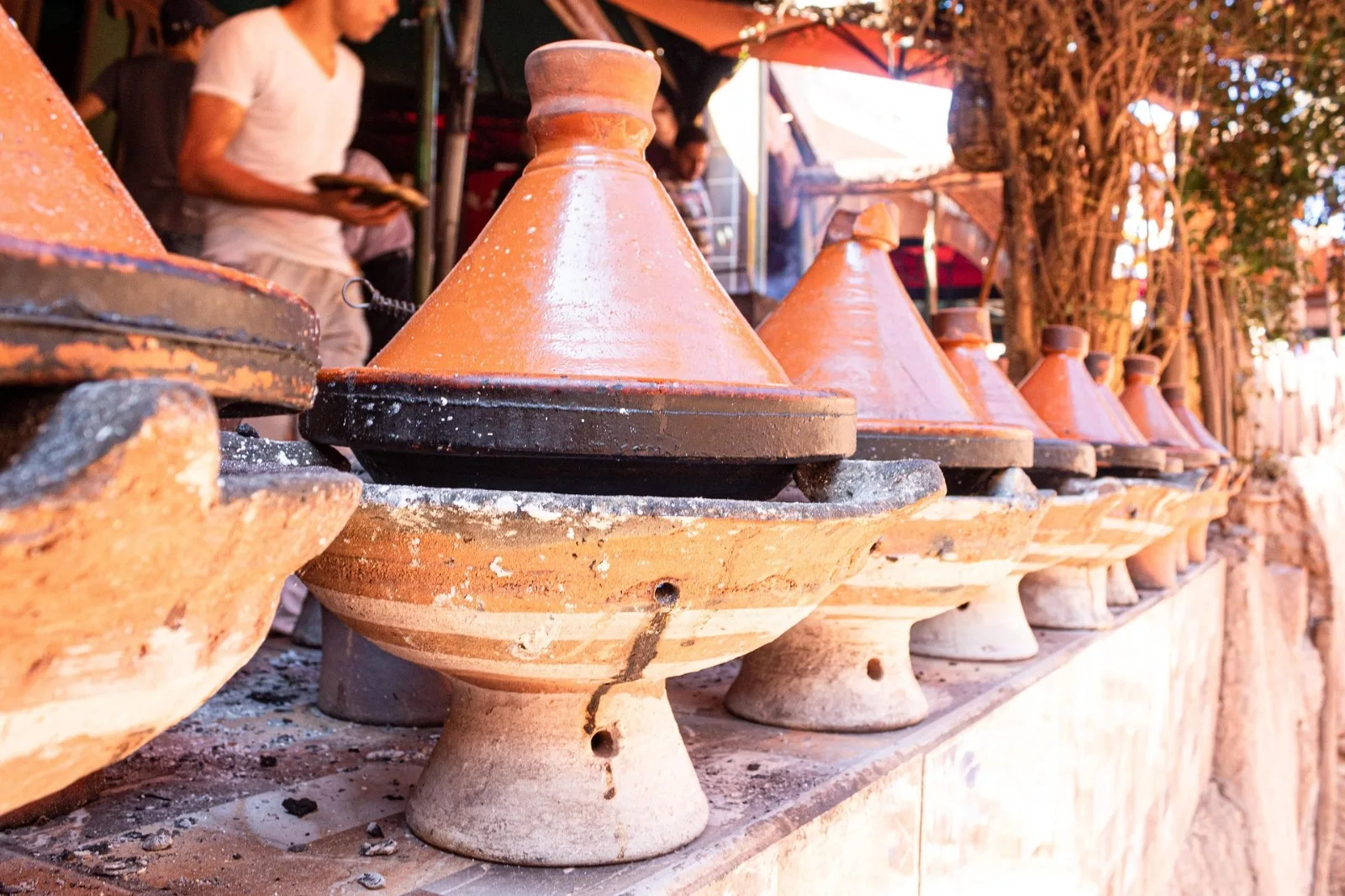
Marrakech dominates the current trend of primal, fire-driven cooking. The signature local dish, Tanjia, completely bypasses the modern kitchen.
Chunks of lamb or beef, preserved lemon, garlic, and aged fermented butter (smen) are sealed in a clay urn.
You hand the urn to the farnatchi, who is the wood furnace operator, who buries it in the dying ashes overnight.
In the heart of Jamaa el-Fna, Moroccan cuisine comes alive in a sensory feast. The square is lined with countless food stalls, where the aroma of spiced tagines, sizzling kebabs, and sweet, honey-drizzled pastries fills the air.
Street vendors serve steaming bowls of harira, lentils, and couscous, while fresh orange juice and traditional mint tea offer refreshing contrasts.
Eating here is as much about the vibrant atmosphere as the flavors, the chatter, the music, and the energy of the crowd create a communal dining experience that captures the essence of Moroccan food culture.
Fez
Fez is the undisputed royal city of complex, time-intensive food prep. Long before artisanal cured meats were a trending topic, the Fassi people perfected Khlii.
This is heavily spiced, sun-dried beef that is preserved in animal fat. Locals crisp it up in a pan with eggs for a deeply intense, high-protein breakfast that easily rivals the best charcuterie.
Although its origins are often linked to Andalusia, B’stilla has become most closely associated with Fez, where it developed into one of the city’s signature dishes. Skip the tourist-friendly chicken versions, we’re talking about the authentic recipe using pigeon.
It is a brilliant collision of savory shredded meat, toasted almonds, and saffron, all wrapped in a brittle, tissue-thin warqa pastry and aggressively dusted with powdered sugar and cinnamon.
Casablanca & Rabat
Casablanca and Rabat run on high-energy, fast-paced street food. In Casablanca’s Derb Sultan neighborhood, the ultimate local flex is eating fresh Camel Kefta.
You buy raw camel meat directly from the butcher, watch it get minced on a wooden block with fresh herbs, and immediately hand it to the grill-master next door to char over smoking coals.
Over in Rabat, the streets are fueled by Maakouda. These are crispy, golden potato fritters heavily spiked with garlic and cumin.
Vendors stuff them piping hot into fresh bread with a heavy smear of spicy harissa for the ultimate cheap, high-carb street sandwich.
Tangier & other northern cities
In this region, the food reflects the Spanish and Mediterranean influence. The undeniable street food champion of Tangier is Kalinte (or Caliante), or you can call it the culinary King of the North.
It is a dead-simple, savory flan made strictly from chickpea flour, water, and olive oil. Baked in massive blistered copper trays, vendors slice it on the sidewalk and dust it heavily with cumin and paprika.
For breakfast, the northern mountains rely on Bissara, a thick, rustic soup made from dried split fava beans.
Poured into a rough clay bowl and drowned in local olive oil, it is pure functional comfort food.
If Bissara or Calentita aren’t your thing, Tangier’s beloved Bocadillos step in as a crowd-pleasing alternative Spanish-inspired sandwiches served in crusty bread and typically filled with tuna, olives, eggs, tomatoes, and spicy sauces, now fully woven into the city’s Moroccan street-food culture.
Essaouira
You don’t go to this windy Atlantic fortress for slow-cooked meat. The port dictates the menu, and the undisputed staple is the Moroccan Sardine.
Morocco is the world’s top exporter of sardines, but the best way to eat them is fresh off the blue wooden boats in Essaouira.
They are butterflied, stuffed with a sharp, herbaceous chermoula paste (cilantro, garlic, paprika, and cumin), and thrown directly onto hot charcoal grills by the water.
Agadir & Souss
If you are obsessed with gut health and functional eating, this one’s for you!
Amazigh people of the southern Souss region have been eating the ultimate superfood for generations: Amlou.
The coastal region around Agadir is the only place on earth where the Argan tree naturally grows.
While the west puts argan oil in shampoo, locals here grind the pure, roasted culinary-grade oil with raw almonds and honey to create a thick, incredibly rich dip.
Served alongside fresh bread and mint tea, it is dense, nutrient-heavy, and entirely unique to the south.
Oujda
In the East, near the Algerian border, the culinary vocabulary shifts to extreme efficiency and zero-waste traditions.
The crown jewel of Oujda is Bakbouka. This dish showcases how every part of the animal can be used.
A sheep’s stomach is meticulously cleaned, stuffed with a heavily spiced mix of rice, chickpeas, liver, and herbs, sewn shut by hand, and braised in a rich tomato broth.
It is labor-intensive, deeply savory, and almost impossible to find on a standard restaurant menu.
For a fast street snack, Oujda relies on Karan, an eastern cousin to Tangier’s Kalinte. This creamy chickpea flan is served stuffed inside a fresh baguette, proving that the best food in the city often costs less than a dollar.