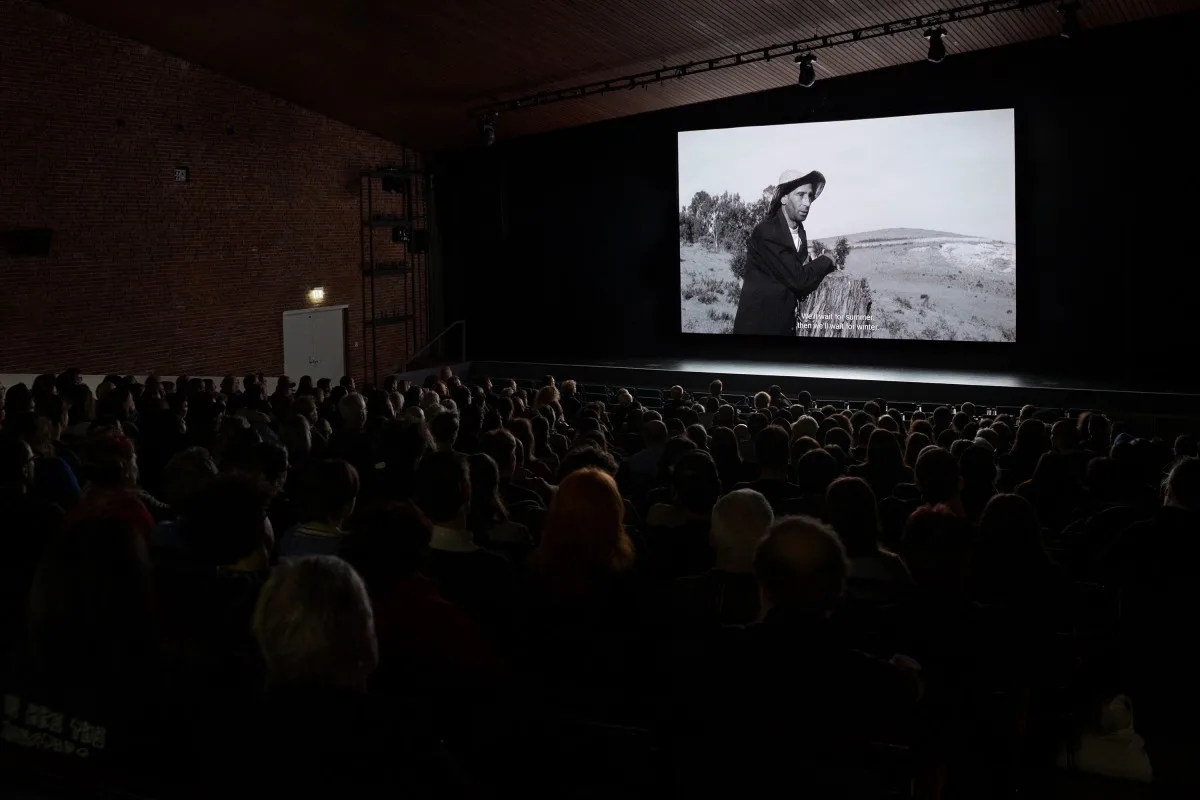
Rabat – The restored version of “Mirage,” the 1979 film by Moroccan director Ahmed Bouanani, had its world premiere Wednesday evening in Berlin.
The screening took place at the Academy of Arts as part of the official “Berlinale Classics” section of the Berlin International Film Festival.
Behind the film is Ahmed Bouanani, a key figure in Moroccan artistic cinema.
Released in 1979, “Mirage” remains his only feature film, yet it has secured a singular place in the history of national cinema.

The story follows a modest man who leaves his village to try his luck in the city, after accidentally finding a large sum of money.
The narrative is often read as an allegory of the social transformations Morocco was experiencing at the time.
Its selection in “Berlinale Classics” carries particular meaning. The section is dedicated to major works of world cinema presented in restored versions, bringing historical films back to the big screen for new audiences.
The restoration was initiated by Narjis Nejjar, Director of the Moroccan Cinematheque.

According to her, preserving and restoring films is one of the institution’s core missions, ensuring that Morocco’s cinematic heritage is passed on to future generations.
The screening was attended by a distinguished group of Moroccan and international film professionals, including Reda Benjelloun, director of the Moroccan Cinematographic Center (CCM), and Heleen Gerritsen, director of the German Cinematheque.
Also present were Touda Bouanani, artist and daughter of the late Ahmed Bouanani, and Narjis Nejjar, director of the Moroccan Cinematheque and the driving force behind the film’s restoration.
The director’s daughter, who is also the founder of the Archives Bouanani Foundation, expressed pride in seeing her father’s work honored on such a stage.
Alongside this premiere, Morocco has been designated “Country in Focus” at the European Film Market during Berlinale 2026.
The country is the first African country to receive this distinction.
For Morocco, this moment is important. It goes beyond showing a restored classic. It underlines the country’s rising role as a protector and preserver of its film heritage and a venue for international film production.