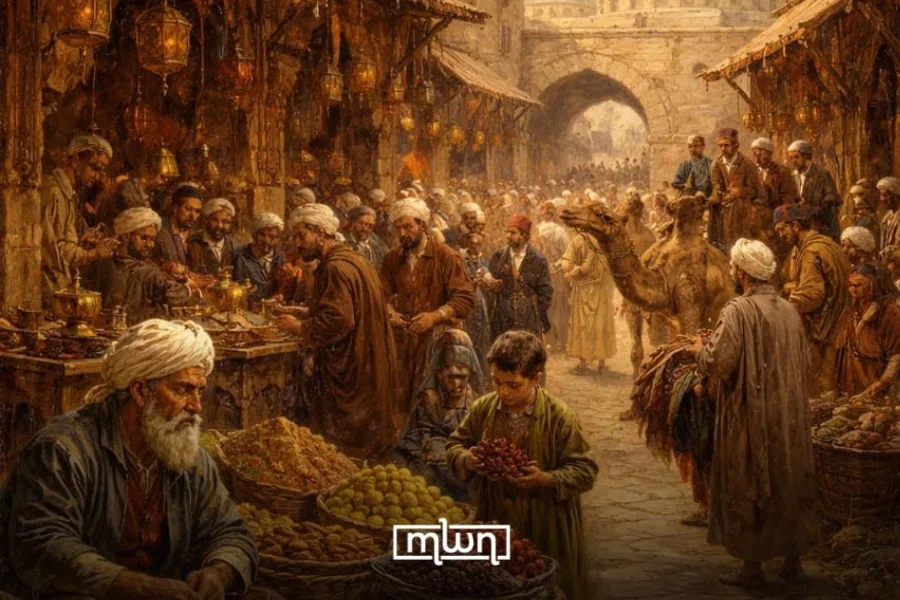
Fez — Tobacco entered Morocco in 1598, introduced through trans-Saharan and European trade routes. The new habit spread quickly, especially in big commercial centers like Fez, home to Al-Qarawiyyin University. Public curiosity soon turned into widespread consumption.
According to “Islamic Ruling on Smoking” by Mohamed Haytham Khayat, by 1602, the question had reached the highest levels of authority. Sultan Ahmad al-Mansur traveled to Fez and asked the city’s leading jurists for a religious ruling. At the center of the deliberations were Muhammad ibn Qassim al-Qassar, the Mufti of the Kingdom, and Sidi Abdullah ibn Hassoon, Wali of Sala, along with other prominent scholars.
The core issue was not merely tobacco’s novelty, but its status during Ramadan. Scholars examined whether inhaling smoke during fasting hours invalidated the fast. Their conclusion was firm: smoking during the day in Ramadan broke the fast because the smoke deliberately entered the body through the throat.
The ruling went further. Tobacco itself was declared forbidden, and all available stocks in Morocco were ordered destroyed.
Public burning in Fez
Following the fatwa, Sultan Ahmad al-Mansur ordered the confiscation of tobacco throughout the kingdom. In Fez, large quantities were gathered in the main square and publicly burned. Chroniclers later described the event as the destruction of vast wealth, with imported supplies reduced to ash before crowds of onlookers.
The campaign aimed to protect Ramadan observance and uphold Islamic law. But compliance proved short-lived.
Nineteen scholars unite
After tobacco resurfaced in markets — particularly amid the instability following Ahmad al-Mansur’s death — scholars in Fez renewed their opposition. Ali ibn Ahmad al-Shami addressed a forceful appeal to Abu al-Qassim al-Ghassani, Chief Justice of Fez, and Ahmad al-Muqri, the Mufti, condemning tobacco as a corrupting and foul substance.
This appeal led to a second formal campaign. The Chief Justice, Sheikh Ahmad al-Muqri, and seventeen other scholars issued unanimous rulings prohibiting tobacco. A total of nineteen verdicts were compiled into a volume titled “Rulings on Smoking by the Scholars of Fez.”
The Chief Justice issued binding confirmation of the rulings and declared tobacco use absolutely forbidden, placing it in the same category as intoxicants and harmful substances.
Backlash and violence
Despite the unified scholarly front, resistance intensified. Tobacco remained popular. Public anger turned against the scholars themselves.
Within a short time, the group of jurists who had led the prohibition was dispersed. Sheikh Ahmad al-Muqri fled to the eastern provinces seeking refuge. The Chief Justice of Fez was killed by a mob.
The events of 1602 marked one of the earliest recorded Islamic rulings against smoking, centered in Fez.