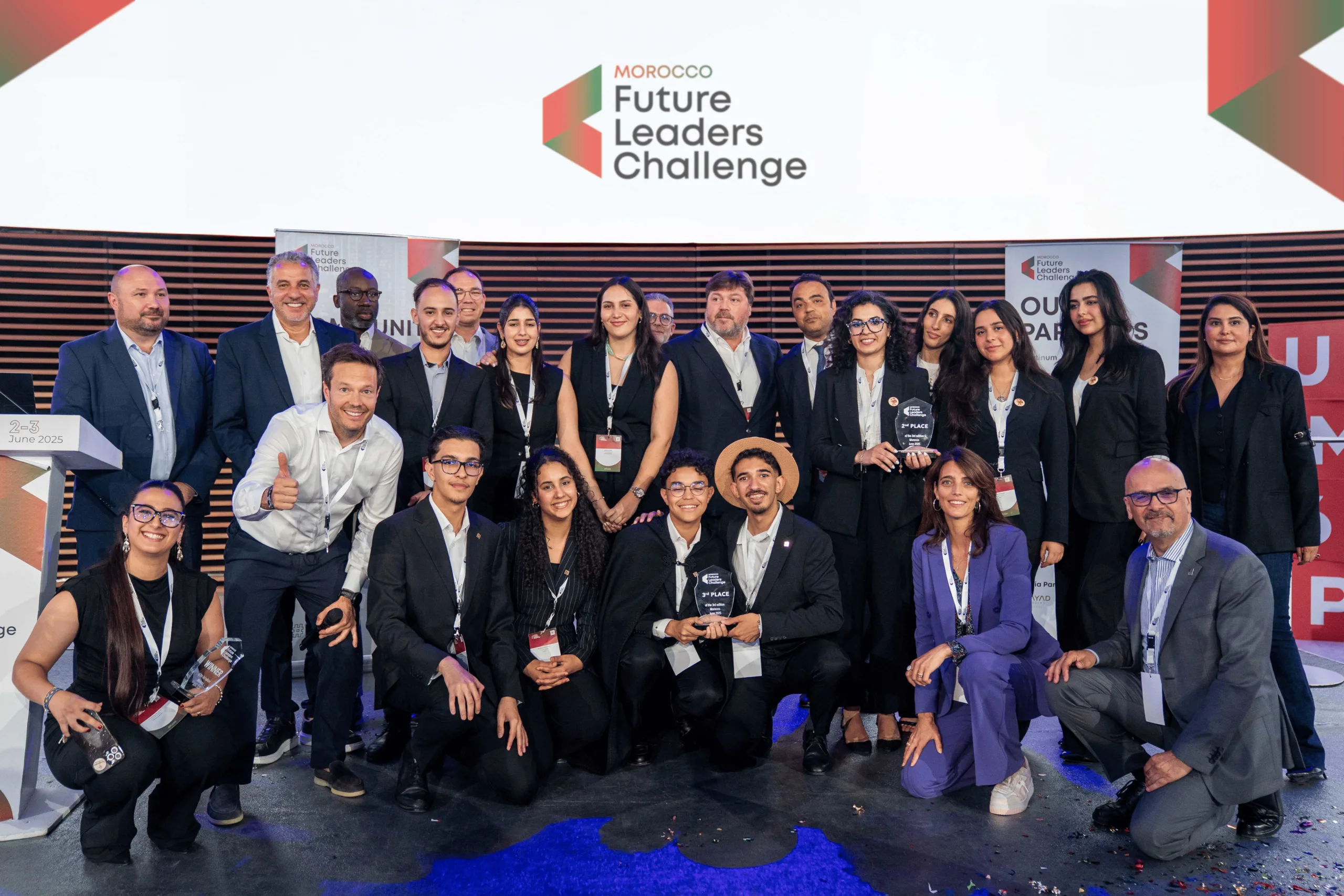
Rabat – The Future Leaders Challenge Morocco 2026 is scheduled to take place on March 30-31, with the two-day event aiming to gather at Rabat’s View Hotel students, school directors, industry executives, investors, and government officials for what promises to be a landmark moment for the sector.
The concept is deceptively simple, yet the ambition behind it is anything but.
Students from over twelve of Morocco’s leading hospitality and tourism schools are given a real, pressing industry challenge, defined by a board of senior sector leaders, and twelve weeks to develop their response.
They then present their recommendations live, in front of the executives and decision-makers who will actually have to reckon with those same challenges in the years ahead.
This makes the event a high-stakes bridge between the classroom and the boardroom.
Accessible by design
One aspect of the event that deserves particular attention is its accessibility model. Participating schools pay nothing.
Accommodation, food and beverage, and full conference access are covered entirely by the organizers.
In a landscape where high-profile industry events often price out smaller or under-resourced institutions, this is a meaningful commitment, and a signal that the initiative is genuinely trying to build a broad coalition rather than an exclusive one.
The numbers back up the platform’s growing reach. The Future Leaders Challenge has now reached over 80,000 stakeholders and generated more than $400,000 (MAD 4,500,000) in public relations value.
Digital engagement has grown substantially with each edition. For an initiative that operates without the marketing budgets of a major trade fair or government-sponsored conference, those figures reflect something real: a model that the industry has decided is worth paying attention to.
The people behind FLC
The Future Leaders Challenge was founded by Hubert Ummels, who also heads the GameChangers Group and the wider Future Leaders Platform.
His approach has always centered on one core belief: that the hospitality industry’s talent problem cannot be solved by schools alone, or by companies alone, or by government alone.
It requires all three working in deliberate alignment, and this event is built to force exactly that kind of conversation.
Ummels isn’t operating in isolation. Anchoring the Morocco 2026 edition is a Strategic Board that reads like a who’s who of the country’s tourism and hospitality establishment.
Raouf Ben Chedli serves as Area General Manager for Hilton Morocco and Tunisia.
Souleymane Khol holds the role of Vice President Operations for Premium, Midscale and Economy at Accor Morocco.
Hamid Sidine is Managing Director of Morocco’s Radisson Hotel Group. Karim Sentici leads SHB as Managing Director.
Laila Bensouda heads Madaëf Sports and Events as General Manager.
Then there’s the institutional weight. Hamid Bentahar is President of the National Tourism Confederation. Imad Barrakad chairs SMIT, the Moroccan Agency for Tourism Development, as its CEO.
Jaafar Mrhardy sits on the TMSA Board. And Abbas Azzouzi runs Experienciah Morocco.
Together, this group doesn’t just lend the event credibility; they define the strategic challenge the students are asked to solve, ensuring that what happens in the room is directly relevant to what’s happening in the industry.
A national academic mobilization
What makes the Morocco edition particularly notable is the breadth of academic participation.
The event draws from institutions spread across the country, from Casablanca to Rabat, from Marrakech to Tangier to Essaouira.
Among the participating schools are the Université Internationale de Casablanca, VATEL, Mohammed V University Rabat, Cadi Ayyad University, and the International Institute of Tourism of Tangier.
The event is partly powered by the School Directors Alliance, a network launched in 2023 that has since grown to more than 170 institutions across the world, well beyond the MEA region.
Its purpose is to harmonize academic standards, close the gap between what schools teach and what the industry actually needs, and give institutions the collective leverage to shape policy and practice at a national and regional level.
The Alliance is, in many ways, the structural backbone of what the Future Leaders Challenge is trying to build over the long term.
Read Also: Inside Morocco’s Luxury Hospitality with Ikram Ait Si Ahmad