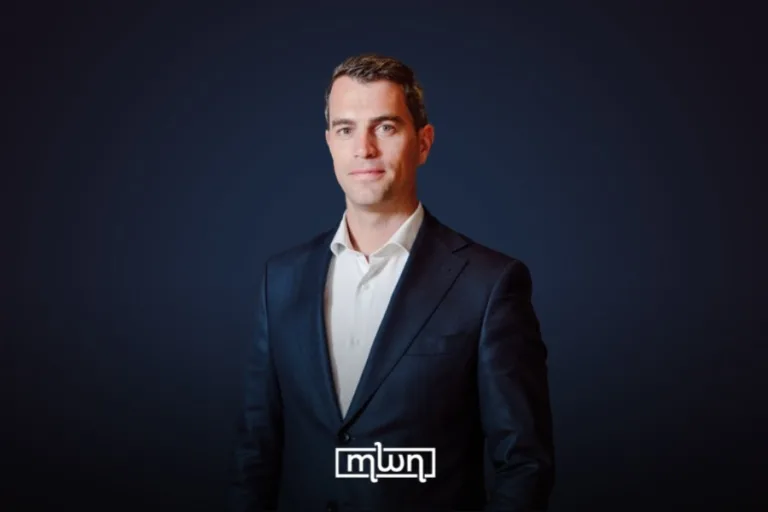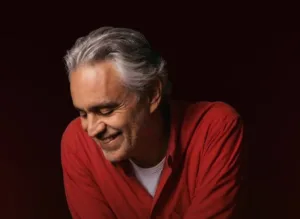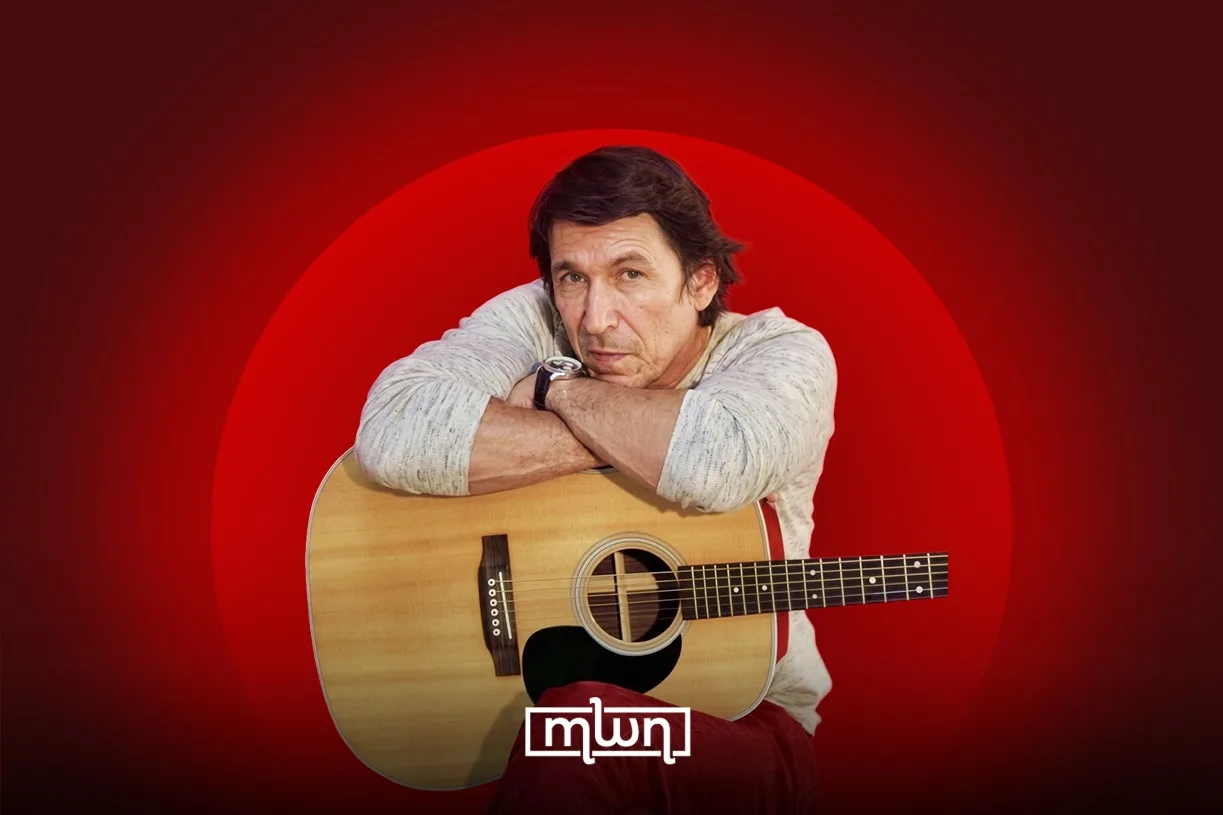
Rabat – Franco-Moroccan singer-songwriter Malek Belarbi, known simply as Malek, has followed a deeply personal path in music.
During this interview, he reflected openly on the stages that have shaped his decades-long artistic path, offering insight into the moments, the melodies, and the choices that have defined his career.
“There are always several ‘turning points’ in a musical trajectory,” he told MWN Lifestyle.
“In reality, these turning points are nothing more than artistic stages. An artist searches. Constantly. He closes doors and opens others. That is his quest.”
For Malek, two moments stand out, even though they occurred long before the wider public knew his name.
The first took place on December 8, 1980, the day John Lennon was assassinated.
The shock of that event triggered a profound realization: projects must always be brought into the present.
He left his university studies, which he had been pursuing alongside music, and committed himself fully to his art.
The second turning point came two years later in a small restaurant on Paris’s Right Bank.
While performing there, he met a record producer who offered to record the song Une Mère, which he had just performed. “For a young singer, that is a major step,” he recalls simply.
The song that defined him
Malek first reached a wider audience with the song “La Mal Vie.” It became his first major success and remains a landmark in his career. Interestingly, he has recently reintroduced it into his repertoire.
“Imagine this: I’ve just reintegrated it into my repertoire! Even though it is the song that made me known, it is, by its style, an exception, especially musically compared to what I wrote later,” he emphasized.
“It did not necessarily correspond to what I wanted to continue writing. It is an ‘urgent’ song, a cry that was probably inside me forever and had to come out. It is a phenomenon that goes a little beyond us.”
Yet success brings expectations, he noted. When an artist creates a hit, audiences often anticipate similar work afterward, which can be impossible to reproduce. He performed the song for several years before stepping back.
“We even quarreled a little! Recently, we found each other again, and I understood how deeply it is part of me, irreversibly.”
Growing up between cultures
Malek’s childhood was shaped by music, family, and cultural diversity. Born to a Moroccan father and a French mother, he was exposed to a vast array of musical influences from an early age.
“My parents loved songs and, from a very young age, introduced me to things as different as Charles Aznavour, Oum Kalthoum, Fairuz, The Platters, Jacques Brel, Fats Domino, Georges Brassens, Abdelwahab Doukkali, and many others,” he recalled.
“This early exposure initiated me to cultural eclecticism, which would remain my lifelong battle.”
Even now, Malek finds inspiration in musicians who can stop him in his tracks.
“Neil Young, Bob Dylan, Fairuz, Chico Buarque… at any time, anywhere, with a voice or style that leaves me standing there stunned, without even understanding why.”
Music calls before words
Although he is celebrated for his poetic lyrics, Malek often begins with the music itself.
“To be completely honest, it is often the opposite process: it is usually the beginning of a piece of music, a melody, or an atmosphere that calls the words. I almost always need, at the beginning, a musical argument to trigger a text.”
He began writing fragments of poetry as a teenager but quickly realized that something was missing.
“I was not entirely satisfied. I felt that something was lacking. I understood that it was music. My texts had to become songs.”
The guitar became his tool for bridging words and melody. Fascinated by its sound and beauty, he bought his first guitar at sixteen and practiced relentlessly.
“I worked a lot until I could produce sketches of songs. They were still far from full songs, but my joy was such that I knew I had found my means of expression.”
Learning and collaboration
Malek never took formal guitar lessons, but his dedication drove his growth.
“I had a very precise goal: composition. I knew exactly where I wanted to go. And I was lucky to meet the right people. Once at university, I met two excellent guitarists who gave me practically all the basics I needed. Together, we wrote my very first ‘real’ songs. All of this takes time and develops throughout life.”
Advice for young artists
For aspiring musicians, Malek emphasizes the importance of work and self-reflection.
“Talent is only a starting point,” he mentioned.
“Without work, it is worth little. Georges Brassens said that without work, talent is just a ‘bad habit.’ You also have to reflect on your objectives, your goals. Finally, you must go deep within yourself to find what you are viscerally: ‘Become what you are!’ I have repeated this often.”
The Moroccan music landscape
Over decades, Malek has observed the evolution of Moroccan music with admiration.
“I have regularly encountered immense creativity, talent, and generosity,” he highlighted.
“We have an extraordinary capacity to defend our roots and identity while mixing with other cultures to invent new paths. Moroccan music is extremely rich and diverse. I have absolutely no worry about creativity.”
Yet he voices a concern that is uniquely modern: artificial intelligence.
“I am very worried about AI entering our field. More and more, wherever we are, it becomes difficult to listen to a song without wondering if a human wrote or performed it,” he expressed.
“Many impostors and false creators will not hesitate to use AI to create illusions and confuse the public. We must be vigilant, and increasingly able to separate the real from the fake, the authentic from the scam.”
Despite these challenges, Malek believes live performance will safeguard authenticity.
“This confusion will make live music, the music played on stage, the ultimate reference,” he said.
“There, people will know you cannot cheat. Real humans play, take enormous pleasure, and share it with the audience. It is on stage that authentic music plays its future. And it will prevail.”
Life beyond the stage
Malek finds balance in solitude and nature. Long walks with his dog, fishing, chopping wood, and simple contemplation ground him.
As a child, he dreamed of a career connected to nature, and he continues to live in the countryside, far from cities and crowds.
Before performing, he isolates himself, letting go of pressure until all that remains is the joy of singing and playing.
“Every song through which you feel that particular vibratory emotion, that magical breath returned by the audience, is at that moment the most important song in the world.”
New projects and the return to stage
Recently, Malek released an EP in collaboration with his friend Nabil Khalidi titled Zouje, featuring guitar, oud, and voice, available on all music platforms.
He is also releasing an album paying tribute to twelve important Francophone texts, spoken over original music by Michel Montoyat.
Regarding a “comeback,” Malek is clear: “In reality, I will never make a ‘comeback’ because I never really left. I stepped back during the last decade to live other important personal things and explore other places. I continued making music, though less intensely. Now I have started performing again, alone on stage, just me and my guitar. I want a ‘back to roots’ approach, performing songs as they were originally written. I take a lot of pleasure in it.”
He also looks forward to touring with Nabil Khalidi and exploring interpretation as much as composition.
“I do not project myself too far. I am already happy to perform again. If the pleasure of playing is still there, and if the audience responds, we will see what comes next.”
Malek sees every concert as a living, unpredictable encounter: “A concert is always something very special, unexpected, different, surprising. It is, after all, always a kind of love rendezvous.”