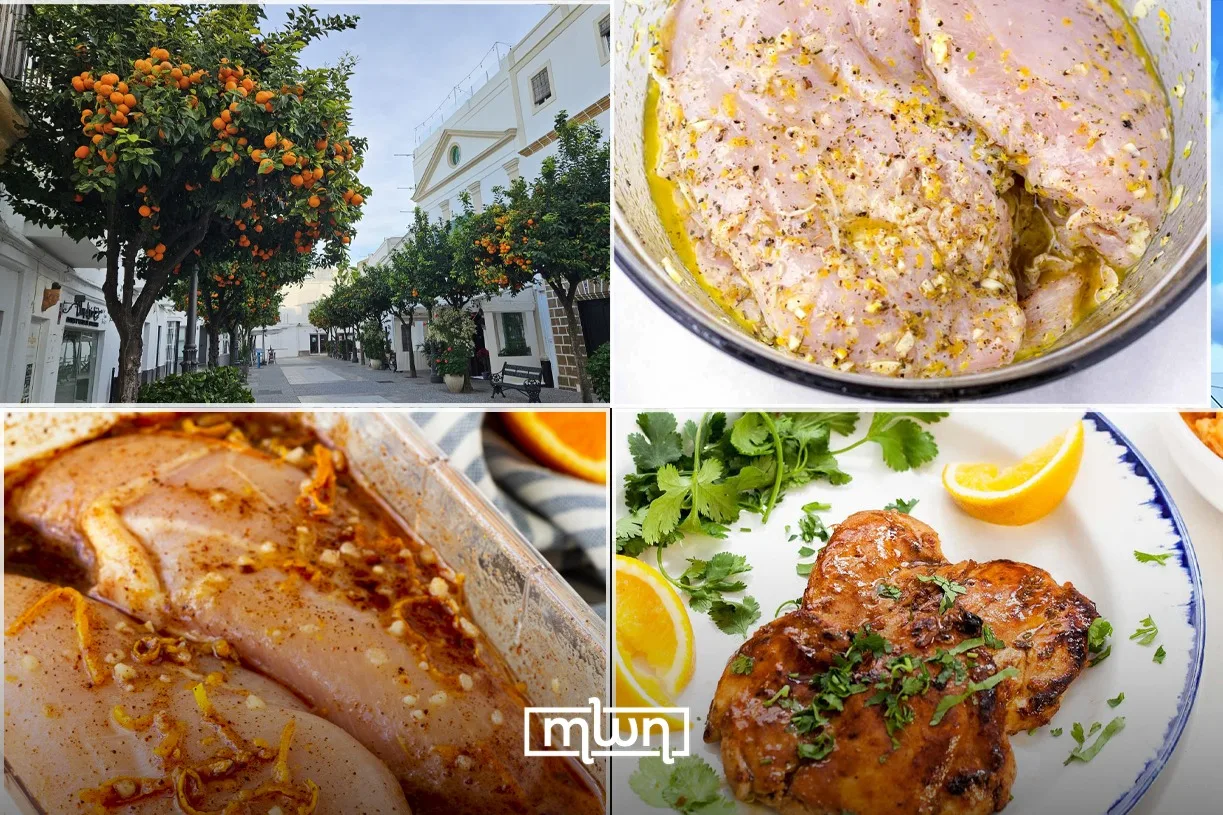
Fez — Bitter oranges are everywhere in Moroccan cities. They line boulevards, shade sidewalks, and brighten public squares with heavy orange fruit that many people ignore because it is too sour to eat fresh.
In many cities like Fez and Marrakech, the fruit falls to the ground, splits open, dries out, or rots under parked cars and along pavements. People pass by it daily, treating the trees as decoration rather than a possible source of flavor.
That neglect is understandable, but it is also a missed opportunity. Bitter oranges, also known as sour oranges, Seville oranges, or bigarades, have long been used in Caribbean, Latin American, Mediterranean, and Middle Eastern kitchens for marinades, sauces, marmalades, syrups, and fragrant condiments.
Their juice is sharper than sweet orange, but rounder and more aromatic than lemon.
That balance makes bitter orange especially useful for chicken, where acidity, bitterness, and perfume can transform a simple dish into something bright and memorable.
A fruit hiding in plain sight
Bitter oranges are not made for casual snacking. Their flesh is tart, acidic, and slightly harsh, which explains why many people leave them alone.
But cooking changes the story. In a marinade, that same intensity becomes an advantage. The juice cuts through the richness of chicken thighs, drumsticks, wings, or a whole roasted bird, while the peel and aroma add a floral citrus note.
This is why sour orange juice appears in marinades across several food traditions. In Caribbean and Latin American cooking, it is often paired with garlic, oregano, cumin, and oil. Around the Mediterranean and the Middle East, similar citrus notes work naturally with olive oil, herbs, spices, and grilled meats.
Morocco has the fruit. The method is already proven elsewhere.
How to use bitter orange in chicken marinade
A simple bitter orange chicken marinade can begin with fresh juice, olive oil, crushed garlic, salt, black pepper, cumin, paprika, and a little ginger. Fresh coriander or parsley can add lift, while a spoon of honey can soften the bitterness without making the dish sweet.
The chicken should be coated well and left in the refrigerator for several hours. Bone-in pieces can handle an overnight marinade, especially when the mix includes oil and spices.
Before roasting or grilling, the chicken should be lifted from the marinade and patted lightly dry. This helps the skin brown instead of steaming. Any leftover marinade that touched raw chicken should be boiled thoroughly before it is used as a sauce.
A Moroccan flavor hiding in waste
For a more Moroccan version, bitter orange juice can be mixed with preserved lemon, turmeric, cumin, paprika, garlic, olive oil, onions, and olives. Roasted potatoes can go into the same tray, soaking up the citrus-spice juices as the chicken cooks.
The result is not “orange chicken” in the sweet, sticky sense. It is sharper, earthier, and more aromatic. The bitterness keeps the dish from feeling heavy, while the citrus gives it freshness.