Zagora – Eid Al Adha is more than a single day of celebration; it is a ritual that lingers for days, sometimes weeks, and even longer. Once the sheep is sacrificed, Moroccan cuisine quietly takes over the rhythm of the household, turning the table into a continuous flow of rich, comforting dishes that define the occasion.
One moment, life is ordinary. The next, Eid arrives and everything shifts into a slow, joyful cycle of lamb-based meals.
Breakfast, lunch, dinner, meat finds its way into every moment, yet never in the same form twice. Each dish tells its own story, shaped by tradition, memory, and shared family moments.
This is just a glimpse of that world, a small selection from a table that stretches far beyond it.
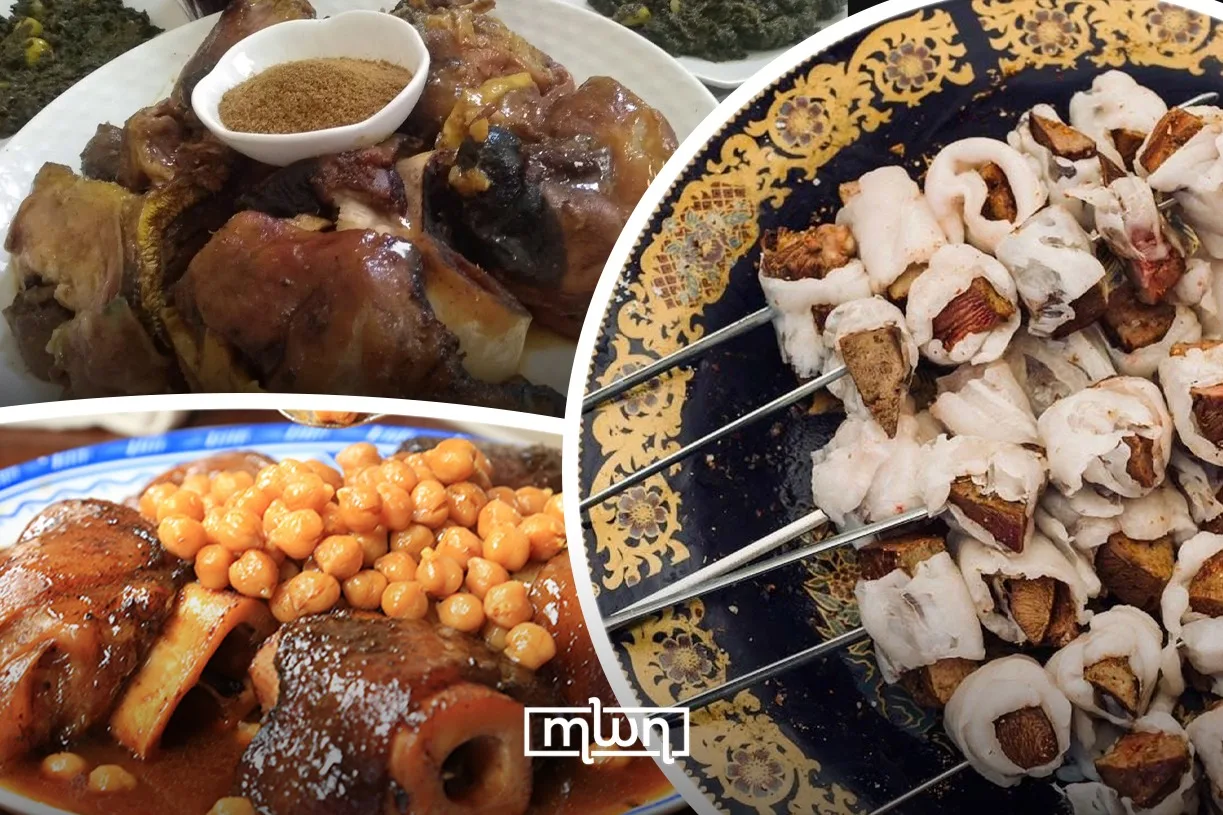
Boulfaf (Grilled lamb liver wrapped in caul fat)
If there is a true opening act of Eid, it is Boulfaf. Skewers of liver and heart are grilled fresh and often enjoyed first thing in the morning, still warm, simple, and full of character.
It’s made from lamb liver, cut into small cubes, seasoned, then wrapped in thin caul fat that melts during grilling and gives the skewers their signature crispy, rich texture.
Boulfaf is less about quantity and more about that first unforgettable taste that signals the start of the celebration.
Ker3in (Lamb trotters)
Yes, even the lamb’s legs come with their own special preparations. In Morocco, nothing is wasted, and every part is transformed into something rich, flavorful, and worth savoring.
Slow-cooked until tender, the trotters take on deep spices and a soft, melt-in-the-mouth texture, often paired with chickpeas that soak up all the flavor of the sauce.
More than just a dish, it is a slow-cooked celebration of patience and tradition. Ker3in is usually enjoyed after the early rush of Eid preparations, when the house finally settles into its festive rhythm.
It’s also part of Morocco’s beloved sweet-savory tradition, where raisins, honey, and cinnamon can be added to bring a subtle warmth and gentle sweetness to the dish.
Tqelya (Moroccan Tripe stew)
This one is among the favorites on Eid. Tqelya is one of those deeply rooted Eid dishes that brings together different parts of the lamb in a single, richly spiced stew.
Slow-cooked with aromatic herbs and warm spices, it transforms tripe and offal into a tender, flavorful dish that carries both depth and comfort.
What makes it stand out is its strong aromatic base, turning what is often considered humble cuts into a dish that feels layered, comforting, and deeply rooted in Moroccan home cooking.
L7em Ras (Steamed head meat)
And once again, that’s another recipe that reflects the Moroccan tradition of giving value to every part of the animal, turning what might be overlooked elsewhere into something carefully prepared and deeply appreciated.
The lamb’s head meat is gently steamed in a simple preparation that allows its natural richness to come through, resulting in a tender, deeply flavorful dish.
It is typically served with salt and cumin on the table, allowing each person to adjust the flavor to their own taste.
Stuffed ti7al (Spleen)
This dish is prepared by carefully filling the spleen with a fragrant mixture of herbs and spices, then gently sealing it before cooking. It is slowly simmered in a rich onion-based sauce, where it absorbs layers of flavor as it cooks.
The dish finishes into a deep, aromatic preparation, with a thickened sauce that is poured over the stuffed spleen just before serving, bringing everything together in a warm, richly spiced plate.
So, Eid Mubarak… and Bsaha!