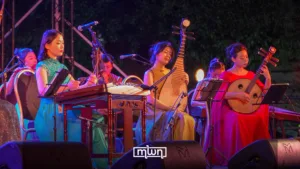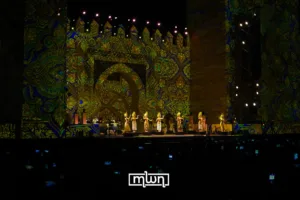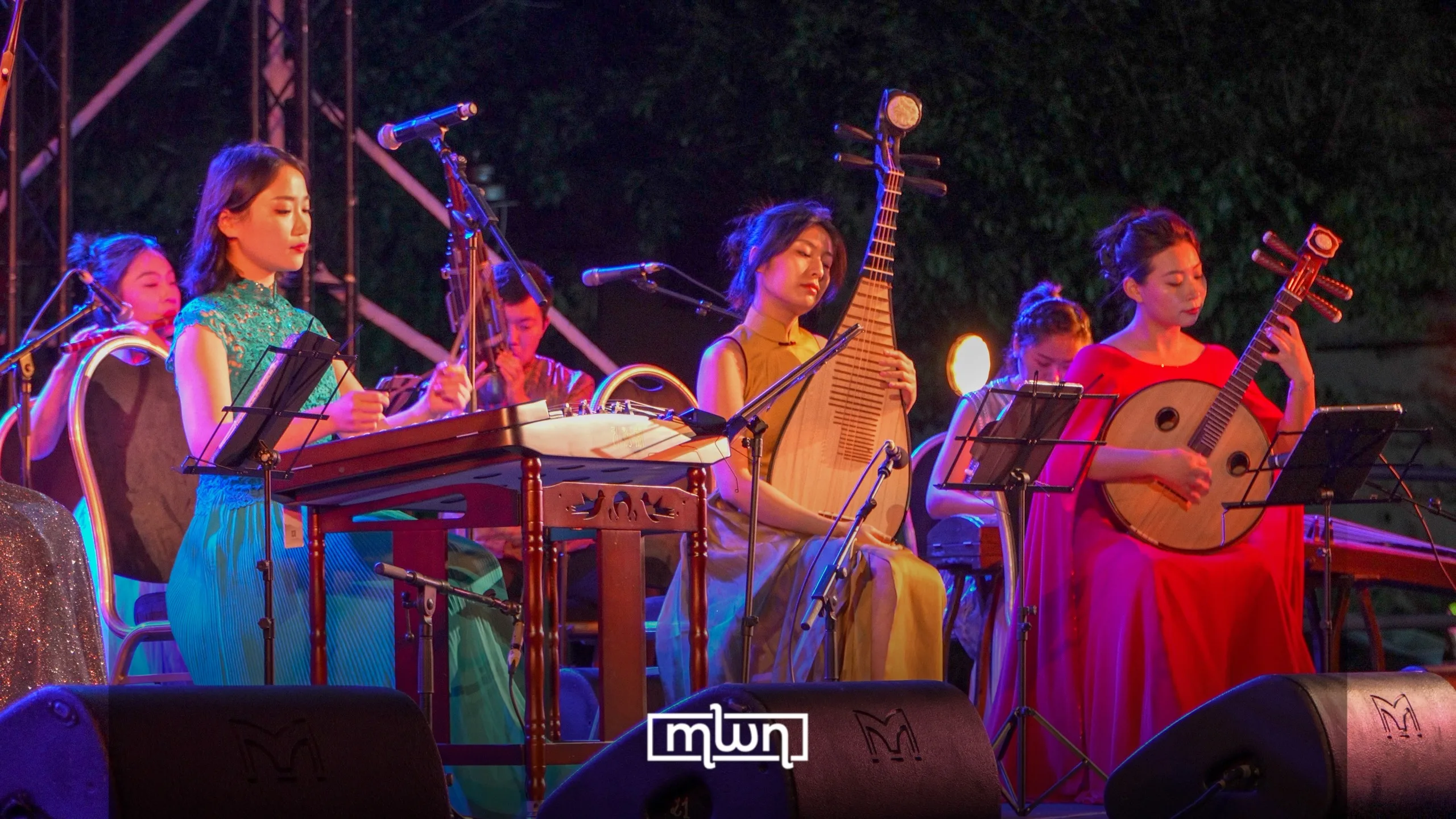
Fez — Fez Festival of World Sacred Music moved into a different emotional register at Jnan Sbil, where Chinese traditional chamber music brought calm, precision, and Eastern elegance into the green heart of the city.
After the monumental opening at Bab Makina, the Jnan Sbil performance felt more intimate.
The scale changed, but the festival’s spirit remained the same: a meeting between heritage, spirituality, and artistic transmission.
The evening placed Chinese musical tradition inside a Moroccan garden shaped by history, water, trees, and quiet movement.

The performance featured the Traditional Chamber Music Ensemble of the China Conservatory of Music, one of the 2026 edition’s key invitations to Asian musical heritage.
The atmosphere carried a different kind of sacredness. There was no need for overwhelming volume or dramatic staging.

The garden itself held the performance, allowing the music to settle into the night air. The audience listened in a softer rhythm, following delicate instrumental lines that evoked distance, memory, and interior stillness.
Jnan Sbil as a living stage
Jnan Sbil gave the performance its visual identity. The venue did not simply host the concert; it shaped the way the music was received.
The garden’s paths, trees, water features, and open sky created a natural chamber around the musicians.

Under the night lighting, the space felt suspended between the public garden and the ceremonial setting.
The audience moved into a slower mood, less formal than a palace courtyard, but still deeply connected to Fez’s sense of place.
That made the Chinese performance feel especially fitting. The music entered a landscape where nature already plays a central role, allowing sound, silence, and space to work together. Each pause carried weight.

Each phrase seemed to travel through the garden rather than remain fixed on the stage.
Jnan Sbil also carries its own historical depth. The gardens were created in the 19th century under Sultan Moulay Hassan I and originally formed part of a royal landscape between Fes el-Jdid and Fes el-Bali.
They later opened fully to the public in 1917, before undergoing restoration between 2006 and 2010 and reopening in 2011.
Today, Jnan Sbil remains one of the rare green spaces in Fez’s old urban fabric. Its position between the city’s historic quarters makes it more than a scenic venue. It is a threshold space, linking royal memory, public life, and the medina’s older rhythms.
That history gave the evening a deeper resonance. Chinese chamber music did not arrive in a neutral location. It entered a garden already built on passage, water, memory, and restoration.