Fez — Morocco is easy to picture. Terracotta walls, cedar, mountains, tiled courtyards, orange trees, souks, and Atlantic air have all become familiar parts of its visual language.
But what does the country smell like?
Marrakech fragrance house Côté Bougie has spent more than two decades trying to answer that question through candles and home fragrances.
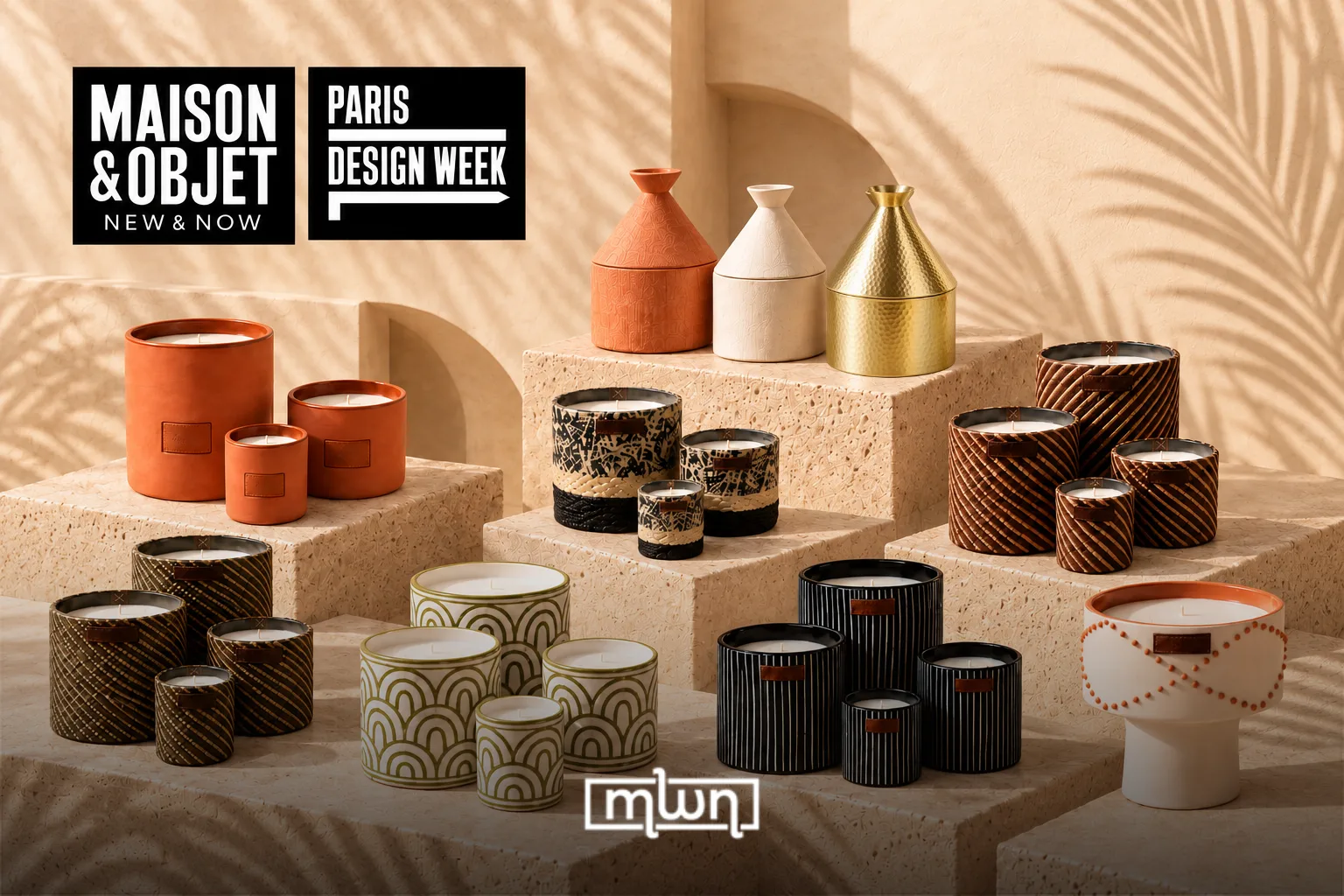
The Moroccan brand is currently exhibiting at Maison&Objet in Paris from September 10 to 14, where the fair features collections including “Atlas,” “Nomad Terra,” “Tajine,” “Magador,” and “40000 Marrakech.”
Côté Bougie describes its work as an “olfactory journey” through Morocco, combining fragrance with ceramics, weaving, and other forms of Moroccan craftsmanship.
From Marrakech to Grasse
The company began in 2003, when Saïda Kadiri started creating original candle designs in Marrakech.
Her son, Omar Benabberrazik, joined the business two years later and helped develop the concept further.
The company’s own history traces its development from a small family project to its first international presentation at Maison&Objet in Paris in 2014.
Production remains closely linked to Marrakech, while the fragrances are developed with perfume specialists in Grasse, France.
That creates an unusual combination.
The scent may be formulated in one of Europe’s historic perfume centers, but the story it is supposed to evoke remains Moroccan.
One “Atlas” candle, for example, combines orange and cardamom with cinnamon, clove, tonka bean, and vanilla. The handmade ceramic vessel uses painted arches as a visual reference to the Atlas Mountains.
Other collections draw from Moroccan architecture and materials.
In March, the brand introduced “BAB,” a collaboration with designer and architect Fanny Lopez inspired by the monumental doors of Marrakech.
When fragrance becomes geography
Côté Bougie is part of a broader shift in how Moroccan design travels internationally.
Instead of exporting recognizable motifs alone, brands are increasingly translating place through touch, material, atmosphere, and scent.
Côté Bougie’s story is particularly suited to that approach because smell is deeply tied to memory.
Orange blossom can recall a courtyard. Cedar can evoke carved wood. Spices can suggest a souk without reproducing one visually.
The company has also worked with Moroccan artisans on ceramic and woven candle vessels, including a women’s weaving cooperative that now involves more than 30 artisans.
At Maison&Objet, those objects enter an international design market crowded with brands trying to sell atmosphere as much as furniture.
Côté Bougie’s advantage is that its atmosphere already has a place attached to it.
Its candles are not simply asking buyers to choose a fragrance.
They are attempting something more ambitious: reducing parts of Morocco to something invisible enough to fill a room.