Fez — From longtime medina favorites to recently reimagined interiors, Marrakech’s riads are once again drawing international attention.
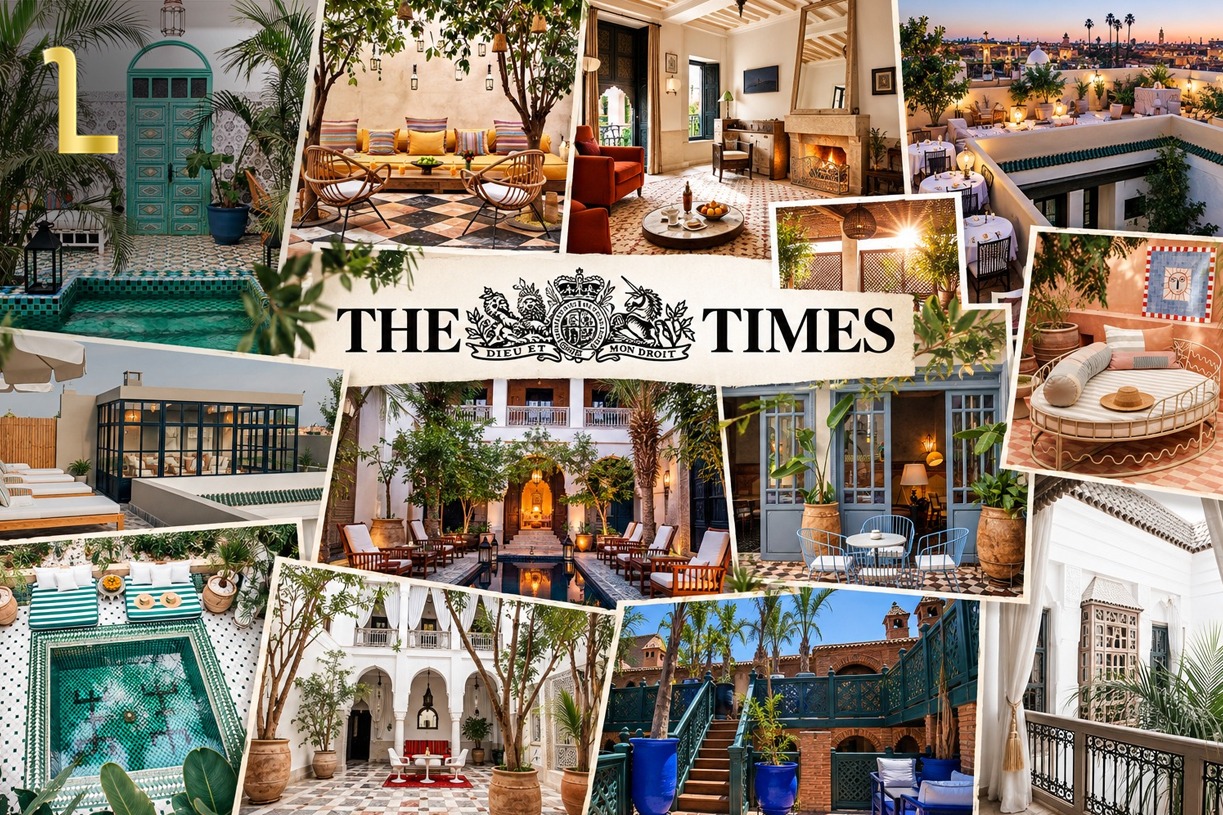
The Times published a September 29 guide selecting 16 of the city’s standout riads, presenting a mix of established addresses, newer properties, and renovated spaces across the medina.
The British newspaper’s list includes Riad Botanica, El Fenn, Riad El Aaiun, Rosemary, Riad Yasmine, Riad No. 37, Riad Alena, Le Farnatchi, Riad Tizwa, Riad Elegancia, Riyad el Cadi, Riad Up, Riad Louhou, Riad Star, Riad les Yeux Bleus, and Riad L’Orangeraie.
𝗗𝗲𝘀𝗶𝗴𝗻, 𝘄𝗲𝗹𝗹𝗻𝗲𝘀𝘀, 𝗮𝗿𝘁, 𝗮𝗻𝗱 𝗮 𝗻𝗲𝘄 𝗿𝗶𝗮𝗱 𝗶𝗱𝗲𝗻𝘁𝗶𝘁𝘆
The selection shows how far the modern riad has moved beyond being simply a traditional house converted into accommodation.
The Times singles out El Fenn for atmosphere, Riad Louhou for value, Rosemary for design, Riad les Yeux Bleus for couples, Riad Yasmine for families, and Le Farnatchi for luxury.
Several properties use traditional Moroccan materials while pushing them in very different aesthetic directions.
Rosemary, created by designer Laurence Leenaert of Marrakech-based label LRNCE, turns the riad into a showcase for contemporary craftsmanship through stained glass, carved plaster, hand-painted tiles, cedar, terrazzo, and sculptural furniture.
At the other end of the spectrum, Riad No. 37 brings a more restrained Scandinavian sensibility to traditional Marrakchi architecture.
Riad les Yeux Bleus takes another approach entirely, using saturated color, graphic patterns, Marrakchi craftsmanship, and mid-century influences to create a more maximalist interpretation of the riad.
𝗧𝗵𝗲 𝗰𝗼𝘂𝗿𝘁𝘆𝗮𝗿𝗱 𝗿𝗲𝗺𝗮𝗶𝗻𝘀 𝗮𝘁 𝘁𝗵𝗲 𝗰𝗲𝗻𝘁𝗲𝗿
Despite those differences, the architecture that defines the riad remains central.
Traditional riads turn inward around courtyards, creating separation from the density and noise of the medina outside. The Times notes that more than 1,000 such properties have now been transformed into boutique accommodation in Marrakech.
Riad Botanica, which leads the newspaper’s numbered selection, combines zellige, an orange-tree-shaded courtyard pool, wellness programming, and locally made craftsmanship. Its own website describes the property as a place shaped by Art Deco influences, Moroccan artisanship, nature, and retreat.
Other addresses lean toward art collections, historic atmosphere, communal dining, rooftop culture, hammams, or highly personalized hosting.
The result is a hospitality category that continues to change without abandoning the architectural form that made it distinctive.