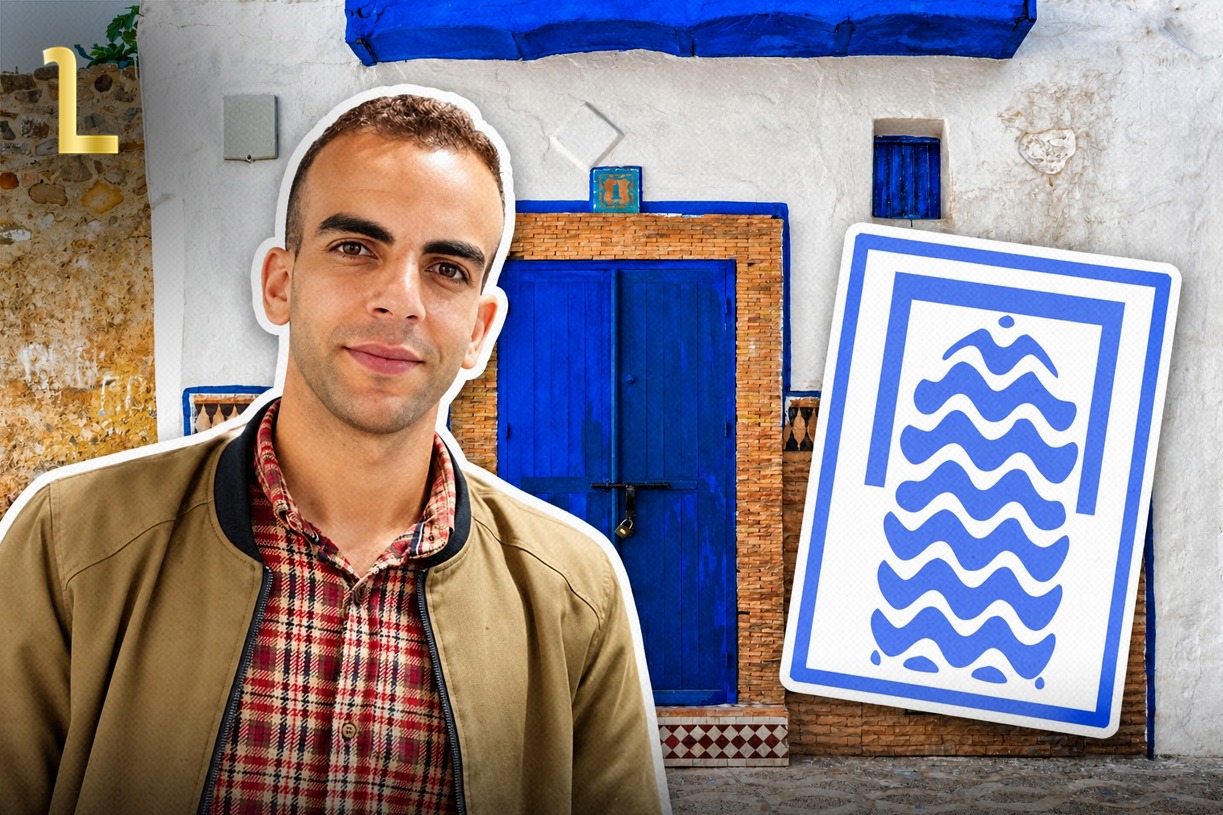
Fez — Moroccan poet Abu Bakr Al-Militi has been named a joint winner of the 2026 “Buland Al-Haidari Prize for Young Arab Poets,” sharing the distinction with Iraqi poet Zain al-Abidin al-Murshidi.
The Asilah Forum Foundation announced to APA News the winners after the jury considered nearly 16 young poetic experiences from across the Arab world.
The jury unanimously chose the two poets for what it described as distinctive bodies of work and different approaches to contemporary Arabic poetry.
The award ceremony is scheduled for October 17 during the autumn session of the 47th “Asilah International Cultural Moussem,” which runs from October 2 to 18. Morocco’s official portal independently lists the eighth edition of the poetry prize among this year’s cultural program.
Poetry built from everyday details
In its assessment of Al-Militi’s work, the jury focused on the coherence of his poetic project across two collections.
The panel highlighted his attention to the small details of his own world and the development of a style that increasingly favors concise language and shorter poetic phrases.
Rather than depending on elaborate vocabulary or heavy rhetorical ornament, Al-Militi’s poetry was recognized for transforming ordinary details into poetic material.
Al-Murshidi, meanwhile, was recognized for a poetic approach that brings different traditions of Arabic poetry into conversation with a contemporary sensibility.
The decision to split the prize between the Moroccan and Iraqi writers places two distinct poetic voices side by side rather than presenting a single model of emerging Arab poetry.
A prize tied to Asilah’s literary history
The award honors Iraqi poet Buland Al-Haidari, who maintained a close relationship with Asilah and its cultural Moussem.
The prize was formally established in the late 1990s, with its first edition held in 2000. Previous winners have included poets from Morocco and across the Arab world.
Its latest edition arrives as Asilah begins another autumn season combining literature, poetry, visual art, exhibitions, and intellectual encounters.
The recognition places the poet’s work within a prize whose history has repeatedly connected younger Moroccan writers with poets from across the wider Arab literary scene.
The October 17 ceremony will give that exchange a public stage in Asilah, a city where poetry has remained part of the Moussem’s cultural identity for decades.