

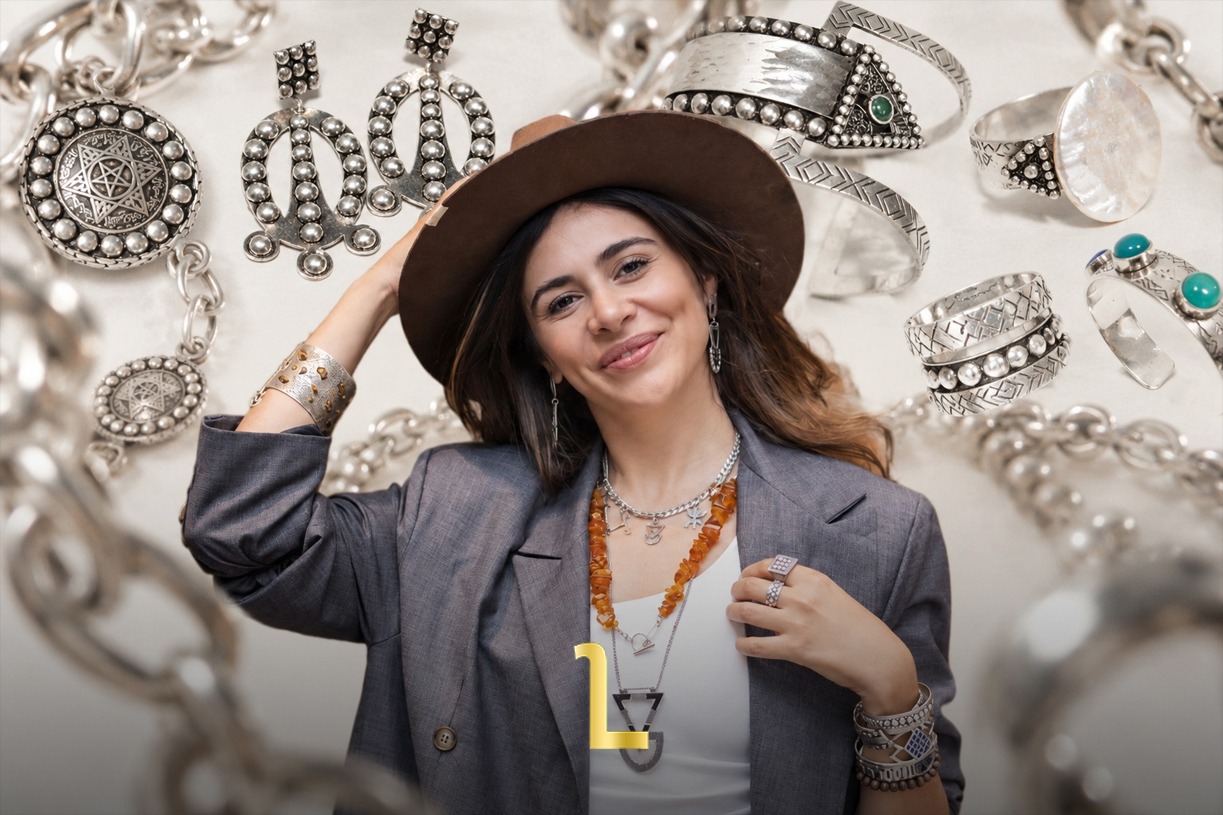
Fez — Samia Benbrahim still keeps the silver earrings an elderly woman gave her in Sa Pa. Their monetary value is modest. Their place in her life is considerably greater.
“They remind me that a jewel can turn a stranger into family,” the founder of Yelli Jewels told Lifestyle Magazine. “That moment shaped everything: it gave Yelli its name, and it is why I want every piece we make to carry a feeling, not just a design.”
The encounter offers a way into understanding the Moroccan jewelry brand. Behind its silver pieces and contemporary interpretations of Amazigh motifs is a designer interested in the relationships jewelry makes possible. A piece can connect its wearer to a place, preserve the memory of another person, or carry a craft into a different generation.
For Benbrahim, that understanding took shape through travel, then became a business rooted in Morocco.
A journey back to her own heritage
Before entering jewelry design, she studied marketing and worked in recruitment in Paris. A seven-month journey through Asia changed her direction. Reporting on her early career traces that trip to 2017, beginning in Sri Lanka and taking her through countries including India, Vietnam, and Myanmar, where she explored jewelry workshops, stone-cutting practices, and street sellers’ collections.
“I always knew I wanted to be an entrepreneur, and to build a bridge between Morocco and the rest of the world,” she said. “What I didn’t know was what that bridge would be made of.”
Traveling alone helped her become more comfortable with uncertainty and less concerned with following other people’s expectations. It also changed how she understood the heritage she had grown up around.
“Seeing how proudly other cultures wore their heritage also made me look at mine differently: what I had grown up with was not a souvenir of the past, but something worth sharing with the world.”
Yelli emerged in 2018. In an interview published that December, Benbrahim described a newly launched website and a business working with craftspeople in southern Morocco. She explained the name as meaning “my daughter” in an Algerian Amazigh variety, linking it to the passing of jewelry from mother to daughter.
Today, she describes the brand’s purpose in equally personal terms. “The brand is my bridge: born in Tiznit, made by Moroccan hands, and worn far beyond Morocco.”
Letting Amazigh symbols breathe again
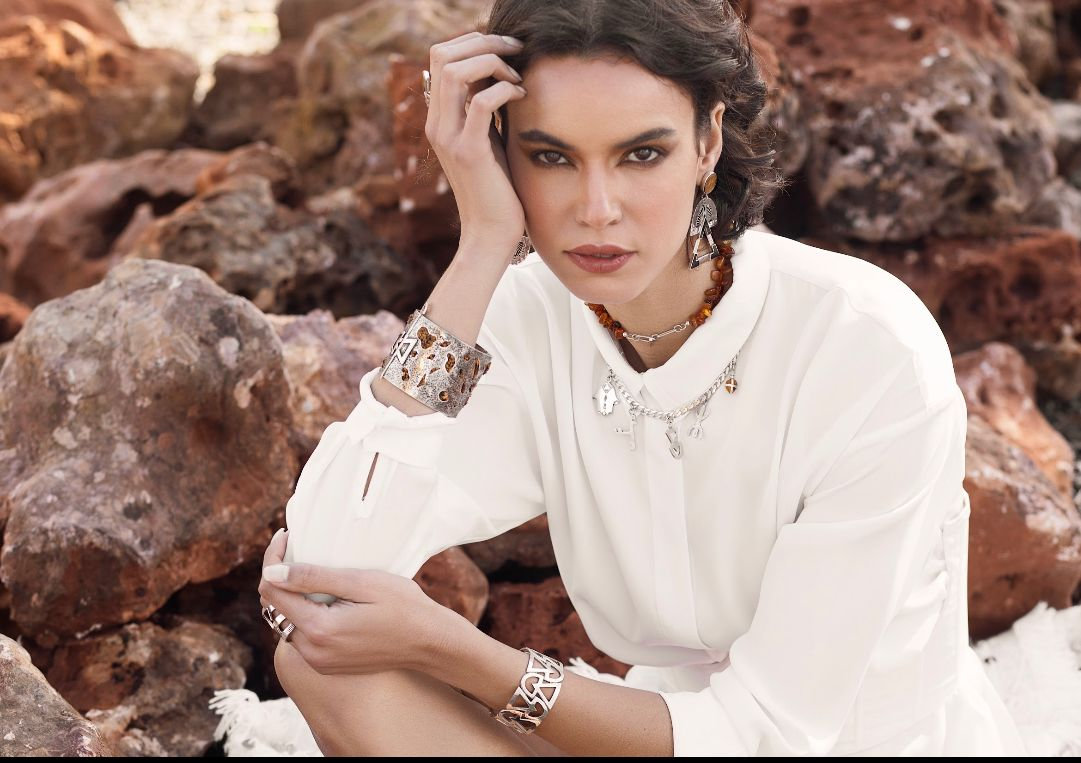
That connection to inheritance runs through Yelli’s identity, but Benbrahim wants the jewelry to remain open to individual interpretation. The brand describes its approach as Neo-Amazigh, adapting inherited references to contemporary forms and ways of dressing.
“For a long time, Amazigh jewellery was seen through an ethnographic lens: precious, guarded, almost frozen in time,” she explained. “Reimagining it in genderless, contemporary forms was never about breaking away from that heritage, but about letting it breathe again.”

The idea has practical expression in the designs. Coverage of Yelli’s U|LT|MA collection highlighted adjustable and reversible pieces, allowing wearers to change how they styled rings, necklaces, and bracelets. That flexibility gives the person wearing the jewelry a role in its expression.
“To me, freedom means removing the rigid rules of how and by whom a piece should be worn, so the symbol can speak to anyone.”
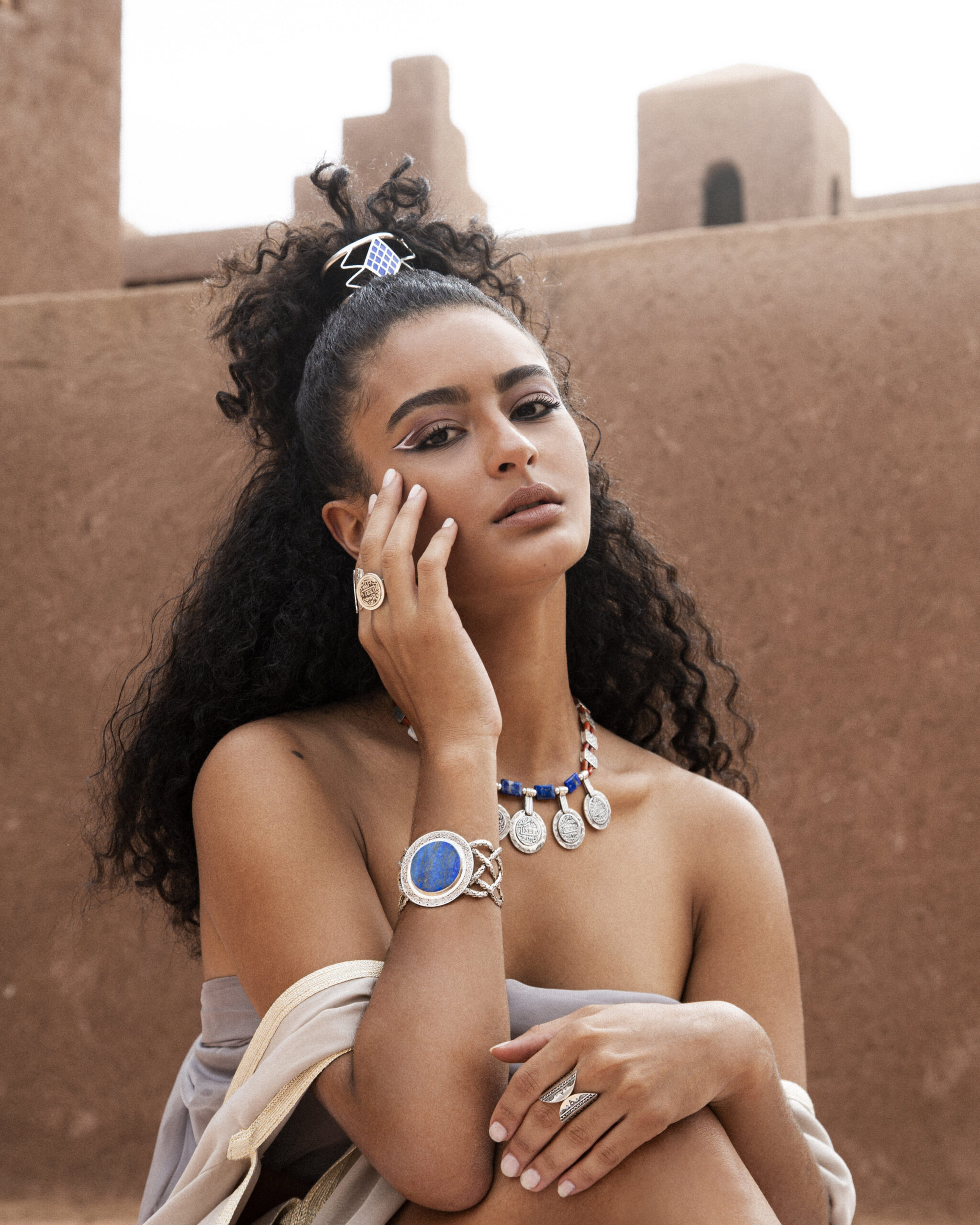
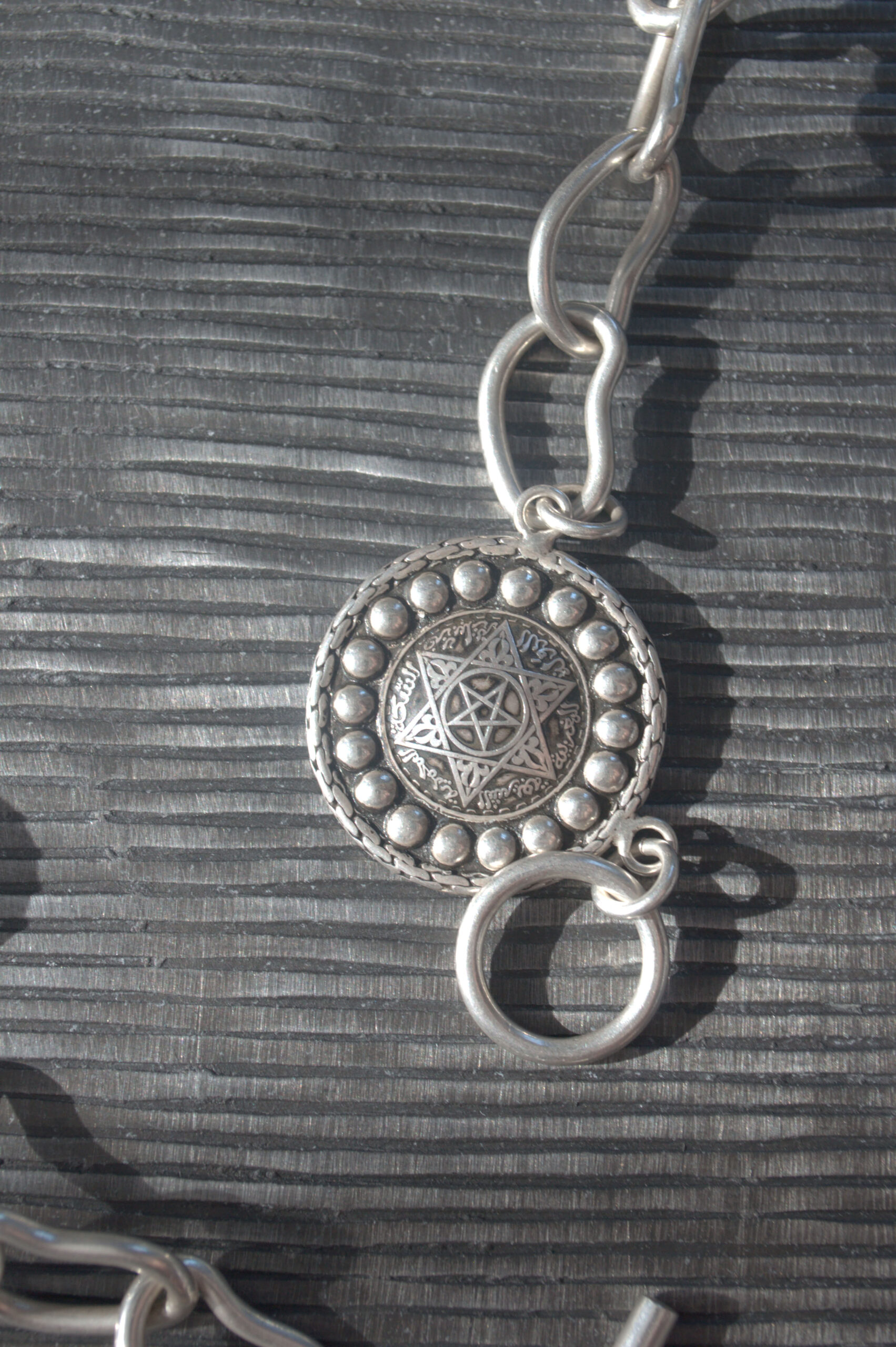
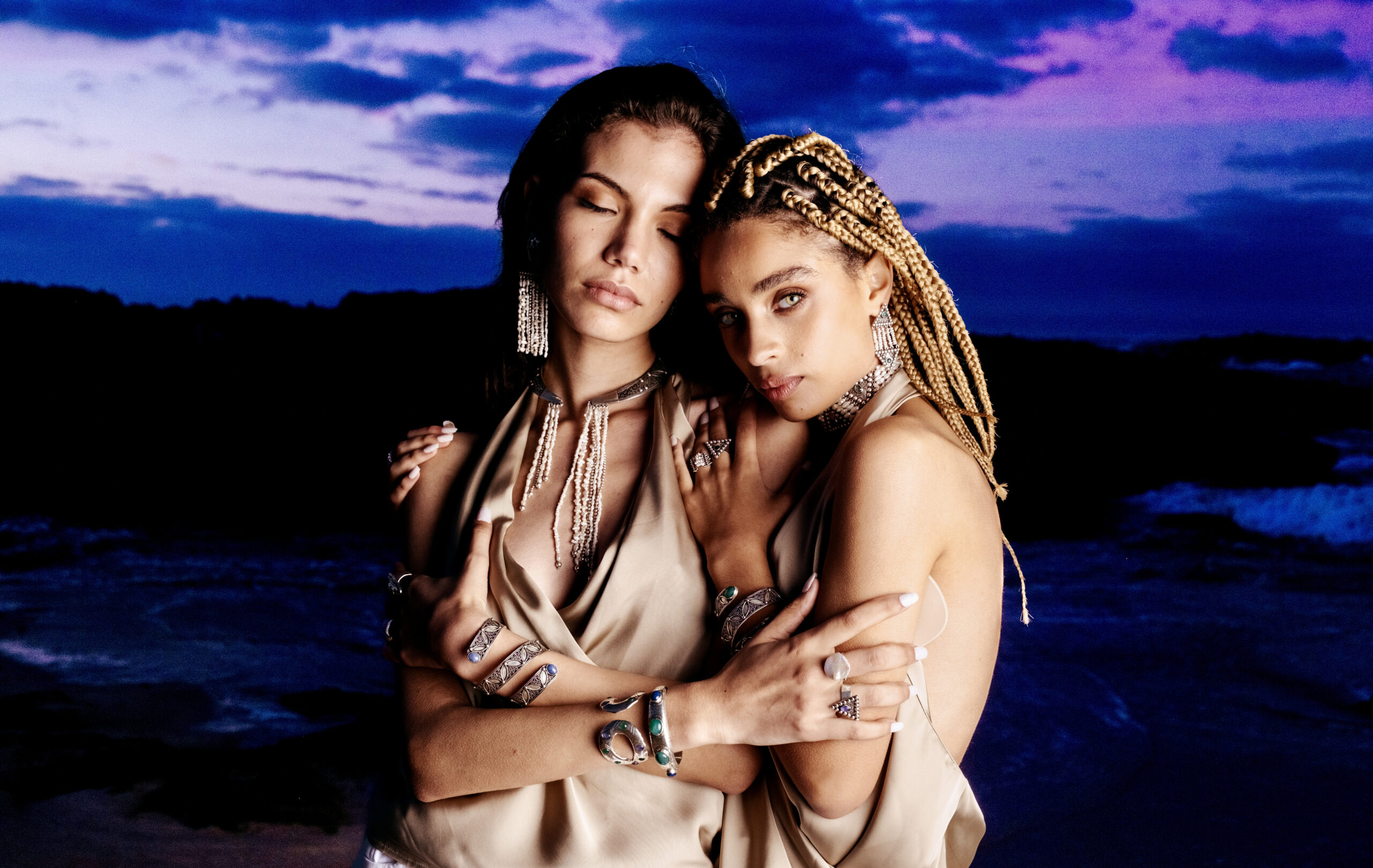
Other pieces show how particular motifs can accommodate new materials and proportions. The brand’s Jade Rain Pearls earrings reinterpret the fibula form in sterling silver, with jade cabochons and pearls. Their listed techniques include chiseling, filigree, beading, and stone setting. Meanwhile, the Aman collection takes its name from the Amazigh word for water, drawing on the sea and its movement.
Benbrahim sees these changes as part of an ongoing relationship with tradition.
“You cannot honour an ancestral craft by treating it like a museum piece. Real preservation means letting it evolve.”
Paying for the skill behind the silver
That position also places responsibility on the business behind the designs. The survival of a technique depends on people having a reason, and the means, to continue practicing it.
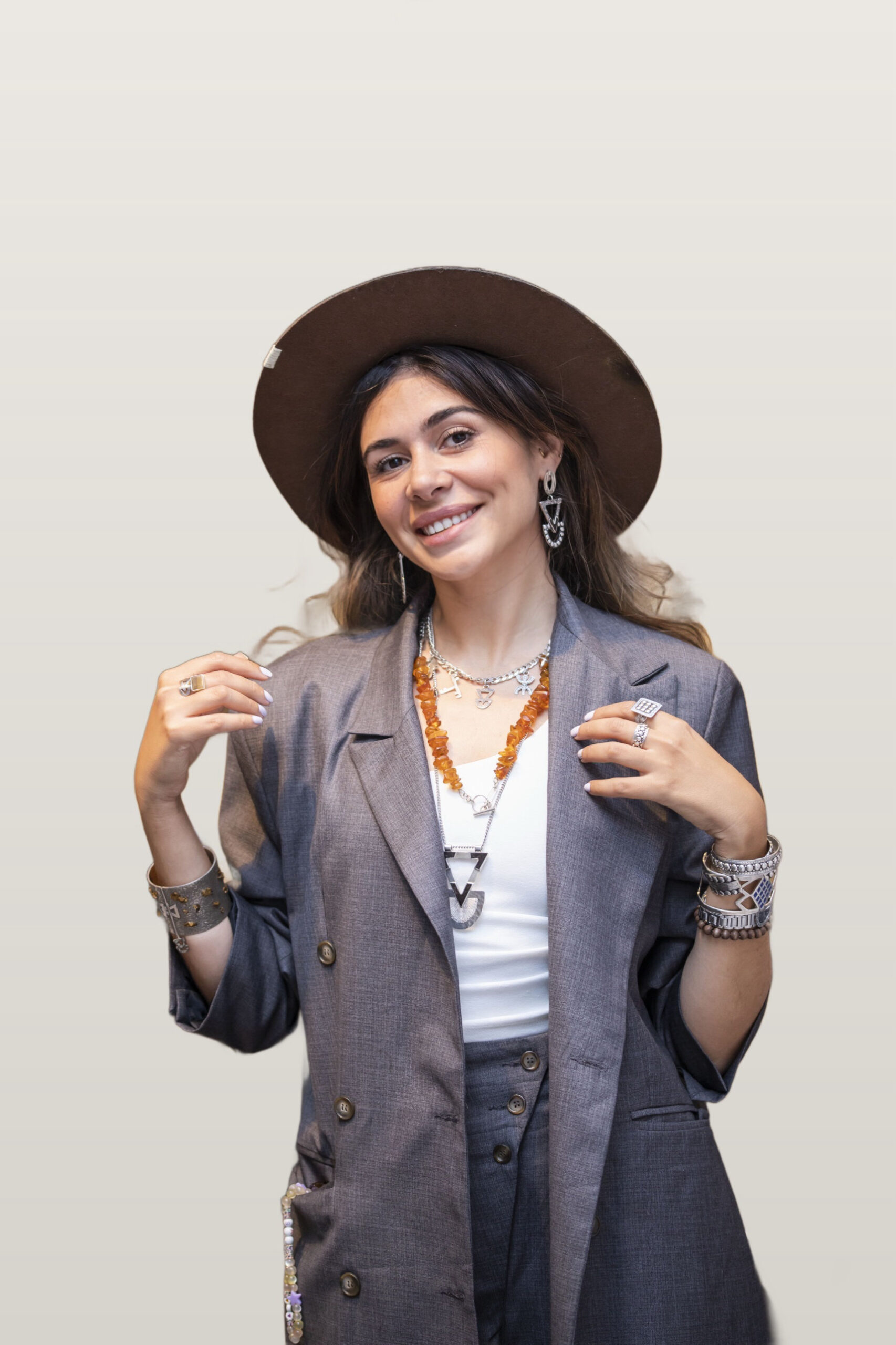
Yelli’s published production process begins with Benbrahim’s sketches, which she develops digitally and tests as printed forms before sending them to the craftspeople. The brand works with 925 silver, an alloy containing 92.5 percent silver, and describes a process involving melting, shaping, and techniques such as enameling, chiseling, and filigree, depending on the design.
For Benbrahim, the skill involved should determine how that work is valued.
“I have never negotiated my artisans’ prices, because their skill is the value of the piece.”
She connects the question of payment with a broader concern about continuity. In her account, inexpensive, rapid production threatens specialist knowledge, while younger generations can struggle to see a viable future in the craft.
“My hope is to help build a sustainable ecosystem where filigree and hand-chiselling are passed on to the next generation, not as a duty to survive, but as a respected, sought-after profession.”
The brand describes its own approach as slow fashion, with limited production runs, orders triggering new batches, and an emphasis on recycling silver. These are the practices Yelli presents as its means of reducing waste and supporting a more considered relationship with consumption.
Tiznit craftsmanship enters the fashion spotlight
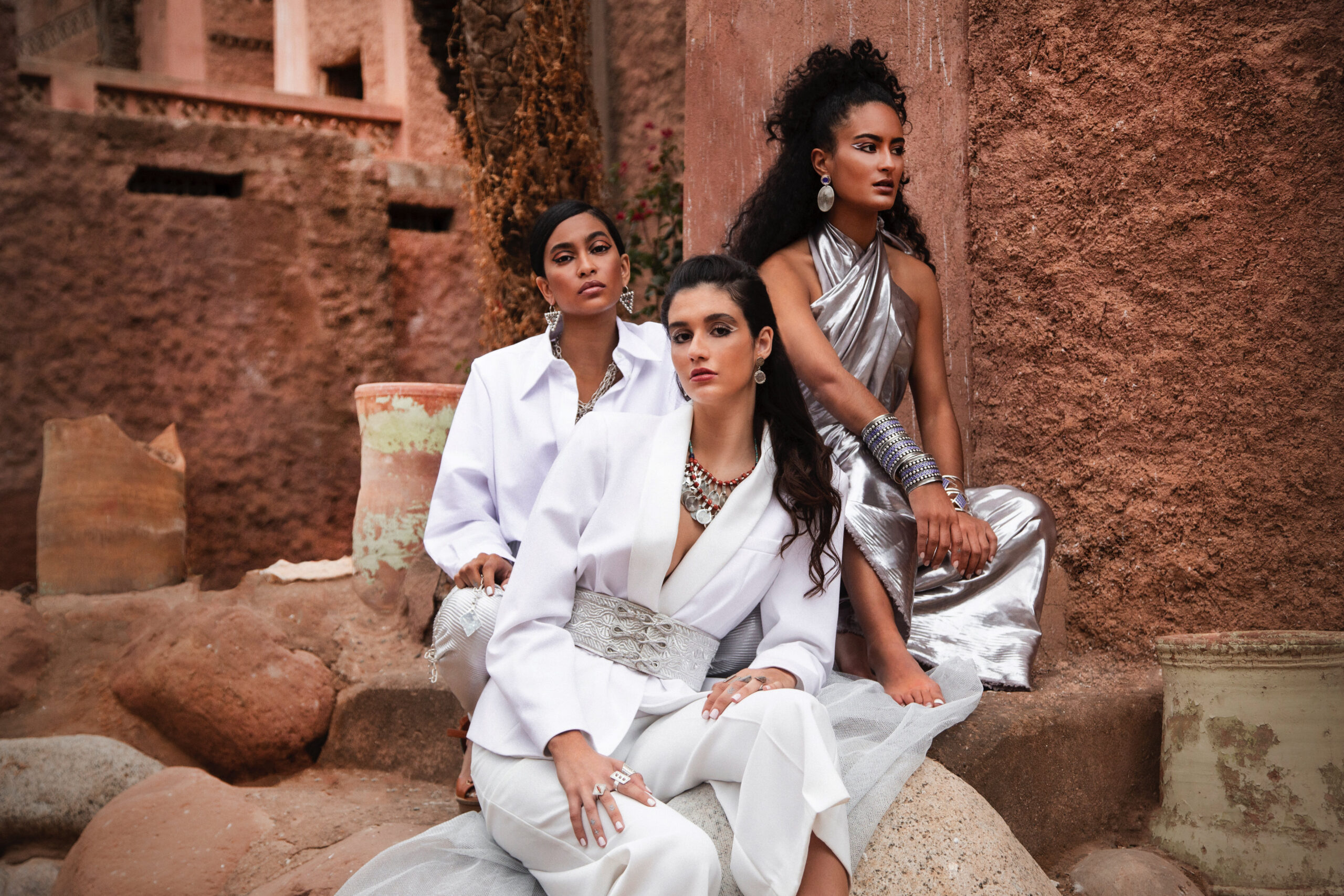
Singer Ouidad recently wore Yelli Jewels in ELLE Maroc, bringing the brand’s silverwork from Tiznit into a fashion editorial spotlight. According to Benbrahim, the label has also featured in Vogue Arabia and Marie Claire France. Behind that visibility are master silversmiths whom she describes as having more than 30 years of experience, reinterpreting Amazigh symbols for contemporary wardrobes.
For the founder, that recognition matters particularly to the people making the jewelry.
“When a piece made in Tiznit appears in ELLE Maroc or Vogue Arabia, the artisans see their work recognised as design, not just local craft,” she told Lifestyle Magazine. “That pride matters, because this knowledge has long been threatened by fast, cheap production, and many young people no longer see a future in it.”
Her own imagined piece would make the work of its maker especially visible. Asked what she would create solely for herself, she describes a heavy silver cuff with an uneven surface, exposed hammer marks, and no polish.
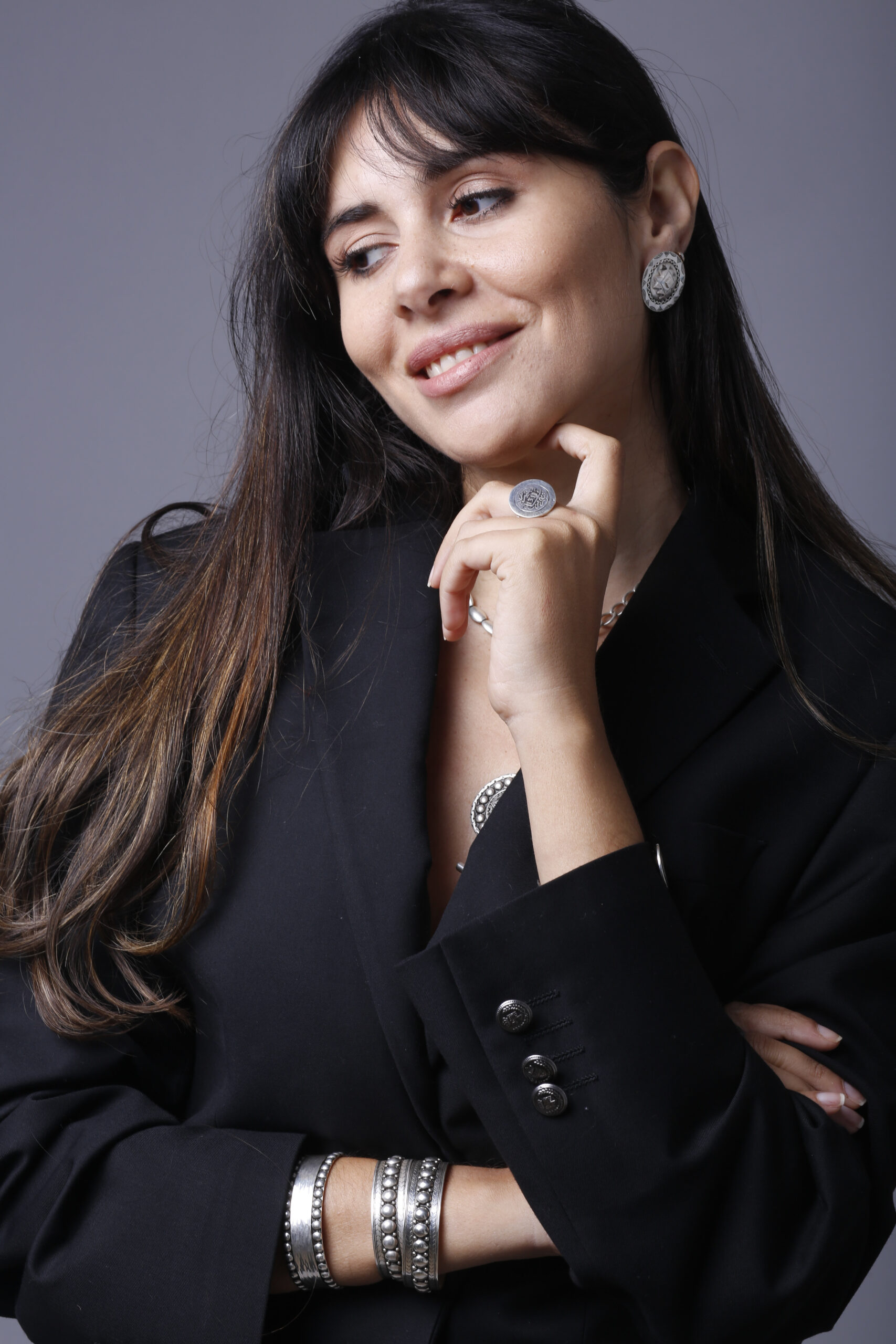
“No stones, no perfect symmetry, just substance and weight on the skin,” she said.
It would be a portrait of the woman she has become through building the brand, learning to trust herself, and continuing through uncertainty. The texture would remain part of its beauty.
“It would speak to the woman I’ve become: someone who has learned that strength lies in resilience, in holding your ground through doubt and storms, and that the most beautiful things are the ones that don’t hide how they were made.”