

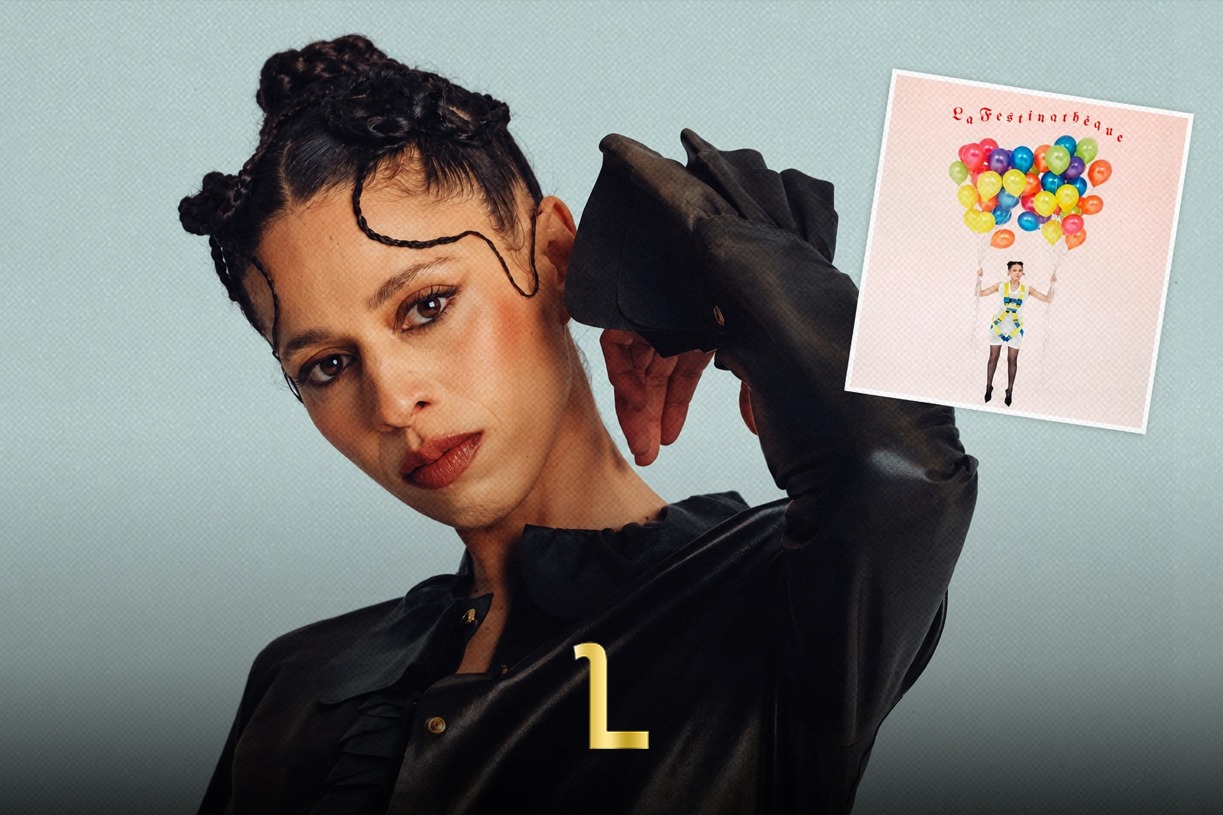
Fez — La Bronze has imagined a place where people can feast on feelings, including the ones they would usually struggle to swallow.
“La Festinathèque,” released October 16 through Audiogram, is the fourth album by Moroccan-Canadian singer, songwriter, and actor Nadia Essadiqi.
Its invented title introduces a world of emotional abundance. Love can burn, disappear, return, or leave something behind. Pleasure shares the table with grief and unease.
Audiogram announced the release alongside a Montreal launch date and further November appearances.
An album that began at home
Much of the record took shape through Essadiqi’s solo writing at home. She also worked with other musicians during writing sessions in Saint-Adrien, Quebec, and Montreuil, France.
The songs introduced before its release included “L’amour enterré vivant,” “Elle est mon homme,” and “Un feu, mes larmes, les armes.”
Their titles establish some of the album’s emotional vocabulary: love, burial, fire, and the difficulty of moving through intimate experiences without carrying their traces.
Family within the feast
An October 16 review in Le Canal Auditif identifies family and heritage among the record’s strongest threads.
“Omri chaddani” includes an Arabic refrain, while “Malika” and “Baba” bring the album toward more intimate family territory.
Elsewhere, the review describes “Détruire ton empire” as confronting a relationship of domination and “L’indécence de mon festin” as addressing social and environmental inequalities.
The imagined banquet therefore has an uncomfortable edge: abundance also raises the question of who can access it.
Beyond the song that traveled
Essadiqi reached international audiences through her Arabic reinterpretation of Stromae’s “Formidable.” Her original work combines alternative pop with electronic, rock, and trip-hop influences.
Dance also plays a role in her performances and videos, including collaborations with choreographers Dave Saint-Pierre and Wynn Holmes.
Her official schedule lists a concert at Moulin Michel in Bécancour on November 20.
With “La Festinathèque,” La Bronze gives her songs a shared imaginary setting. The feast makes room for contradictory appetites: connection and independence, celebration and mourning, the desire to remember and the need to begin again.