

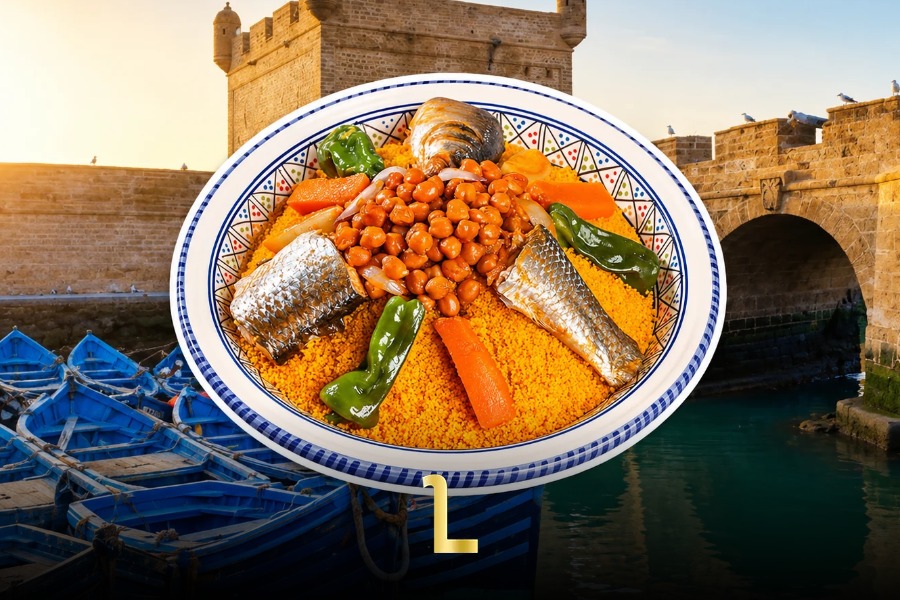
Rabat – Between the rich blend of Amazigh, Andalusi, Arab, and Mediterranean influences, Moroccan cuisine offers a unique culinary experience that caters to all tastes. This time, fish couscous, for seafood lovers.
In Morocco, couscous is deeply woven into the culture. For Moroccans, couscous is more than just a meal; it is a sacred Friday ritual that symbolizes unity, hospitality, and family togetherness.
Each Friday, Moroccan households are filled with the aroma of carefully cooked vegetables, Moroccan spices, and fluffy couscous grains. Families gather weekly to celebrate a Moroccan culinary legacy.
Typical Moroccan couscous is typically associated with red meat or chicken and seven vegetables, yet Moroccan cuisine offers another version paying tribute to its coastlines.
Coastal taste in couscous
Fish couscous is not just an alternative to meat or chicken couscous; it is a testament to the diversity of Moroccan cuisine. It is the result of varied local ingredients, regional culinary knowledge, and tastes passed down through generations.
Many people automatically think of Tunisia when they hear fish couscous, which is no surprise. Fish couscous is a staple of Tunisian cuisine and a very popular dish among foodies who love Tunisian cuisine. However, it is not only exclusive to Tunisia.
Morocco’s extensive coastlines have heavily influenced its cuisine. In the coastal regions of Essaouira, Safi, El Jadida, and Oualidia, seafood is an important element in everyday dishes.
Reflecting local coastal ingredients, fish couscous is especially known in Safi; instead of meat or chicken, seafood is the star of the show.
Bringing together coastal ingredients and regional culinary knowledge into one meal, fish couscous offers a culinary journey that takes you beyond familiar tastes.
Couscous preparation requires in-depth culinary knowledge. Semolina grains are traditionally steamed until light and fluffy.
For fish, sea bream is preferable. It is seasoned with chermoula, a blend of olive oil, tomato paste, spices, and parsley, and then cooked in a separate pot with chopped onions, tomato paste, spices, and chili. Vegetables such as pumpkin, zucchini, and carrots may find their way to the pot.
A moment of sharing
As a Moroccan saying goes, couscous is best enjoyed with others. It is usually served in a large communal plate, and represents an opportunity to gather, discuss, and catch up with friends and family.
Couscous originated more than a thousand years ago among the Amazigh people of North Africa, who developed it as a way to preserve semolina for long periods. Couscous is still celebrated across North Africa, even as its preparation and ingredients continue to evolve differently across the region.