

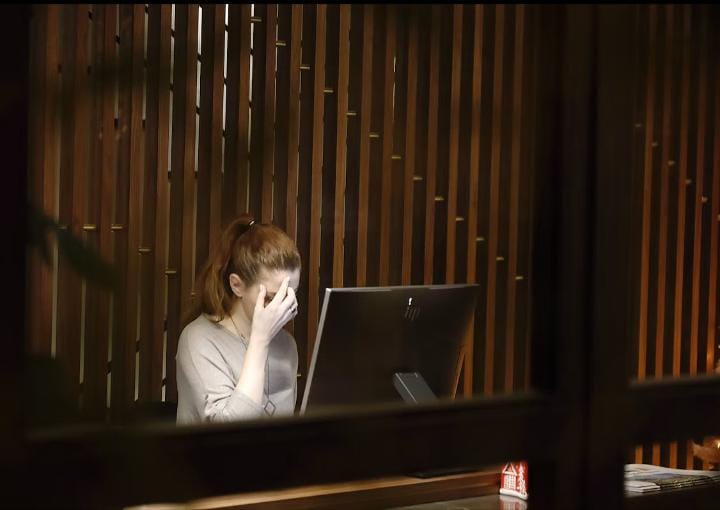
Rabat – Have you ever spent the entire weekend sleeping in, lounging on the couch, doing practically nothing, only to wake up on a Monday morning feeling as drained as you were on Friday?
If this sounds familiar, you are not lazy, and you are not just tired; you have likely crossed the threshold from normal tiredness into burnout.
Let us imagine leaving your laptop plugged into a charger while running heavy applications; the laptop will stay bright and function for a while before it freezes and goes completely black; well, that is exactly what happens to a human’s brain.
Social media has glamorized hustle culture and commercialized a lifestyle of constant busyness, making exhaustion the norm and completely degrading the real toll it takes on mental health.
What is burnout?
In 2019, the World Health Organization (WHO) added burnout to the 11th Revision of the International Classification of Diseases (ICD-11) as an occupational phenomenon, and not as a medical condition.
The WHO defines it as a syndrome resulting from chronic workplace stress that has not been successfully managed, manifesting across three core dimensions: a profound feeling of energy depletion or exhaustion; an increased mental distance from one’s job, often accompanied by negativism; and a noticeable drop in professional efficacy.
Unlike ordinary stress, which is a normal short-term response that results from daily pressures like tight deadlines, financial worries, or lack of sleep, burnout is characterized by a sort of emotional exhaustion, consumption, and disengagement.
In practical terms, burnout occurs when you endure emotionally, physically, and mentally demanding routines without genuine recovery. It is the quiet turning point where a person who used to achieve a great deal in life suddenly loses interest, and activities they once enjoyed become a burden.
First step toward recovery
Recognizing that shift is the crucial first step toward real recovery. While ordinary stress can often be relieved with a good night’s sleep, a weekend off, or a cleared to-do list, burnout cannot be solved with passive rest. Healing entails stepping back, setting boundaries, and allowing your mind the space to finally rebuild.