

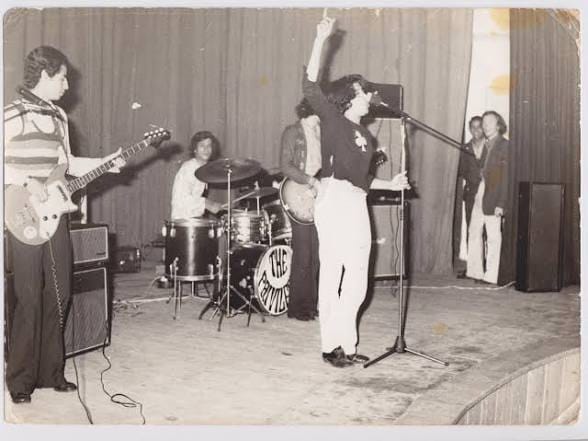
Rabat – Decades after recording wild Darija-infused funk songs like “Zman S3ib” in the 1970s and fading into obscurity, an eccentric Moroccan painter, actor, and singer is finally getting the recognition he deserves.
Imagine you are listening to a 1970s soundtrack like “Zman S3ib,” “Sid Redad,” or “Bsalama Habibti,” songs whose raw vocals and funk sound draw comparisons to James Brown.
Fadoul is also known in Morocco and the region as the “Moroccan James Brown.” Imagine a Moroccan singer using raw Darija (Moroccan dialect) with the untamed energy of a punk rocker.
Heavy funk basslines and fuzzy guitars crash straight into Gnawa and Chaabi rhythms, creating a blend that feels completely rebellious. That is the creation of the one and only Fadoul, who returned to the headlines with a song that many enjoyed. Where? In the recently released GTA VI.
The gem was introduced to many Moroccans, who were mesmerized to discover that the man behind the famous song was a Moroccan musician.
Mfadel Fadoul, a Moroccan funk pioneer, singer, actor, and painter with an eclectic eye that served him well, created some truly original sounds before quietly disappearing from the spotlight.
About the Artist
Born in Casablanca in the early 1940s, Mfadel Fadoul, often dubbed the Moroccan James Brown, never fit into a single artistic box. Long before diving into music, he expressed himself on canvas and on stage as an actor.
In the late 1960s, a move to Paris exposed him to the raw power of American soul and funk. When he returned to Casablanca in the 1970s with his band, Les Privilèges, he not only drew inspiration from Western hits but also translated them into the chaotic, vibrant pulse of Moroccan street life.
Fadoul is known for blending American funk and rock influences, particularly James Brown and the British rock band Free, with Darija lyrics and local North African rhythms.
Instead of singing with smooth, well-polished pop vocals, Fadoul deployed his voice like a percussion instrument. Inspired heavily by James Brown and Otis Redding, he screamed, growled, laughed, and gasped over the music. His delivery was theatrical and urgent, sounding like a punk singer years before punk rock existed.
Fadoul never cared about studio perfection. His 1970s singles sound alive, like a late-night street jam captured on tape.
Later, in the 1980s, he shifted into a completely different style in Paris (under the name “Bob” Fadoul), trading live instruments for synthesizers, drum machines, reggae rhythms, and early rap on cassette tapes.
Many believe that Fadoul did not receive the recognition he deserved during his time.
The singer died in Casablanca in 1991. While GTA revived his famous music, new and old fans believe he was largely forgotten outside a small circle of dedicated fans, never knowing that one day his sound would echo around the globe.