

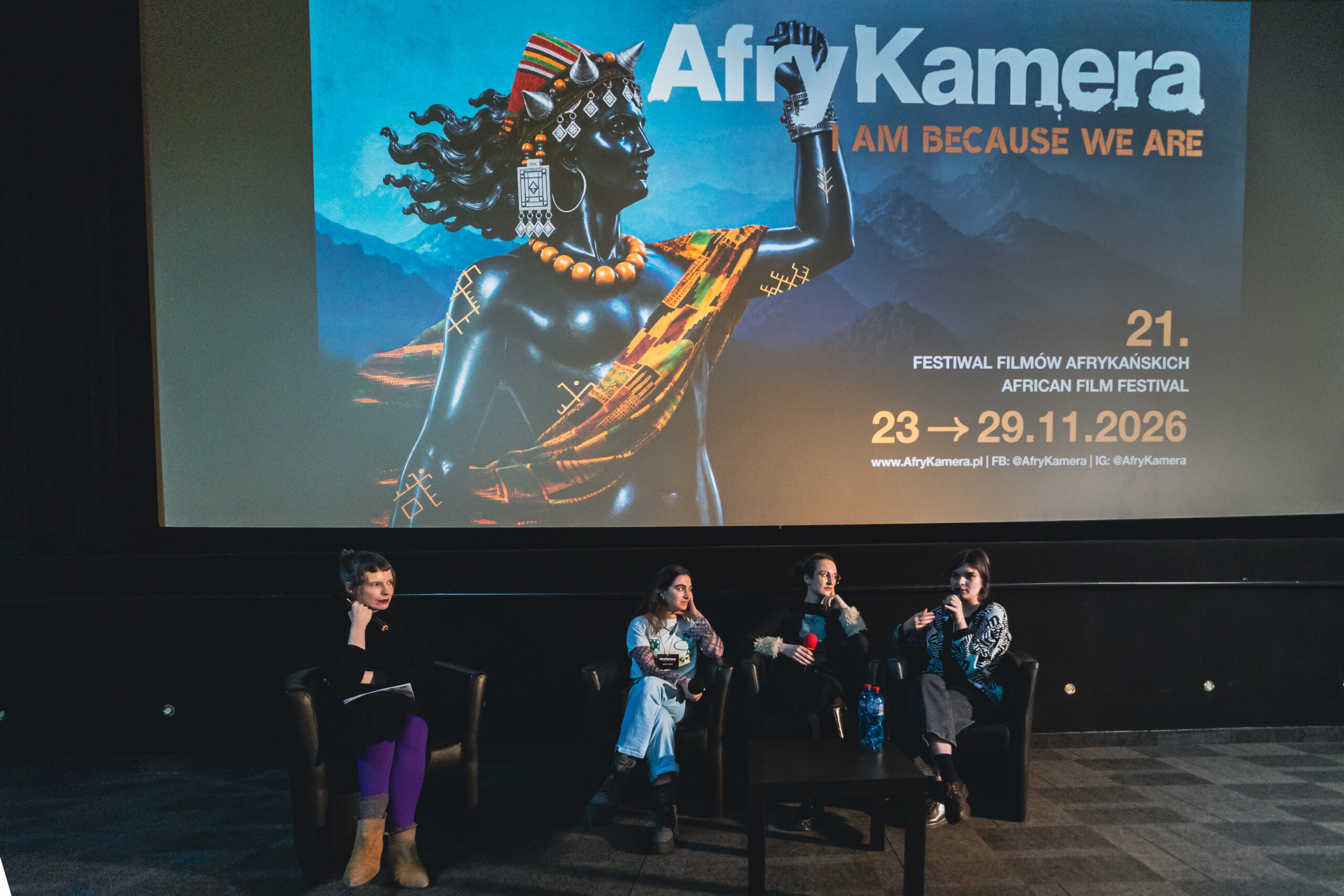
Casablanca – Film festival AfryKamera continued in Warsaw on Wednesday with a program that explored different ways of seeing and telling African stories, from questions of identity and belonging to the preservation of history.
Running from November 23 to 29, the festival brings African cinema to Polish screens through feature films, documentaries, and short-film selections. This year’s edition follows the theme of Ubuntu, a philosophy that puts community and human connection at its center.
The November 25 program featured four screenings in Warsaw, including a short-film selection dedicated to representation and a documentary revisiting Ghana’s path to independence.
Looking at Africa through different perspectives
The afternoon program opened with “AfryGaze,” a 95-minute selection of six short films that approached African stories from different perspectives. The lineup travelled from Namibia and Zimbabwe to Sudan and Montreal, while also looking beyond the continent’s geographical boundaries.
Among the films, “Connection,” directed by Namibian filmmaker Zachary Batik, follows a lone wanderer crossing the desert with an old television set in search of a stable signal. In “God Sleeps on Sunday,” Zimbabwean director Naishe Nyamubaya explores a conflict between a preacher hoping to build a new church and a traditional healer who occupies the land.
The selection also included “Nothing Happens in Your Absence,” a documentary short by Sudanese filmmaker Ibrahim Omar about a man who returns to his village hoping to open a cinema, only to see his plans disrupted by war.
The program ended with “Mix,” a Polish documentary by Klaudia Szott that looks at the experiences of people with roots in different cultures. Through archival films made by students from the Global South who studied in Eastern Europe during the Cold War, Sylwia, the daughter of a Polish mother and a Nigerian father, explores her own roots and what it means to grow up between two cultures.
The screening also included a Q&A with filmmakers Klaudia Szott, Teresa Fazan, and Marta Grzegorek, moderated by journalist and film critic Ola Salwa.
Memory, family, and the stories we preserve
The day also featured a screening of Moroccan filmmaker Mostafa Derkaoui’s 1974 film “About Some Meaningless Events.” The film follows a group of young filmmakers in Casablanca as they search for a subject for their next project. After witnessing a crime, they begin investigating what happened, gradually questioning the role of cinema and the artist in society.
Once banned in Morocco, the film blurs the lines between documentary and fiction and remains an important work of independent Moroccan cinema.
Later in the evening, Cameroonian director Auguste Bernard Kouemo Yanghu’s “The House of Wind” turned to family ties and the distance between generations. The film follows 80-year-old Josette, who lives alone in Yaoundé after all her children move abroad. Hoping to bring them closer to home, she encourages them to build houses in Cameroon. However, an unexpected friendship with her young neighbor Sarah makes her reconsider her expectations of family and closeness.
The final screening, “The Eyes of Ghana,” directed by Ben Proudfoot, revisited the country’s struggle for independence through the film archive of Chris Hesse, a former cameraman for Ghana’s first prime minister and president, Kwame Nkrumah.
Now in his nineties and gradually losing his sight, Hesse wants to preserve the footage he recorded during the 1950s and 1960s before it disappears. With the help of young Ghanaian filmmaker Anita Afonu, he hopes to bring these images back to the public and protect a visual record of the country’s history.
With more screenings scheduled through November 29, AfryKamera continues its week-long program in Warsaw, bringing together films that explore African identity, memory, and representation from different angles.
Read Also: Afrykamera’s Second Day Puts North African Cinema in Focus