

Casablanca – A girl is expected to be obedient. But what happens when she refuses?
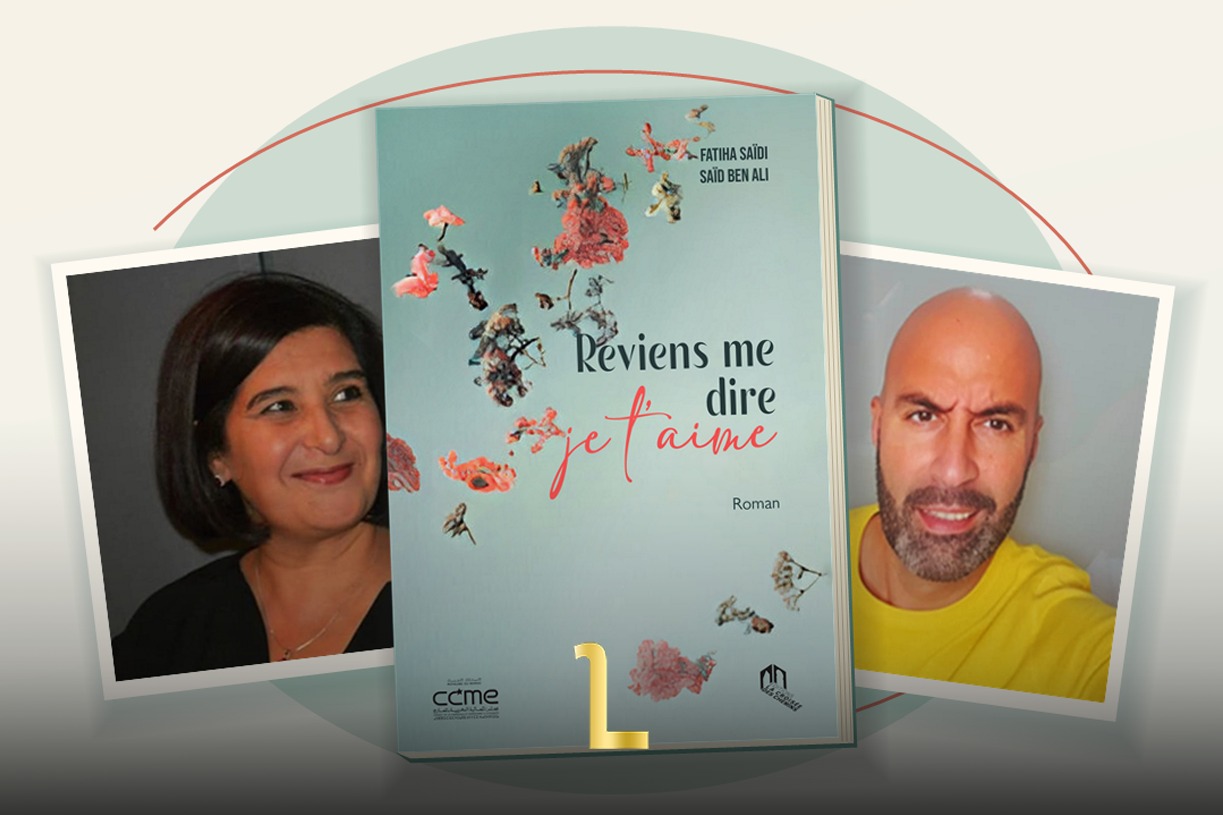
Belgo-Moroccan authors Fatiha Saïdi and Saïd Ben Ali will explore this question and much more during a literary meeting at the Goethe-Institut in Rabat on December 2, centered on their book “Reviens me dire je t’aime” (Come Back and Tell Me You Love Me).
Published in 2025 by La Croisée des chemins in the CCME collection, the book follows Myriam and Daoud, a brother and sister separated for nearly two decades, who begin exchanging letters and confronting the family wounds that drove them apart.
Through their correspondence over the course of a year, the two revisit childhood trauma, family violence, the weight of tradition, and the emotions they have long kept buried. Their letters move between anger, painful confessions, attempts at understanding, and the desire to repair a relationship that time alone could not heal.
Myriam’s escape and Daoud’s reckoning
Myriam left her family nearly 20 years ago, refusing to live by the rules that expected her to submit and protect the family’s honor at the expense of her own freedom. Her departure marked an act of resistance, but it did not erase what she had endured.
Writing to Daoud, she finally gives voice to the anger, pain, and questions she carried for years. She confronts her brother not only as someone who shared her childhood, but also as someone who helped uphold the authority and expectations that pushed her away.
Daoud, meanwhile, represents the other side of that family dynamic. He once acted as the guardian of family honor, enforcing the rules that left Myriam with little room to choose her own life. Yet the book does not stop at portraying him through his past actions.
During his incarceration, Daoud begins questioning the violence he once accepted and perpetuated. His letters reveal guilt, reflection, and a sincere attempt at redemption. He must confront the harm he caused rather than simply ask his sister to move on.
That contrast makes their exchange particularly compelling. Myriam has spent years fighting to reclaim her freedom, while Daoud is only beginning to understand the consequences of the role he played. Their letters do not erase the past, but they create space for both to face it differently.
A conversation about breaking the cycle
The meeting will also look at the book’s wider themes, including patriarchal family structures, gender expectations, violence, memory, forgiveness, and the possibility of rebuilding relationships. At its heart, “Reviens me dire je t’aime” asks what it takes to break away from patterns passed down through generations, and whether acknowledging the harm can open the door to change.
The literary meeting will take place on Wednesday, December 2, at 6 p.m. at the Goethe-Institut in Rabat, with Chiraz El Fassi, General Delegate of Wallonia-Brussels in Morocco, moderating the discussion.
Organized by the General Delegation of Wallonia-Brussels in Morocco in partnership with the Council of the Moroccan Community Abroad (CCME), the Circle of Belgian Graduates (CLB), and the Goethe-Institut, the event forms part of the European Union’s Literary Cafés cycle in Morocco and Rabat’s 2026 UNESCO World Book Capital cultural program.