
NASA Starts Practice Countdown for First Crewed Moon Mission in 50 Years
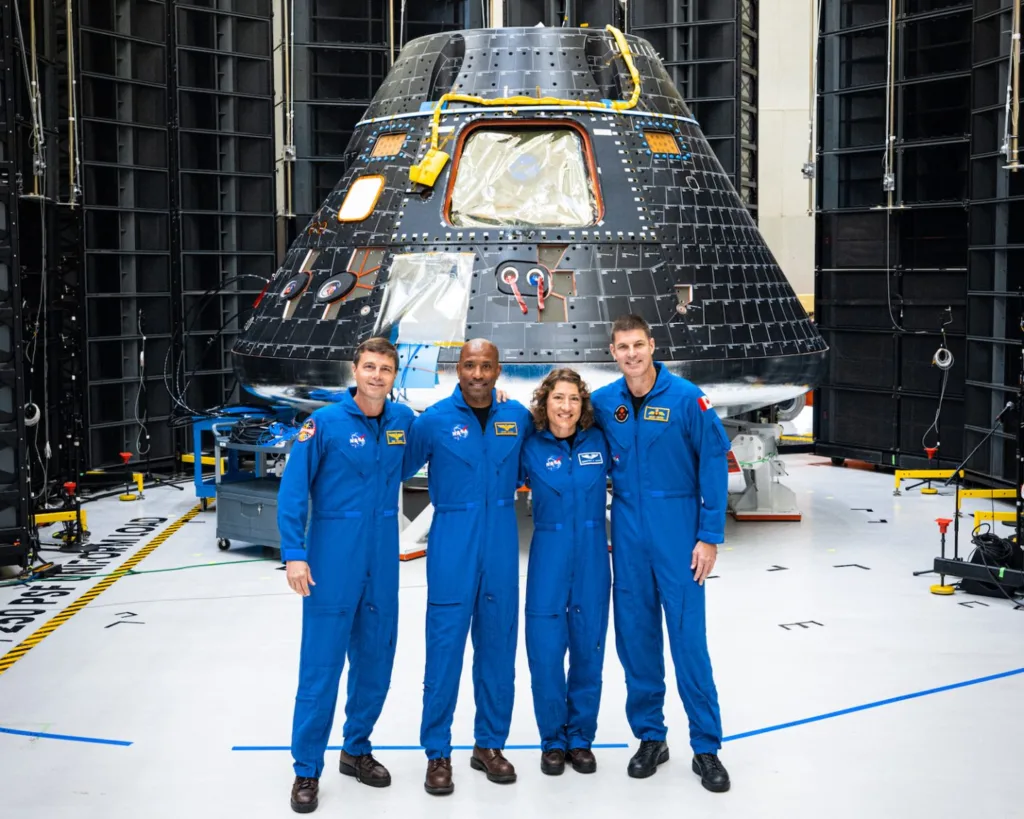
The space agency has launched a critical rehearsal ahead of a historic lunar flyby that would send astronauts around the moon for the first time since 1972.
Six Planets Align in Rare August 2025 Sky Show
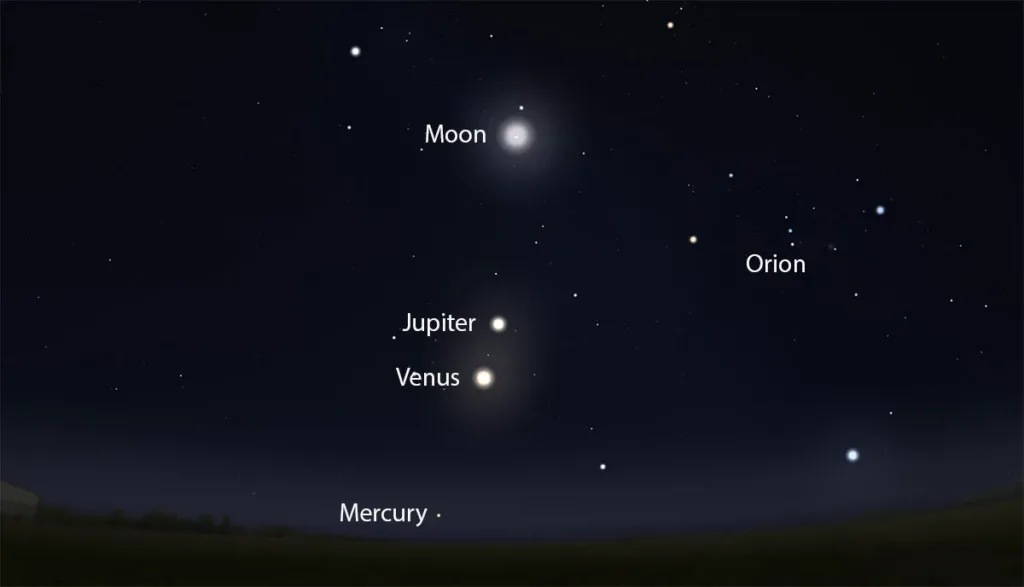
This event will be a delight for early morning sky-watchers around the world.
Russia Launches ‘Noah’s Ark’ Mission to Study Space Radiation on the Tiniest Passengers
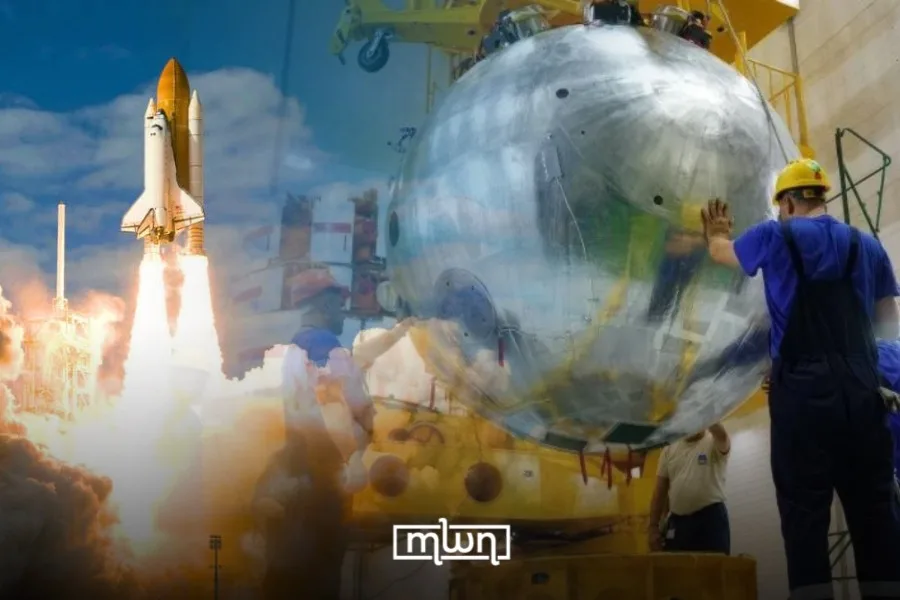
Scientists are turning to mice, fruit flies, and lunar dust to prepare humanity for deep-space travel. Fez– Russia is taking a bold step toward the dream of human colonization beyond Earth, launching a mission that looks more like a miniature ark than a spacecraft. On August 20, 2025, a Soyuz-2.1b rocket will lift off from the Baikonur Cosmodrome in Kazakhstan, carrying a satellite called Bion-M No. 2. Its passengers? Seventy-five mice, over a thousand fruit flies, and an assortment of biological samples, all bound for a 30-day journey in orbit. The mission, nicknamed “Noah’s Ark” for its diverse living cargo, will expose these organisms to elevated levels of cosmic radiation and microgravity. Scientists hope the findings will provide crucial insights into how space travel affects living systems — knowledge essential for long-term human missions to the Moon, Mars, and beyond. Studying space radiation through mice and microgravity The central experiment focuses on mice, chosen for their genetic similarity to humans and their sensitivity to radiation. The rodents will be split into three groups: one living in normal conditions on Earth, another in a ground-based flight simulator, and a third spending 30 days in orbit. This setup will allow scientists to compare how different environments affect physiology and health. Each mouse’s tiny capsule is equipped with life-support systems: ventilation, lighting, food supplies, waste removal and even microchips to track changes inside their bodies in real time. Cameras and sensors will stream constant data back to Earth, helping researchers understand how these animals adapt to weightlessness and, just as importantly, how they readapt once gravity returns. The results could guide future strategies to protect astronauts from radiation exposure during prolonged missions, which is one of the greatest obstacles to deep-space exploration. Lunar simulation materials: testing how we might build on the Moon Bion-M No. 2 isn’t only carrying animals. It’s also hauling lunar regolith simulants, which are engineered dust and rock designed to mimic the Moon’s surface. Once the materials return to Earth, scientists will analyze how radiation and vacuum conditions affect them. Why does this matter? Future lunar bases will likely need to be built using local resources rather than shipped from Earth. Understanding how Moon-like materials respond to space conditions is key to figuring out how to construct durable habitats for long-term settlement. What fruit flies reveal about life in space Alongside the mice are more than a thousand fruit flies, tiny but mighty contributors to biological science. Their short life cycles and well-mapped genetics make them perfect for studying how organisms of different complexity react to microgravity and radiation. Combining data from both species will give scientists a more complete picture of spaceflight’s biological toll. A high-radiation orbit to push research further Unlike previous missions, this satellite will orbit at an inclination of about 97 degrees, deliberately chosen to double the radiation exposure compared to its predecessor, Bion-M No. 1. This harsher environment will provide researchers with a clearer understanding of how deep-space radiation damages tissues and accelerates biological aging, while also testing methods to mitigate these effects. The mission’s findings could inspire new technologies to shield astronauts and support human health during multi-year trips through space. Building the biological roadmap for future explorers For space agencies worldwide, it’s an urgent question: how do we keep explorers safe when there’s no quick return to Earth? By tracking how living creatures cope with the stresses of orbit, Russia’s Bion-M No. 2 mission is laying groundwork for the next generation of human exploration. The data will help scientists develop better countermeasures against radiation, fine-tune spacecraft life-support systems, and plan settlements on the Moon and Mars using local resources. In other words, “Noah’s Ark” is a preview of humanity’s next giant leap. The tiny travelers on this mission may one day help us decide how, and where, humans will live beyond our home planet.
A Giant Star-Making Cloud Was Hiding Near Our Solar System Undetected, Until Now
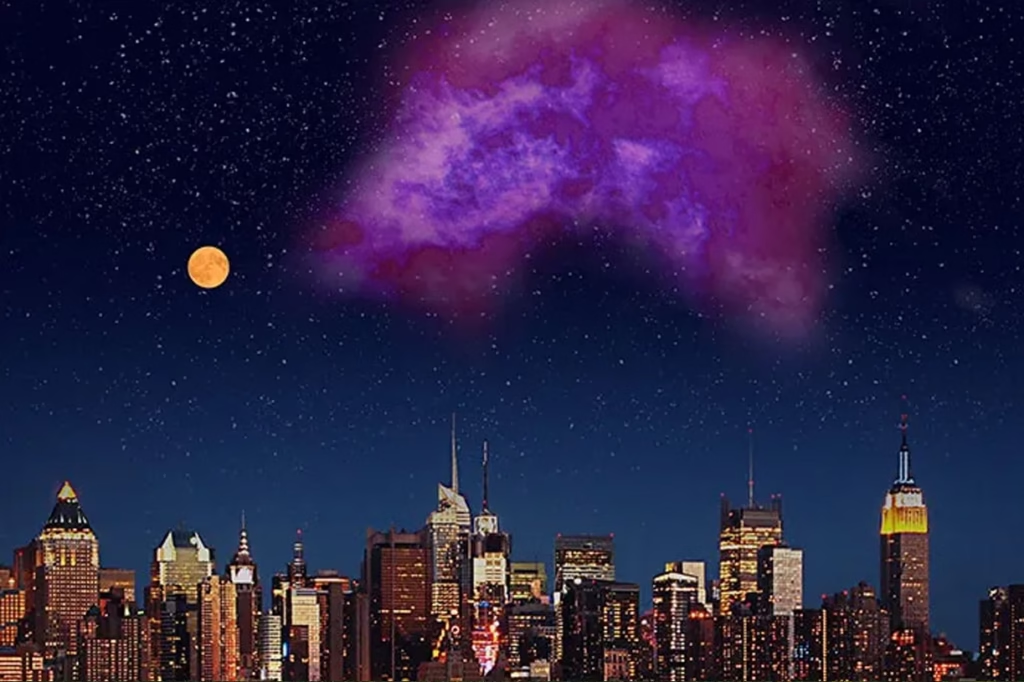
A quiet discovery just changed what we thought we knew about our cosmic neighborhood. Fez– In a cosmic game of hide and seek, astronomers have just spotted something huge, and surprisingly close, that had been lurking in plain sight all along. Meet “Eos,” a newly discovered molecular cloud that might just be the closest stellar nursery we’ve ever missed. Led by Rutgers University in New Jersey, an international team of scientists has identified this enormous hydrogen-rich cloud quietly floating just 300 light-years away from Earth. That’s practically next door in space terms. Not only is it one of the largest single structures in the sky, it’s also among the nearest potential star-forming regions to our solar system. So why didn’t we see it before? Simple. Eos plays by different rules. Most star-forming clouds shine thanks to carbon monoxide, a favorite marker that astronomers rely on when scanning the skies. But Eos? She’s subtle. She barely contains any carbon monoxide, making her nearly invisible to conventional telescopes. “She’s been hiding in the shadows,” said Dr. Blakesley Burkhart, a Rutgers astrophysicist involved in the discovery. “We weren’t using the right kind of light to see her.” Instead of relying on traditional methods, the team used a more delicate approach, detecting faint ultraviolet glows emitted when hydrogen molecules interact with starlight. Think of it as catching a firefly in a pitch-black forest, with a pair of sunglasses on. Tricky, but not impossible. Eos, named after the Greek goddess of dawn, is shaped like a crescent and weighs in at roughly 3,400 times the mass of the sun. It’s the kind of place where stars are born: cold, dense, and full of gas and dust. Picture it as a galactic maternity ward, where the raw materials of planets and solar systems gather before the drama of formation begins. And this cloud? It’s not just scientifically cool, it’s historically important. “Finding Eos changes the game,” Burkhart added. “If this massive cloud was sitting right in our galactic backyard unnoticed, who knows how many others are out there, waiting to be found?” The implications are vast. Not only does this give astronomers a new lab to study how stars and planets form, but it also forces us to rethink what we “think” we know about our own cosmic neighborhood. Eos may have been silent, but now she’s front and center, whispering secrets about the universe’s earliest building blocks. Read also: Everything You Need to Know About Volubilis: Morocco’s Timeless Roman City
What Can Space Do to Your Body
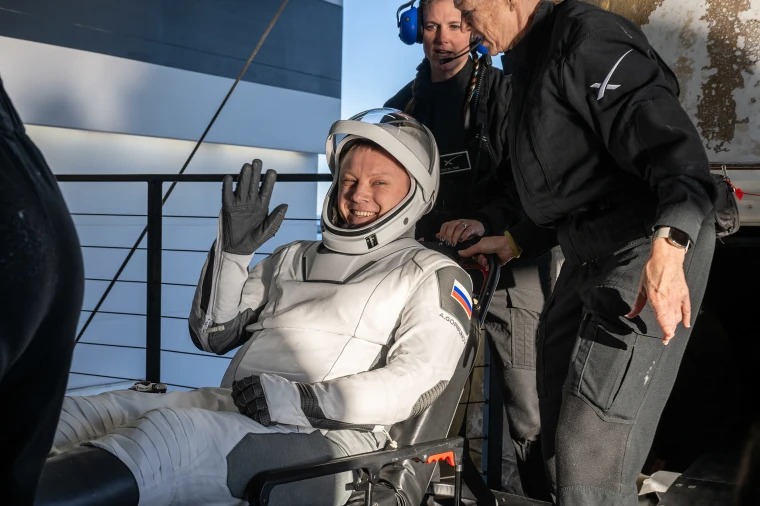
Nine months in space sounds cool until your body forgets how to work. Spending time in space sounds like the ultimate dream: floating weightless, gazing at Earth from above, and living like a sci-fi hero. But what happens when the dream ends, and reality, otherwise known as gravity, comes crashing back? Astronauts Suni Williams and Butch Wilmore know this better than anyone and recently told their story to the BBC. What was supposed to be a quick eight-day mission aboard the International Space Station (ISS) turned into an unexpected nine-month stay. Now that they’re back on solid ground, their toughest mission begins: getting their bodies to work properly again. Ask any astronaut, and they’ll tell you: zero gravity feels amazing at first. “It feels like a holiday,” says Tim Peake to BBC, who spent time on the ISS in 2015. With no gravity pulling you down, your heart, muscles, and bones get a break. Moving is effortless. It’s like lounging in bed for weeks, but that’s also the problem. On Earth, even standing still takes effort. Gravity forces your muscles and bones to work constantly, keeping you upright. In space, everything is weightless, so your body gets lazy fast. Without resistance, muscles shrink. The heart weakens because it doesn’t have to pump against gravity. Bones become fragile, breaking down faster than they rebuild. “Every month, about 1% of their bone and muscle withers away, it’s accelerated aging,” explains Prof. Damian Bailey, a human physiology expert at the University of South Wales. What happens when astronauts return? After months of weightlessness, even simple things like walking become a challenge. When Suni and Butch’s capsule landed, they needed help just to stand. Their bodies weren’t used to supporting their own weight. To prevent complete muscle loss, astronauts exercise for two hours every day in space, using treadmills, stationary bikes, and resistance machines. But even that isn’t enough to stop the damage. Now, back on Earth, they’ll need months of intense rehab to rebuild their strength. Muscles recover relatively quickly, but bones? That’s another story. “It could take a couple of years for their bone mass to come back,” says Dr. Helen Sharman, the first British person in space. And even then, it might never fully return to normal. Bones and muscles aren’t the only things that take a hit. Space changes the entire body, right down to the bacteria in our gut. Even fluids in the body behave differently. With no gravity pulling them down, they shift upward, making astronauts’ faces look puffy. It might seem harmless, but that swelling affects the brain and eyes, sometimes leading to permanent vision problems. And then there’s balance, another system that gravity controls. In space, there’s no up, down, or sideways. The body’s sense of direction goes haywire. “That initial phase of dizziness, regaining balance, and being able to walk properly again, that’s about two or three days,” Peake explains. “And those days can be brutal.” Space may be the final frontier, but the human body is still playing catch-up. Even with years of training and recovery plans, astronauts return home changed. Some effects fade, others linger forever. For Suni and Butch, the adventure isn’t over, it’s just moved to the gym. And while they won’t be floating through their workouts anymore, getting back to normal might just be their hardest mission yet. Read also: What Marvel Movies Teach Us About Tech, Innovation, and Hustling Hard
Russia’s New Plasma Engine Could Reach Mars in 30 Days
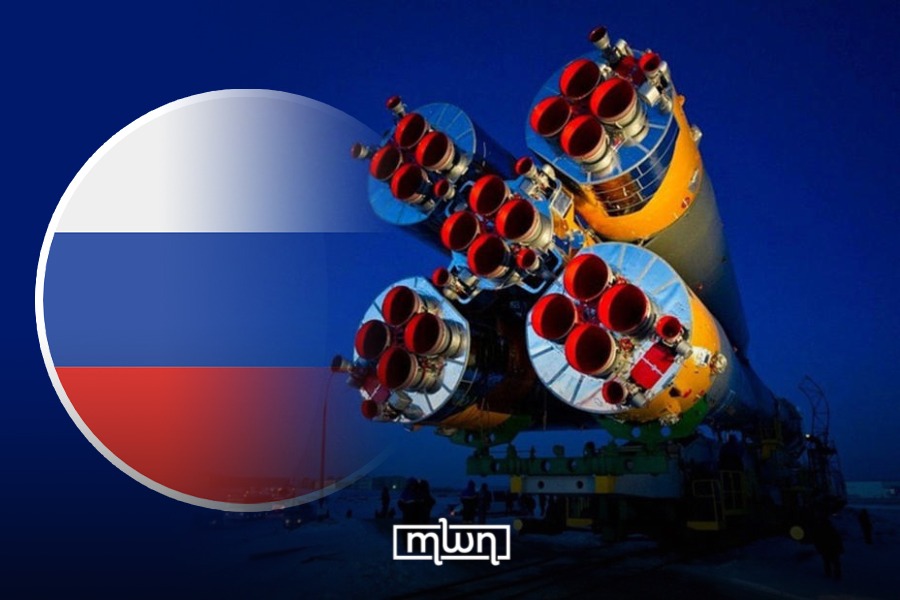
Scientists have unveiled something that might make deep space travel much faster. Fez – Russian scientists have built a new plasma rocket engine that could make space travel much faster. The engine, made by Rosatom researchers, could take astronauts to Mars in just 30 to 60 days instead of a year. How it works The engine uses a special kind of electric power called plasma. It runs in short bursts and can reach an average power of 300kW. This makes it much faster than regular rocket engines. Scientists say it could push a spacecraft to speeds of around 195,000 miles per hour. According to World Nuclear News Alexey Voronov, a top scientist at Rosatom, said that long trips to Mars are dangerous. Space radiation can harm astronauts. Shorter trips would make space travel safer. He explained that this prototype is a big step. Scientists need to test it to see if it works well in space and how much it will cost to produce. They are building a special lab to test the engine. The lab includes a large vacuum chamber that is 14 meters long and 4 meters wide. This chamber will create space-like conditions for experiments. Mars is about 140 million miles away from Earth. Right now, trips to Mars take nearly a year. Reports suggest that the U.S. and the European Space Agency have also been working on ways to make space travel faster. According to the Russian newspaper Izvestia, the new engine has a thrust of about 6N. Scientists say it can push charged particles, electrons, and protons, at speeds of 100 km per second. This could help spacecraft travel not only to Mars but also beyond the solar system. What’s next? A plasma rocket engine works using electricity. It has two electrodes that pass charged particles between them. It has a magnetic field that pushes the particles out when a high voltage is applied, creating thrust. The new engine will still need a traditional rocket to launch into space. Scientists hope to have a working model ready by 2030. If successful, this technology could change space travel forever. Read also: Apple Set to Launch New Products Next Week