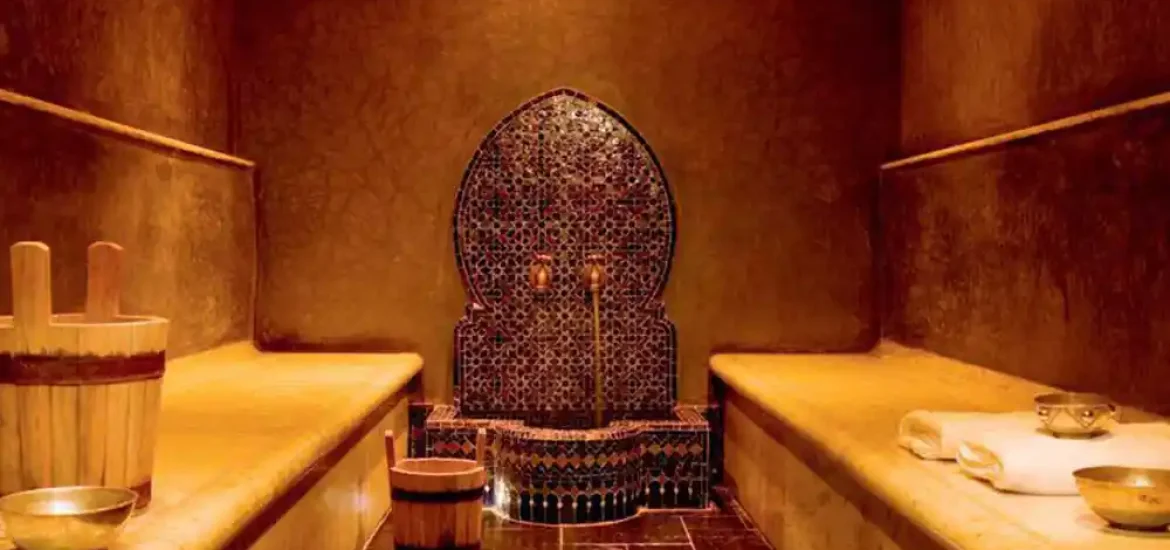
Fez — A hammam is a steam bath and ritual cleanse with deep roots in the Islamic world, a cornerstone of public hygiene and spirituality across North Africa and beyond.
In Morocco, these domed bathhouses sit near mosques and markets, offering a sequence of warm and hot rooms, scrubs, and rinses that leave the skin polished and the mind clear.
The practice is as social as it is physical. For generations, Moroccan hammams have served as affordable community spaces where neighbors catch up, celebrate milestones, and reset before weddings and holidays.
Attendants apply black soap and a rough kessa glove for a deep exfoliation that regulars consider essential self-care.
After years when minimalism and icy dips set the tone, heat-based bathing is back in global wellness. This shift is pushing luxury and urban spas to add hammam suites or full wet circuits that pair steam, scrub, and cold contrast.
International hotels have embraced the ritual. In Madrid, a renovated city-center spa features marble hammam rooms and steam areas that reinterpret North African traditions for a European audience, part of a wider move to blend heritage bathing with modern skincare and design. The result is a gentler, more private format than the bustling communal bathhouses found in Morocco’s neighborhoods.
For first-timers, the core steps remain familiar: warm up in steam, lather with olive-based black soap, submit to a brisk scrub with the kessa glove, then rinse and cool down. Some spa menus add argan-oil massages or clay masks, but the effect is the same: lighter limbs, softer skin, and a quiet, post-sauna calm. Guides for visitors to Marrakech outline this sequence, underscoring how tradition translates neatly to today’s wellness playbook.
At home, the hammams faces real-world pressures. A multi-year drought has led several Moroccan cities to order weekly closures of public baths to save water, a move that affected thousands of workers.
Elsewhere in the region, restored bathhouses are drawing new audiences. Istanbul has seen a wave of heritage hammams reborn for locals and travelers, proof that the format can thrive when preservation, storytelling, and service align. Together with Morocco’s living tradition, these revivals provide a template for exporting the ritual without losing its essence.
The appeal is easy to understand. A proper hammam is not only about glowing skin; it is a social reset, a slow hour away from noise, and a reminder that wellness did not start with apps or gadgets.