Rabat – In its latest feature on transformative food journeys, National Geographic has highlighted six immersive gastronomic experiences across Morocco.
By spotlighting these six experiences, the publication highlights the country’s culinary diversity.
Together, they paint a portrait of a country where food is not merely consumed but shared, celebrated and preserved.
Cook experience with Atelier Chef Tarik
At the foothills of the High Atlas Mountains, Atelier Chef Tarik offers more than just culinary instruction.
Based in Tahannaout, the community-focused cookery school welcomes small groups eager to master Moroccan classics in an intimate, garden setting.
Participants prepare traditional dishes before sitting down together to share the meal they’ve created.
If guided by chef Youssef, guests are treated not only to expert instruction but also to lively storytelling and humor that bring the experience to life.
What sets Atelier Chef Tarik apart is its social mission: the school relocates every decade to towns and villages with fewer economic opportunities, ensuring its presence benefits local communities.
A street food journey through Marrakech
In Marrakech, culinary discovery begins in the medina’s labyrinthine alleys. A guided walking tour reveals a vibrant street food culture shaped by centuries of trade and tradition.
The journey often starts in the historic Jewish Quarter with sfenj, which is a fluffy Maghrebi doughnut enjoyed plain, filled with egg, or drizzled with honey.
From there, visitors weave through souks sampling briny olives, chebakia pastries coated in sesame and honey, and kaab el ghazal, delicate crescent-shaped treats filled with almond paste and orange blossom water.
The tour typically culminates at Chez Lamine, where mechoui lamb is slow-cooked underground for up to five hours.
Sunset dining among olive groves
Just 30 minutes outside Marrakech, Farasha Farmhouse merges agrotourism with refined dining.
Set against the backdrop of the Atlas Mountains, the retreat hosts sunset suppers beneath fairy lights strung between 400 olive trees.
Founded by Fred and Rosena Charmoy, the property embraces local craftsmanship, from zellige tiles to vintage Moroccan furnishings.
The culinary highlight is a five-course feast built around seasonal produce from the farm’s own garden.
Dishes may include shredded lamb pastilla paired with fennel salad and mint labneh, followed by date crumble topped with mint-tea ice cream.
Visit Amal Women’s Training Center
Food also serves as a vehicle for social transformation. Founded by Nora Fitzgerald Belachen, the Amal Women’s Training Center was created to support disadvantaged women through culinary training.
More than a decade after its founding, Amal has trained over 300 women, equipping them with professional skills and economic independence.
Its restaurant in Marrakech’s Gueliz district serves classic tagines, lamb specialties and nostalgic desserts, including orange-and-cinnamon ice cream that evokes childhood memories across Morocco.
The initiative underscores how gastronomy can extend beyond taste, becoming a platform for empowerment and social change.
Enjoy mint tea
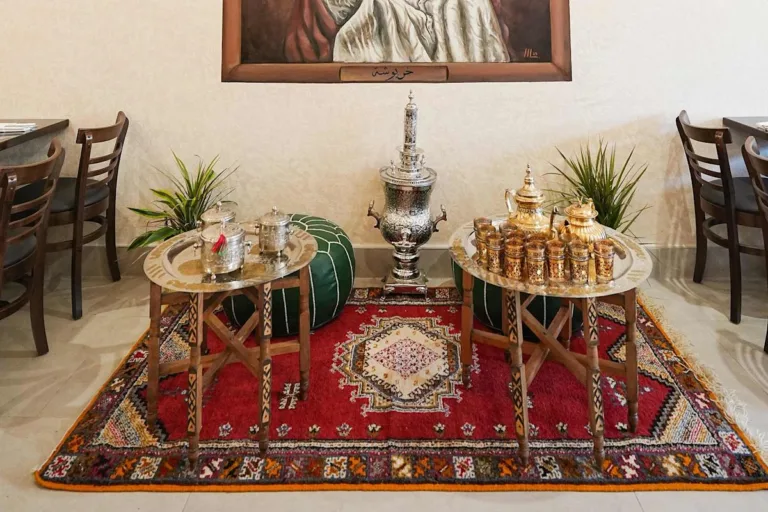
No culinary journey in Morocco is complete without participating in the tea ritual known locally as atay naa naa. Mint tea, typically gunpowder green tea infused with fresh mint and generous sugar, remains a cornerstone of hospitality.
Travelers can experience the ceremony in village homes, souks and dedicated teahouses such as 1112 Marrakech and Zawia Tea Room, both located in Marrakech.
The deliberate pouring from a height, creating a delicate froth, transforms a simple beverage into a symbol of welcome and connection.
Learn about the sanctity of bread
Bread anchors every Moroccan meal, serving as both sustenance and symbol.
In Amazigh communities of the Atlas Mountains, tafarnout is baked against the walls of clay ovens, while khobz, with its crisp crust and soft interior, accompanies soups and stews.
At Kasbah Africa, visitors can tour local mills and bake traditional bread, gaining insight into ancestral techniques.
Meanwhile, La Sultana Marrakech offers workshops that combine hands-on baking with visits to communal ovens, concluding with desserts and warm mint tea.