Fez — After stops in Marrakech and Tangier, Morocco Fashion Week continued its journey across the country to a new stage in Taza on November 29.
The event placed the city’s heritage and creativity at the heart of the runway, turning its spotlight on the richness of local craft and regional savoir-faire.
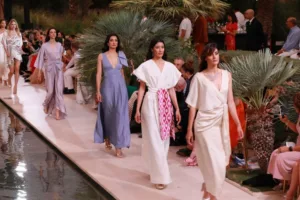
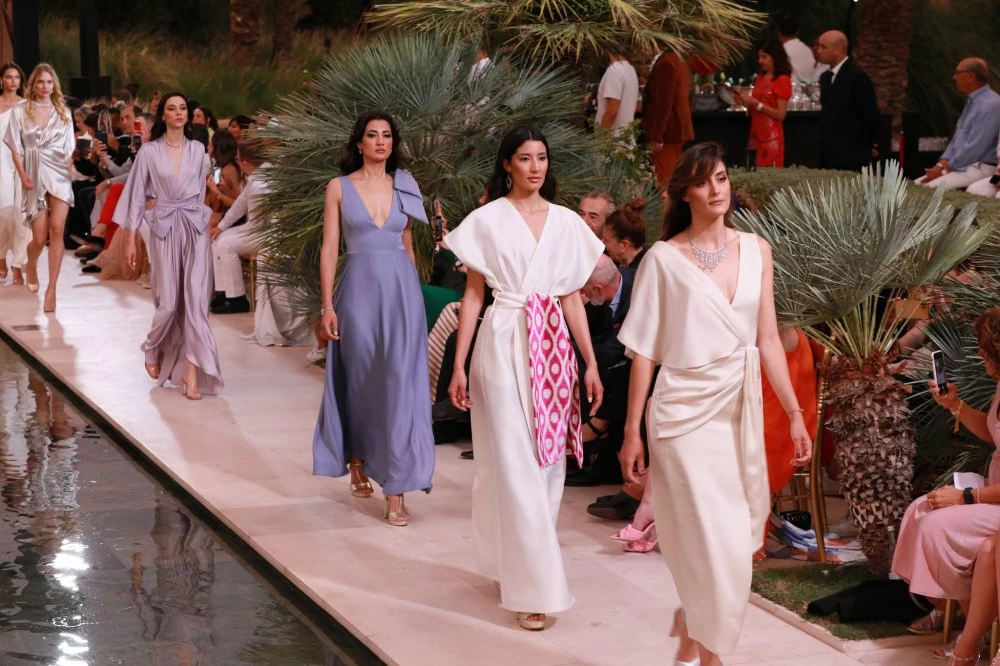
The evening was built around caftan collections by three Moroccan designers. Their work combined refined silhouettes, meticulous handwork, and a clear dialogue with the traditions of Taza and its neighboring cities.
Caftans that tell regional stories
Designer Sahar Saleh, who hails from Taza, dedicated her collection to her home city. She drew on ancestral techniques and worked closely with local artisans. The result was a series of pieces that paid tribute to the textures, motifs, and gestures rooted in Taza’s craft culture.
Through embroidery, cuts, and finishing details, her caftans connected the runway to workshops and looms that usually remain behind the scenes. The collection underlined how fashion can help keep regional know-how alive by giving it fresh forms and new audiences.
From Fez, designer Caftan by Maha offered a different but complementary voice. Her pieces carried the mark of Fassi textile tradition, with sophisticated structures and rich materials. Fez, often described as Taza’s “cultural and historical sister,” appeared in the precision of the work and the density of its decorative language.
Maha’s silhouettes entered into a quiet dialogue with Taza’s setting. They linked one historic city to another, showing how regional identities can meet on the same runway without losing their specificity.
Meknes-born designer Amina Benzekri Benrahal closed the trio. Her name has long resonated in the world of Moroccan caftan, both nationally and internationally. In Taza, she presented creations that reflected full mastery of an emblematic art of dress. Her work showcased noble fabrics, finely controlled lines, and finishes that confirmed her reputation for excellence.
Tradition, materials, and modern lines
For the organizers, each designer offered a distinct reading of Moroccan textile heritage. All three blended careful handwork, high-quality materials, and modern cuts.
The collections invited the audience on a refined journey through Moroccan tradition. They showed how caftan design today remains rooted in history while embracing new shapes, proportions, and styling. The evening suggested that Moroccan fashion, far from looking backward, is capable of drawing energy from its past to project itself into the future.
A cultural boost for Taza
Beyond the artistic dimension, this Taza edition of Morocco Fashion Week carries a strategic meaning for the city. Hosting the event gives Taza increased visibility on the national map. It helps encourage the emergence of new talents and strengthens cooperation between local actors, public institutions, and the wider fashion and design ecosystem.
For a territory still rarely visited by major cultural events, the choice of Taza is a strong signal. It highlights a living heritage and reveals creative potential that often remains underexposed. It also shows that style and innovation are not limited to Morocco’s largest cities.
A fashion week as development engine
With this new step, Maroc Fashion Week confirms its ambition to be more than a series of shows. The project positions itself as a cultural development engine and a tool for showcasing Morocco’s riches in all their diversity and authenticity.
The success of the Taza stage rested on broad institutional mobilization. The Association du Grand Taza pour le Développement (Grand Taza Association for Development) played a central role, building on the first edition of the Festival de Taza organized under the theme “L’Haity, memory and living art.”
The event was held in collaboration with the Commune of Taza, the Ministry of Culture, Communication and Youth, and the Ministry of the Interior. Together, they helped bring to life a moment that ties fashion to territory.
Through Taza, Maroc Fashion Week reaffirmed a simple idea: when heritage, artisans, and designers share the same platform, a city’s identity can walk the runway — and carry its story far beyond its own walls.