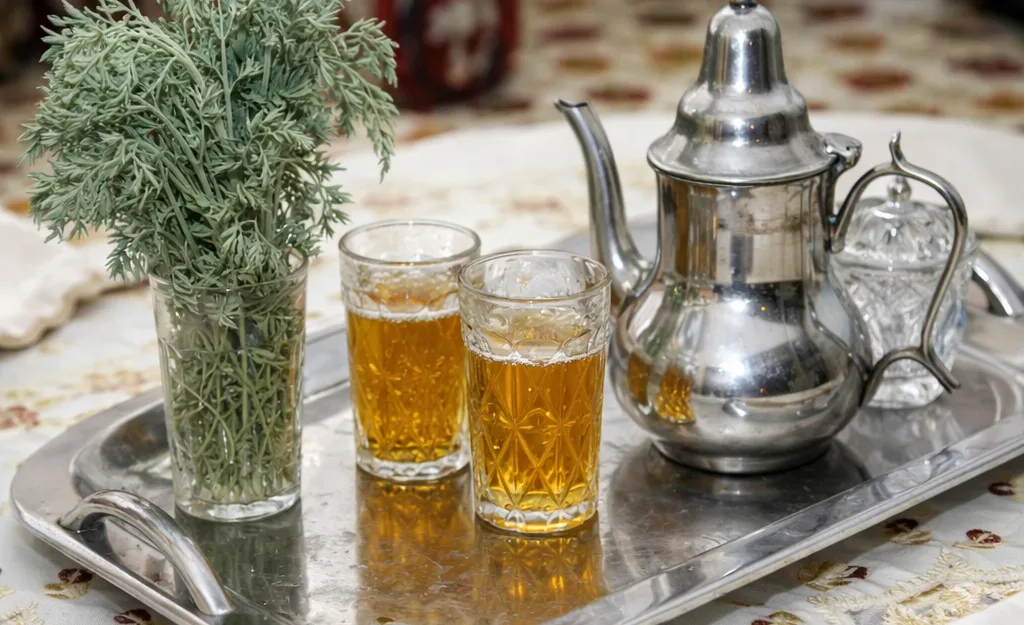
Fez — During winter, tea culture in Morocco subtly shifts. While mint tea remains a national symbol, sheeba (warmwood plant or Artemisia absinthium) tea gains remarkable popularity once cold weather sets in.
Known for its sharp bitterness and intense aroma, sheeba, or wormwood, occupies a special place in seasonal rituals and household remedies.
A winter drink rooted in tradition
Sheeba tea has long been associated with colder months. Traditionally prepared with green tea and minimal sugar, it contrasts sharply with the sweetness of mint tea. Many Moroccans associate its taste with strength, resilience, and seasonal balance.
In rural and urban homes alike, sheeba is often introduced as soon as winter begins. Its presence signals a change in rhythm, diet, and daily habits tied to colder weather.
Perceived health benefits drive its popularity
One key reason for sheeba’s winter dominance lies in its medicinal reputation. The plant is widely believed to aid digestion, reduce bloating, and relieve stomach discomfort after heavy meals common during winter.
Sheeba is also associated with warming the body and supporting immunity. While not a medical treatment, its use reflects inherited knowledge passed down through generations, especially during flu season.
Why some prefer it over mint tea in winter
Mint tea is refreshing and aromatic, but its cooling effect makes it less appealing during colder days. Sheeba, by contrast, delivers warmth and intensity that many find more comforting.
Its bitterness is also seen as beneficial. For many Moroccans, bitter flavors symbolize cleansing and balance, especially after rich winter foods and reduced physical activity.
A taste acquired with age and experience
Unlike mint tea, sheeba is rarely a first choice for children. Its appeal grows with age. Many adults associate it with maturity, discipline, and seasonal wisdom.
Serving sheeba tea often carries intention. It is not an all-day drink, but one offered deliberately, usually in the evening or after meals.
A ritual tied to season and memory
Beyond taste, sheeba tea carries emotional weight. Its smell and flavor evoke memories of winter evenings, family gatherings, and advice from elders.
This emotional connection reinforces its place in Moroccan culture. Drinking sheeba becomes both a sensory and cultural experience tied to the season.
A seasonal balance, not a replacement
Sheeba does not replace mint tea year-round. Instead, it complements it. As spring returns, mint naturally regains its dominance.
For winter, however, sheeba reigns. Its bitterness, warmth, and symbolism align perfectly with the season, making it, for many, Morocco’s true winter tea.