Fez — As the Africa Cup of Nations continues across Morocco, the tournament has distinguished itself not only through competition but thorough execution.
AFCON 2025 has been built on a clear operational philosophy: centralize systems, anticipate pressure points, and mobilize national institutions around a single delivery framework.
The result is a tournament functioning with precision, clarity, and confidence.
A single digital gateway governing access and flow
At the heart of the tournament lies a unified digital structure centered on the “Yalla” platform. Ticket purchases, stadium entry, and access to official fan zones are all tied to a single Fan ID. This structure reduces duplication, eliminates bottlenecks, and ensures uniform enforcement across cities and venues.
The same platform supports international visitors through streamlined visa facilitation and multilingual assistance, allowing supporters to move from arrival to matchday without procedural friction. This integration has turned what is often a fragmented experience into a continuous, predictable journey.
Rail-driven mobility as an organizing principle
Morocco’s transport strategy has treated rail as the tournament’s circulatory system. The national railway operator, ONCF, deployed expanded schedules and additional capacity synchronized with match calendars.
This rail-first approach connects host cities efficiently and safely, enabling fans to follow teams across the country while reducing congestion on roads and at airports. Movement between cities has become a feature of the tournament rather than a constraint.
Structured fan zones make for a distributed celebration
Official fan zones have extended AFCON beyond stadium walls into carefully designed public spaces. These zones combine live screenings, cultural programming, food, and music, while remaining free and regulated through the same Fan ID system used for stadiums.
By dispersing large gatherings into planned environments, organizers have preserved atmosphere while maintaining safety and order. In this way, the tournament’s presence is felt city and nationwide without overwhelming any single site.
A security model observed at the highest level
Security at AFCON 2025 has been comprehensive, visible, and deliberately structured. Stadiums, transport hubs, and fan zones operate under layered monitoring systems, supported by rapid-response units and coordinated command centers.
The scale and sophistication of this architecture has drawn international institutional attention. Delegations from the FBI have been present during the tournament to observe Morocco’s security deployment, surveillance integration, and crowd-management protocols. Their presence demonstrates that the tournament’s security framework is not only effective but considered a reference model for large-scale sporting events.
Hospitality and infrastructure aligned with global standards
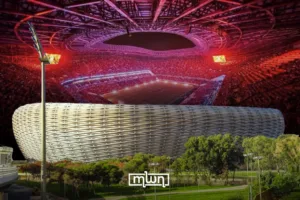
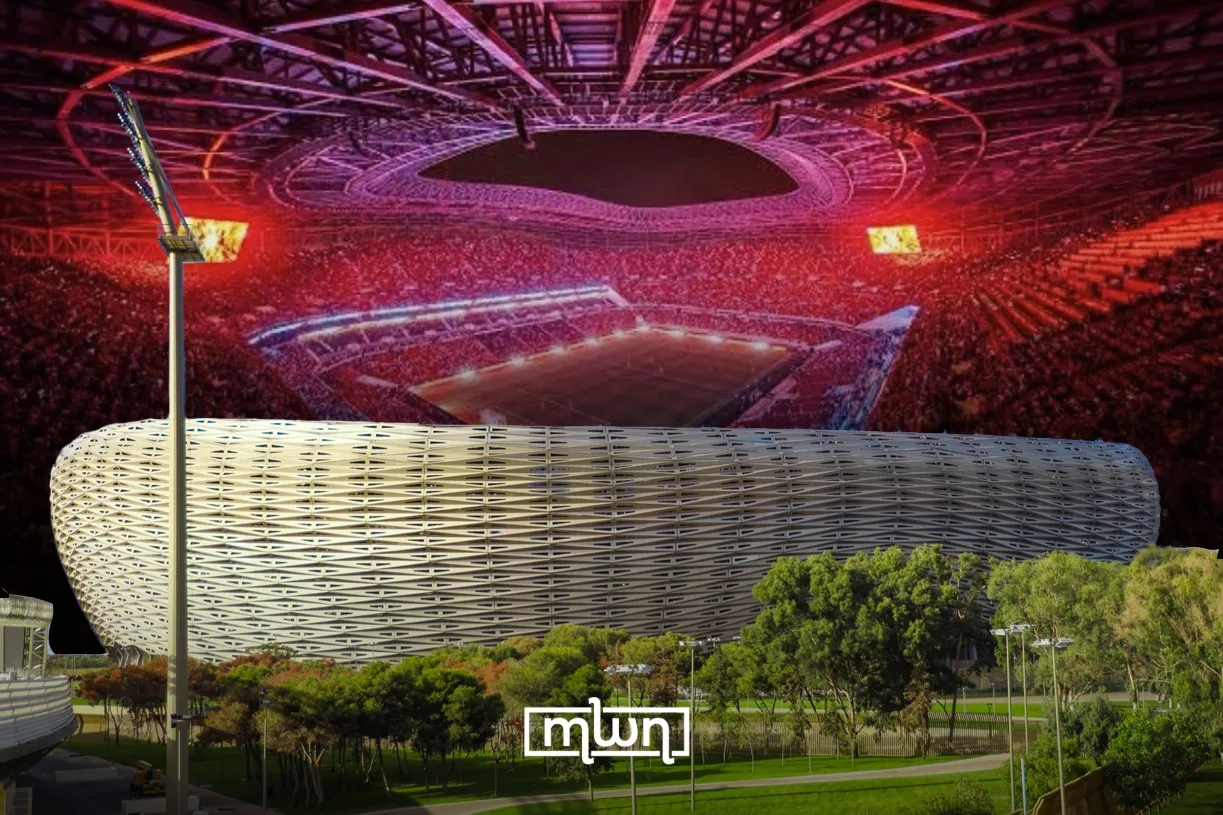
Upgraded stadiums, premium hospitality services, and clearly segmented access routes have reinforced Morocco’s capacity to deliver events at the highest level. These elements reflect experience, long-term planning, and alignment with international benchmarks set by major global tournaments.
The approach also mirrors Morocco’s broader trajectory as a future co-host of the 2030 FIFA World Cup, with AFCON 2025 serving as a full-scale operational rehearsal.
Fan reception shaped by clarity and control
Across host cities, volunteers, signage, and coordinated public services have created a welcoming and navigable environment. Procedures are consistent, information is clear, and transitions between spaces are smooth. Fans encounter structure rather than improvisation, allowing the tournament’s festive energy to flourish within an organized framework.
AFCON 2025 demonstrates that continental tournaments can be delivered with discipline, ambition, and institutional coherence. Morocco’s execution confirms that peak organization is not aspirational—it is achievable, and it is unfolding in real time.