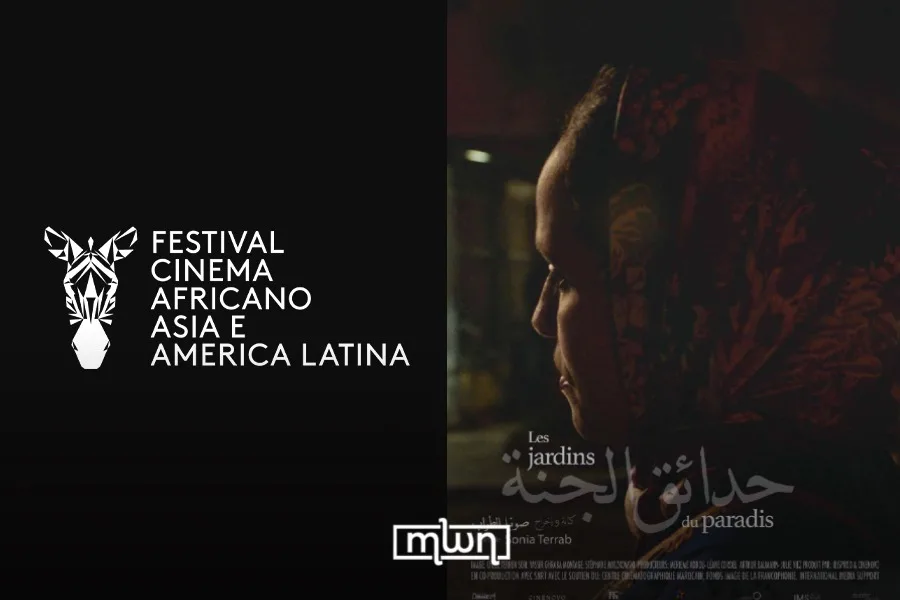
Casablanca – Moroccan short film “Paradise Garden,” directed by filmmaker Sonia Terrab, won two prizes during the 35th edition of the African, Asian, and Latin American Film Festival in Milan.
The film received the awards for “Best African Short Film” and the “Multimedia San Paolo – Telenova Award,” further establishing Moroccan cinema’s presence on the international stage.
Closely grounded in lived experience, the story addresses an issue that many women continue to face within patriarchal systems. It follows Naima and her son Ahmed, who live in a Moroccan bidonville. Their lives are disrupted when they learn that their neighborhood, including Ahmed’s school, will be demolished.
As the father is absent and has abandoned the family long ago, Naima faces a major legal obstacle: she cannot transfer her son to another school without the father’s approval and signature. In this case, the mother has no legal authority to act independently, which puts Ahmed’s future at risk.
The film is not only a work of fiction but also a deeper reflection on the persistence of laws that grant men legal privileges over women. It invites viewers to question these structures and reflect on the need for change.
Cinema as a voice for the marginalized
In Morocco’s current Moudawana (Family Code), the father still holds legal guardianship (wilaya), even in cases of absence. While this may seem like an exception, in reality, many women and children continue to be heavily affected by its consequences.
With this film , Terrab makes her narrative debut film following background in documentary filmmaking. Her work consistently focuses on marginalized communities whose voices are often unheard. These are people encountered in everyday life, yet their struggles remain underrepresented and demand greater visibility.
Coproduced by Iris Productions and Cinenovo, “Paradise Garden” follows a range of previous successful documentary works, including “Shakespeare in Casablanca” (2016) and “L7sla – The Dead End” (2019).
Such works and many others are proof that cinema is not only a space for entertainment, but also a powerful medium for conveying messages that concern us all. It has the ability to raise awareness, provoke reflection and inspire change.
Read also: Montreal to Host 3rd ‘Gnaoua Art and Cultures of the World Festival’ in April