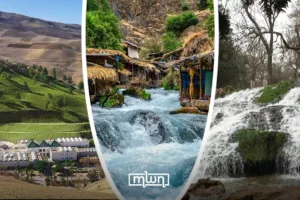
Fez — Spring is when Morocco’s water landscapes feel most generous.
Snowmelt, recent rain, and milder temperatures make this the strongest season for springs, cascades, and river sources, especially in the Middle Atlas and northern mountain zones.
For travelers looking beyond beaches and medinas, five places stand out for both beauty and atmosphere: Ras El Ma in Chefchaouen, Ain Asserdoun in Beni Mellal, the Sources of Oum Er-Rbia near Khenifra, Ain Vittel in Ifrane, and the thermal waters of Moulay Yacoub near Fez.
Ras El Ma, Chefchaouen
Ras El Ma is one of those rare urban springs that feels both practical and poetic.
It’s the water source that helped give life to Chefchaouen, supplying drinking water, powering mills, and irrigating nearby land.
That history still gives the site weight, but in spring what really matters is the contrast: cold running water, green edges, and mountain light just outside the blue medina.
It is easily one of the most photogenic quick escapes in northern Morocco.
Ain Asserdoun, Beni Mellal
Ain Asserdoun is less wild than some of the other picks, but that is part of its appeal.
The spring sits inside one of Beni Mellal’s best-known green spaces, where water channels, gardens, and shade make it feel like a polished oasis rather than a remote stop.
Ain Asserdoun is among the springs most visited by tourists and hikers, which says a lot about its place in Morocco’s spring landscape.
In April and May, the balance of fresh water and lush vegetation makes it one of the country’s easiest high-reward nature visits.
Sources of Oum Er-Rbia, near Khenifra
For travelers who want something more dramatic, the Sources of Oum Er-Rbia are among Morocco’s strongest spring-season choices.
Oum Er-Rbia, one of Morocco’s major rivers, rises about 40 kilometers from Khenifra, with dozens of springs feeding the river’s beginning. That combination of multiple sources, rushing water, and red-rock terrain gives the area a rougher, more cinematic beauty than a simple picnic spring.
In spring, the fuller flow and greener slopes make the site far more compelling than it can be later in the dry season.
Ain Vittel, Ifrane
Ifrane is practically built for spring, and Ain Vittel is one of the clearest reasons why.
The region’s springs, waterfalls, forests, lakes, and picnic-friendly natural sites and Ain Vittel is a fresh-air stop about three kilometers from town, known for pure spring water and easy relaxation.
It is not Morocco’s most spectacular water site, but it may be one of the most pleasant in spring, when the cedar landscape is still cool, the ground is green, and the whole area feels lighter than in peak summer.
Moulay Yacoub, near Fez
Not every spring visit has to be about cold mountain water.
Moulay Yacoub earns its place because it offers something different: warm mineral-rich thermal waters that Morocco’s tourism authorities repeatedly present as a major wellness destination near Fez and Meknes.
The site is a place for hot baths and thermal care and spring as an especially good time to visit the historic spa town.
For travelers who want a calmer, restorative spring escape rather than a hike or a viewpoint, Moulay Yacoub remains one of Morocco’s most established water stops.
The bigger appeal of these places is that they show a greener Morocco, one that many visitors miss when they focus only on desert circuits or imperial cities.
In spring, water changes the mood of the country. It sharpens color, softens heat, and makes even familiar regions feel briefly renewed.
That is exactly why these five springs, each in a different register, are worth building a trip around.