Rabat – The second day of Maroc Fashion Week 2026 unfolded in an atmosphere where tradition and innovation seamlessly converged, as designers, beauty experts, and creatives gathered in Marrakech to celebrate Moroccan craftsmanship on a global stage.
Hosted at the Moroccan Culinary Art Museum, the event highlighted the richness of heritage while embracing contemporary couture interpretations that speak to today’s evolving fashion identity.
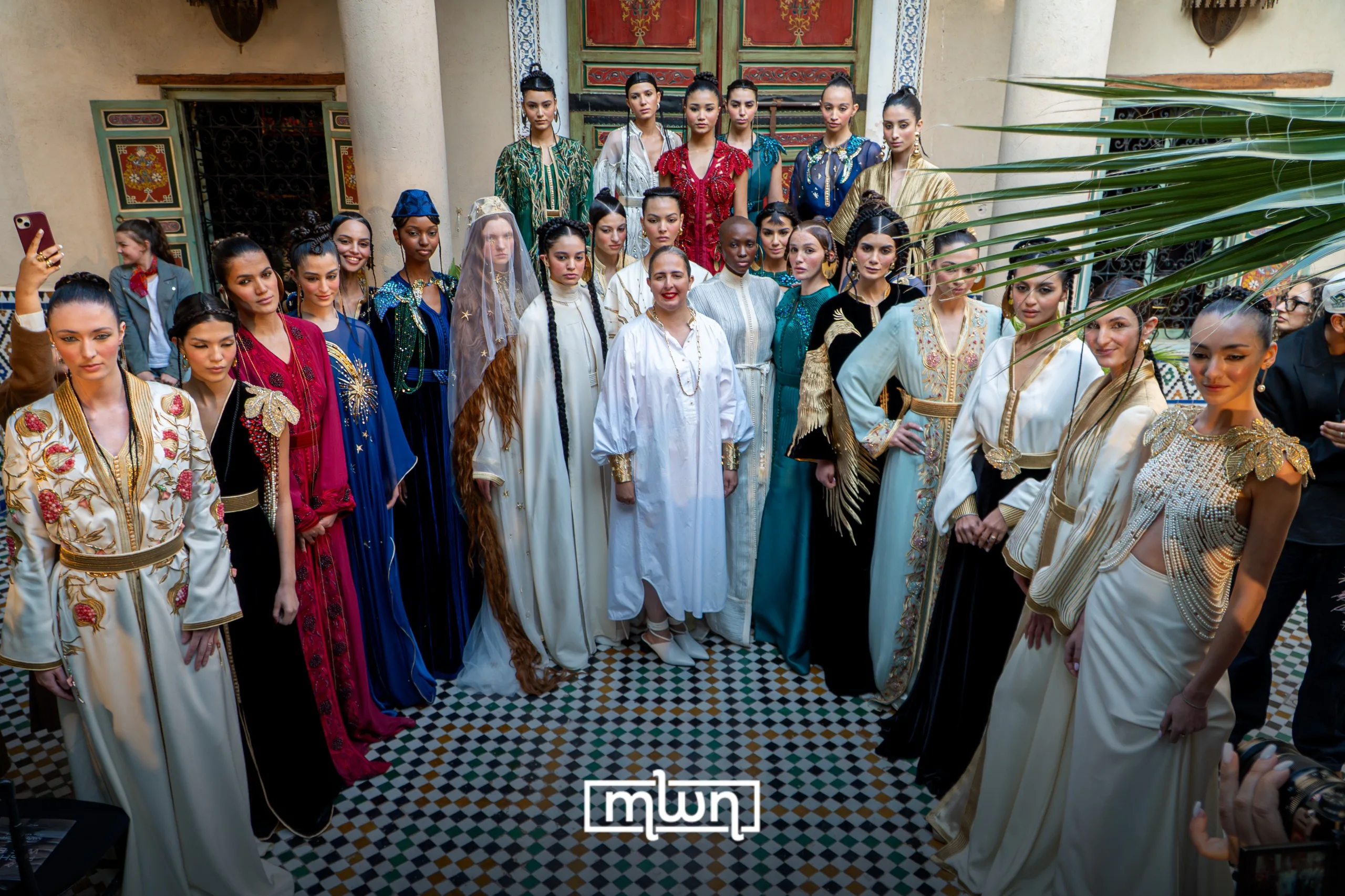
One of the most anticipated moments of the day came from Moroccan designer Sara Chraibi, who presented her haute couture collection titled “One Garden, Two Souls.”
Marking a symbolic return after several seasons in Paris, Chraibi delivered a deeply poetic and emotional runway that explored themes of unity, duality, and self-discovery.
Inspired by the writings of Jalal Al Din Rumi, the collection translated spiritual reflection into fabric, silhouette, and movement.
The caftans presented in the collection were a masterclass in balance, modern in structure yet deeply rooted in Moroccan tradition.
Flowing silhouettes were reimagined with architectural precision, featuring structured shoulders, elongated lines, and refined draping that gave each piece a sculptural quality.
While the foundation of the caftan remained intact, Chraibi introduced contemporary cuts, sheer overlays, and asymmetrical detailing that added a sense of modern fluidity without compromising cultural authenticity.
Color played a central role in the storytelling of the collection. Soft ivory and sand tones evoked purity and introspection, while deep emerald greens and midnight blues added emotional depth and richness.
Occasional bursts of gold shimmer symbolized spiritual elevation and connection, subtly catching the light as models moved across the runway.
These tones worked in harmony, creating a visual narrative that reflected both earthiness and transcendence.
The craftsmanship was further elevated through intricate embellishments.
Traditional Moroccan embroidery techniques were reinterpreted with a modern sensibility, featuring delicate threadwork, crystal applications, and hand-stitched detailing that emphasized texture and light.
The result was a collection that felt both timeless and forward-looking, honoring ancestral techniques while pushing couture boundaries.
Complementing the garments were carefully curated accessories that enhanced the visual harmony of each look. Jewelry played a particularly significant role, with gold-toned earrings, ornate chokers, and hand-adorned cuffs reflecting Moroccan artisanal heritage.
Many pieces featured subtle gemstone accents, emerald, pearl, and amber, that echoed the colors of the caftans, creating a cohesive aesthetic where every detail felt intentionally connected.
The jewelry did not overpower the garments; instead, it elevated them, reinforcing the idea of balance between simplicity and opulence.
Adding another layer to the day’s narrative, beauty expert Farah El Ouali, director of the Farah El Ouali Academy, emphasized the importance of Moroccan heritage in global beauty and fashion collaborations.
With over 30 years of experience, she highlighted her team’s international journey across Japan, France, and Italy, where Moroccan artistry continues to influence global beauty standards.
Together, the presentations and insights of Day 2 reflected a unified vision: Moroccan fashion as both a cultural anchor and a global language.
From the poetic elegance of Sara Chraibi’s couture to the beauty philosophy championed by Farah El Ouali, the day celebrated a Morocco that is deeply rooted in tradition while confidently stepping into the future of fashion.
As the runway lights dimmed in Marrakech, what remained was a clear message, Moroccan couture is not only preserving its heritage, but redefining it for the world stage.