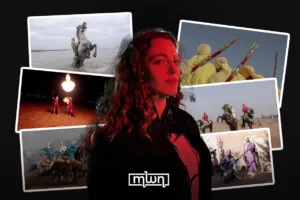
Fez — Italian photographer Chantal Pinzi is among the 2026 World Press Photo Contest winners for her project “Farīsāt: Gunpowder’s Daughters,” a story centered on Moroccan women preserving and reshaping the equestrian tradition of Tbourida.
World Press Photo lists the work among its 2026 winners in the Africa Stories category, while Pinzi’s agency, Panos Pictures, confirmed the distinction this week.
The project focuses on horsewomen entering a cultural space long dominated by men.
One of the most striking images in the series shows Ghita Jhiate handling her restless stallion in Sidi Rahal after finally realizing her dream of riding in a Tbourida performance in 2025, years after her father had forbidden her from taking part. World Press Photo’s published caption says she rode alongside Zahia Aboulait, described in coverage of the project as one of the pioneers of female Tbourida in Morocco.
A Moroccan tradition seen through women’s eyes
World Press Photo describes Tbourida as a UNESCO-recognized Moroccan equestrian tradition dating back to the 16th century, in which groups of riders gallop in unison and fire rifles in a choreographed display inspired by cavalry warfare. The organization says the practice was historically reserved for men, but began opening to women after Morocco’s 2004 family code reforms strengthened women’s rights.
That shift remains limited but significant. According to the contest’s published background on the project, Morocco now has seven all-female troupes out of roughly 300 in total. The same material notes that many of these riders shoulder major personal expenses themselves, from horses and costumes to the permits needed for gunpowder use.
The judges highlighted the project not just for its subject, but for how it presents that subject visually.
More than a sports story
Pinzi, who is based in Berlin, is widely described as a visual activist working in photojournalism and documentary photography. Multiple profiles say she often uses sport as a way to expose inequality and social exclusion, especially in communities where women still face barriers to participation.
That framing helps explain why “Farīsāt: Gunpowder’s Daughters” resonates beyond photography alone. The project is about heritage, but also about entry, visibility, and the cost of claiming space inside a living tradition. In Morocco, where Tbourida remains one of the country’s most recognizable forms of ceremonial performance, the presence of women riders carries both cultural and symbolic weight.