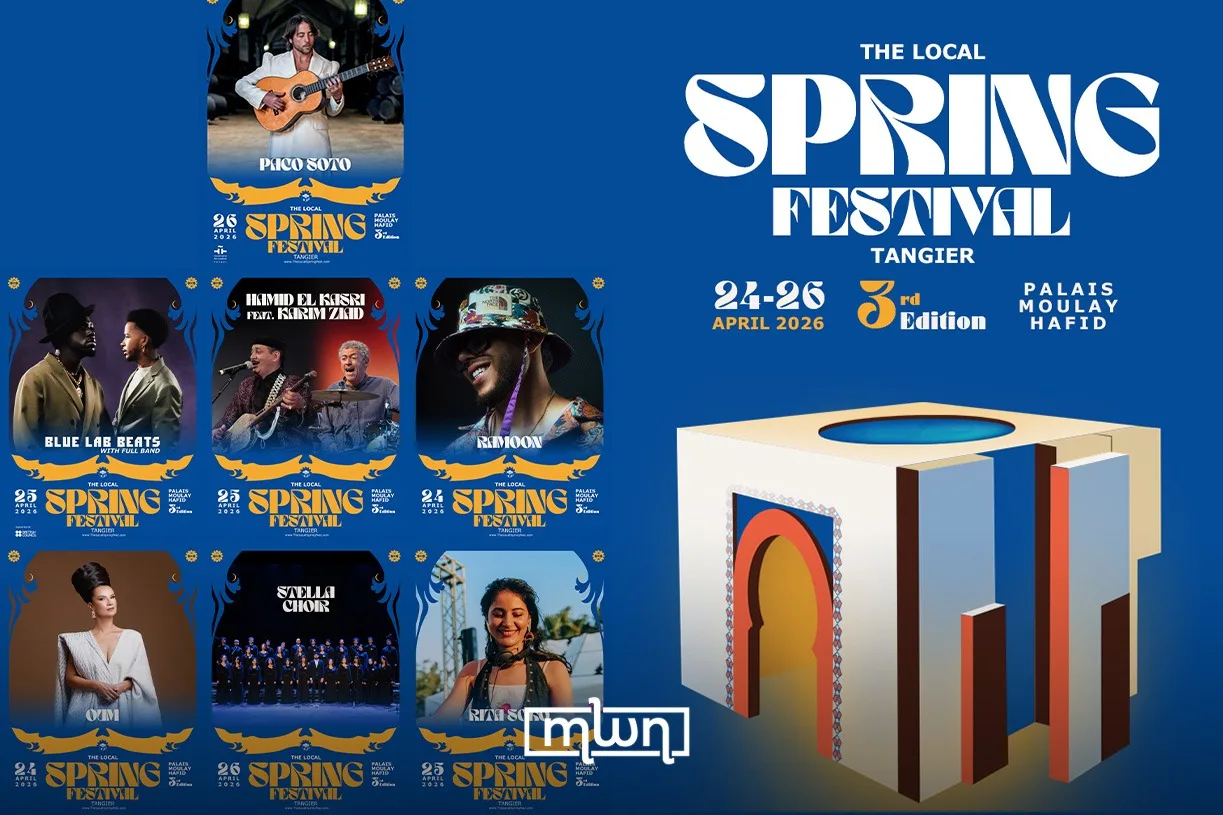
Fez — Tangier will host the third edition of The Local Spring Festival from April 24 to 26 at Palais Moulay Hafid, with a program built around live music, visual arts, and community-centered cultural activities.
The event returns with a lineup that mixes major Moroccan performers, rising local voices, and international artists, giving this year’s edition a broad and energetic profile.
A lineup blending established stars, fresh voices
The festival opens on April 24 with Oum and Ramoon, pairing one of Morocco’s best-known contemporary artists with a younger name shaping the country’s newer music scene.
The second day brings one of the strongest combinations in the program, with Blue Lab Beats, Hamid El Kasri, Karim Ziad, and Rita Soko.
That lineup brings together Grammy-winning international talent, Gnawa depth, and newer currents moving through Morocco’s live music scene.
The closing night on April 26 will feature Stella Choir and Paco Soto, giving the final day a different rhythm and texture.
Across the three evenings, the festival moves between soul, Gnawa, jazz-influenced fusion, choral performance, and Mediterranean sounds, creating a program that feels varied without losing its identity.
That range is clearly part of the festival’s appeal. Instead of sticking to one genre or one audience, The Local Spring Festival is building a space where different generations and styles can meet on the same stage.
The result is a lineup that feels curated for discovery as much as recognition.
A fuller cultural experience
Music may be the main attraction, but the festival is also expanding the experience through art installations, a local creators market, masterclasses, and roundtable discussions. Those elements give the event a wider cultural dimension and make it more than a concert weekend.
The creators market will offer visibility to local talent, while the masterclasses and discussions add room for exchange, learning, and direct interaction.
Art installations further strengthen the festival’s visual identity, turning the venue into a space shaped by both performance and design.
This broader format helps explain why the event continues to grow in Tangier. It is not only offering audiences a chance to watch artists perform, but also inviting them to move through a shared cultural space built around creativity, participation, and encounter.