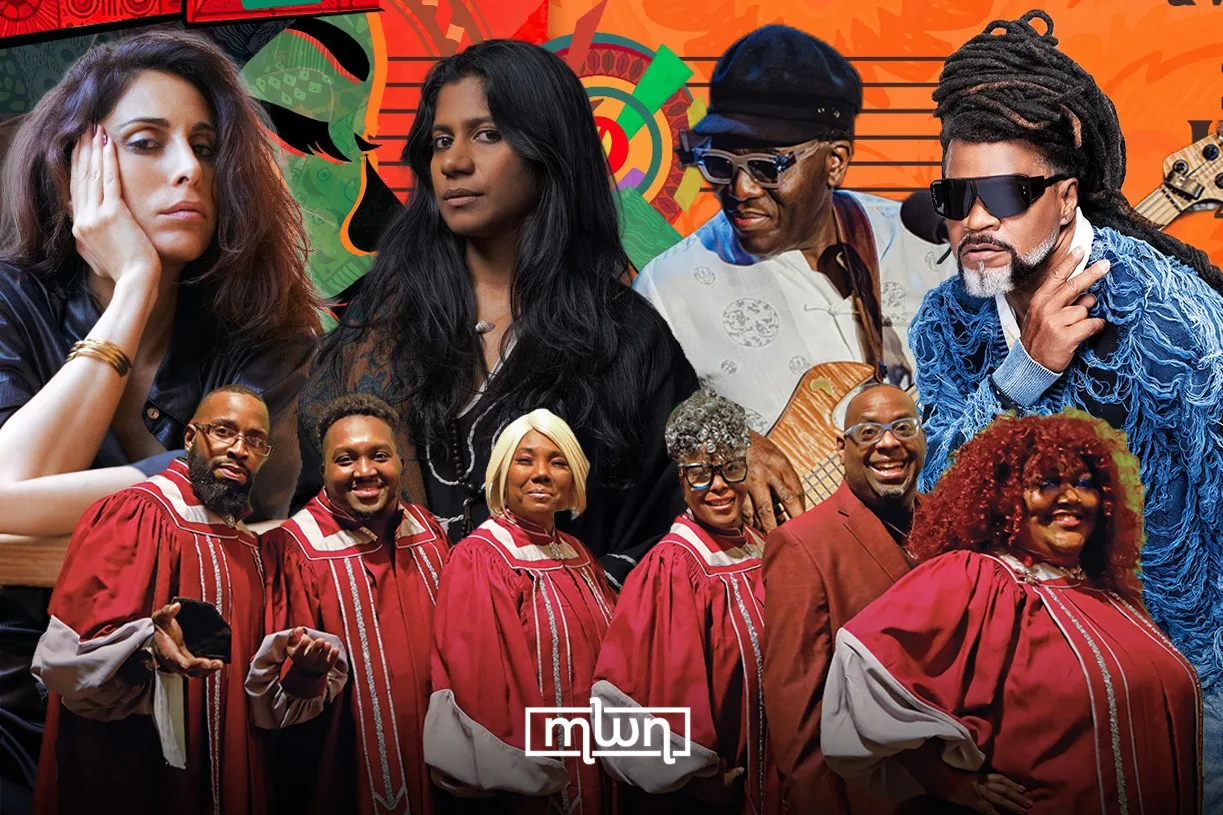
Fez — The 2026 Gnaoua and World Music Festival is shaping up as one of Essaouira’s richest lineups in years, bringing together Moroccan maâlemin, African stars, Arab alternative voices, gospel performers, Amazigh icons, and experimental musicians from June 25 to 27.
The 27th edition will gather 460 artists, placing the lineup at the center of the festival’s identity: not just concerts, but musical encounters built around fusion, transmission, and cultural dialogue.
Global names meet Gnaoua tradition
Carlinhos Brown stands as one of the edition’s biggest international names. The Brazilian percussionist and singer returns to Essaouira with a sound rooted in Bahia’s Afro-Brazilian traditions, mixing samba-reggae, African rhythm, Brazilian popular music, and stage-driven energy.
His return carries added weight because he will also reunite with Maâlem Hamid El Kasri in a fusion concert, placing Gnaoua rhythms in direct conversation with Afro-Brazilian percussion traditions. The official program lists the El Kasri-Brown fusion for Saturday, June 27.
Richard Bona adds another major African presence to the lineup. The Cameroonian bassist, singer, and composer will perform with Moroccan singer Asmaa Lmnawar, creating one of the festival’s most anticipated crossovers. The pairing brings together Bona’s jazz-rooted African sound and Lmnawar’s polished Arabic vocal style.
Gospel, Levantine sound, and spiritual jazz
The Harlem Spirit of Gospel by Anthony Morgan will bring African American gospel to the Essaouira stage, with a performance built around choral power, soul, and collective energy.
The gospel act will also enter the festival’s fusion format through a collaboration with Moroccan musician Mehdi Qamoum, scheduled for Friday, June 26, according to the official program.
The Arab alternative scene will be strongly represented through Yasmine Hamdan, one of the most recognizable voices of contemporary Arabic experimental pop. Her music blends electronic textures with the memory of Levantine song, giving the lineup a darker, more intimate register.
Palestinian group 47Soul will bring a completely different kind of electricity. Their “Shamstep” sound mixes electronic music, hip-hop, and Levantine dabke, turning folk rhythm into a modern club and festival language.
Ganavya, born in New York and raised in southern India, adds a more meditative layer. Her work connects South Asian devotional singing with spiritual jazz, improvisation, and collective listening.
Morocco at the heart of the program
The Moroccan lineup is just as important as the international names. Oudaden will carry the Amazigh voice of the Souss region, drawing on a career that began in 1978 and a catalog of more than 37 albums and 600 songs in Tachelhit.
Hoba Hoba Spirit will bring Casablanca’s urban energy through rock, reggae, Gnaoua influence, and lyrics rooted in Moroccan realities. Their presence keeps the festival connected to Morocco’s modern band scene and its long-running culture of social commentary through music.
Bob Maghrib offers another local-global bridge, reworking Bob Marley’s legacy through Moroccan instruments, Maghrebi arrangements, Jamaican reggae, and African rhythm.
Bnat Louz & Raskas will present “AZMZ,” a creation that combines Amazigh polyphonic singing from Tafraout, electronic textures, post-rock influence, and contemporary visuals. The project shows how the festival is also making space for new Moroccan stage languages, not only established heritage forms.
The maâlemin remain the backbone
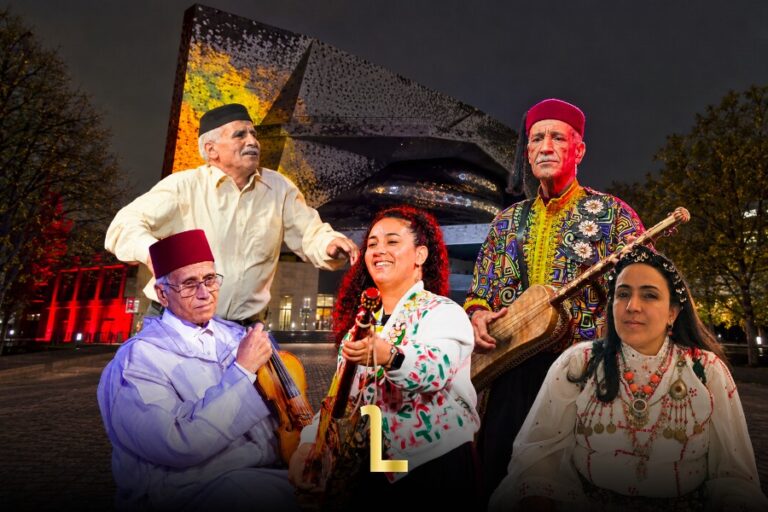
The lineup also keeps the Gnaoua maâlemin at the center, where they belong. The official program includes Maâlem Hamid El Kasri, Maâlem Mohamed Montari, Maâlem Hassan Boussou, Maâlem Amine Daoudi, Maâlem Abdelkader Amlil, Maâlem Khalil Mounji, Maâlem Houssam Gania, Maâlem Abdelkebir Merchane, and others.
This is what makes the Essaouira festival different from a standard world music event. International stars do not simply arrive, perform, and leave. They are placed inside a structure where Moroccan Gnaoua music drives the encounter.
The result is a lineup that feels both global and deeply Moroccan. It moves from Bahia to Cameroon, Palestine to Lebanon, Harlem to South India, and Casablanca to Tafraout, while keeping Essaouira as the meeting point.
For the 2026 edition, the festival’s strongest message is clear: Gnaoua is not a preserved relic. It is a living music powerful enough to host the world, absorb new sounds, and remain unmistakably rooted in Morocco.