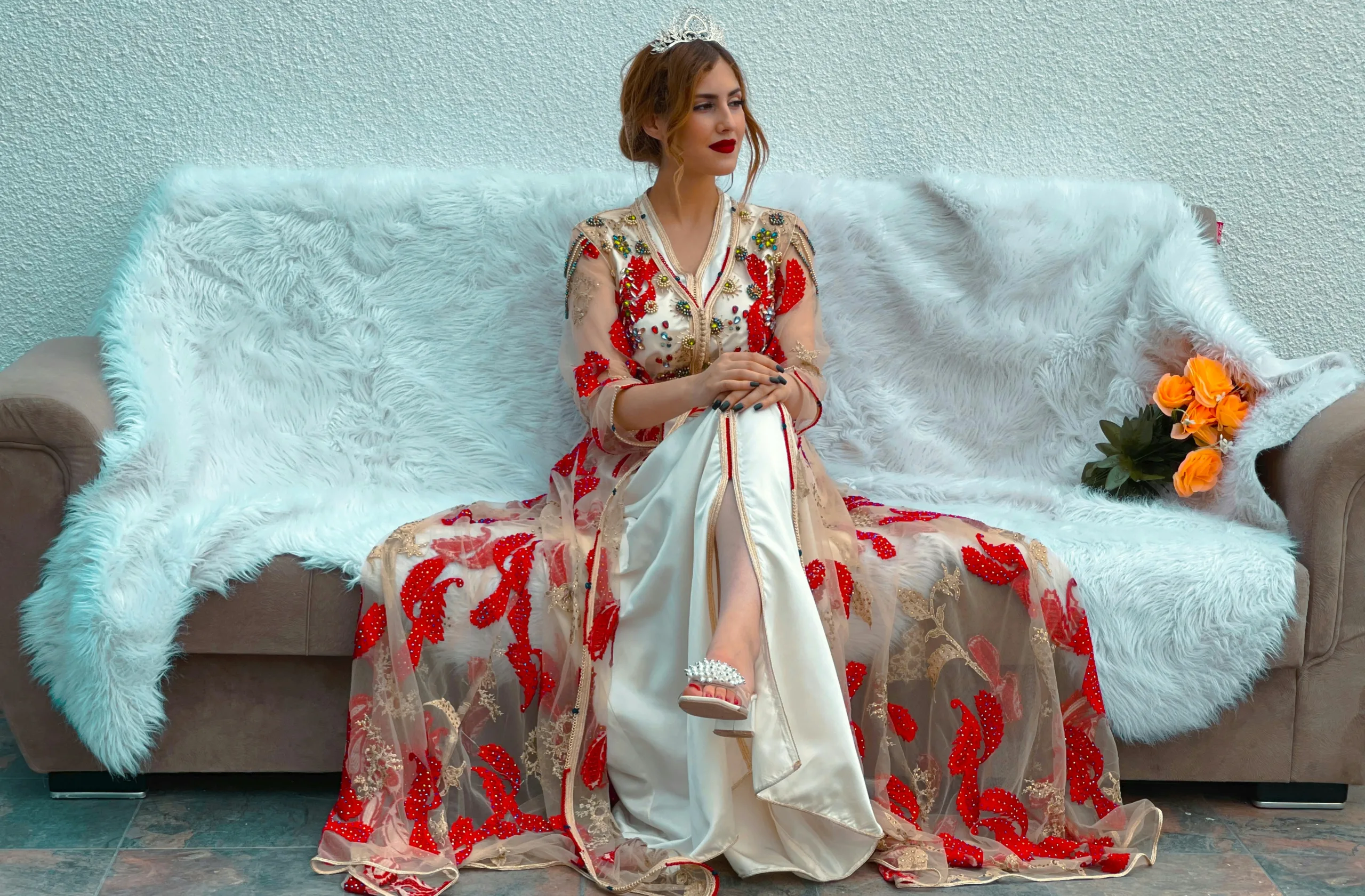
Fez — A bespoke Moroccan caftan is not bought the way a dress is bought. It is commissioned, discussed, measured, adjusted, and slowly brought to life by hands that understand fabric, ornament, and occasion.
The caftan is tied to memory as much as fashion. It appears at weddings, engagement ceremonies, Eid gatherings, official receptions, and family celebrations where clothing carries emotional weight.
A custom caftan turns that heritage into something personal, made for one body and one moment.
The tradition
Traditionally, the process begins with a woman choosing the fabric herself, often from a trusted fabric shop or souk where texture, color, shine, and weight matter as much as price.
Once she has selected the fabric, she takes it to a tailor or caftan artisan, usually with an idea of the style she wants or a reference from another caftan.
The tailor takes her measurements, discusses the cut, sleeves, neckline, embroidery, sfifa, buttons, and belt, then begins shaping the garment in stages.
The client usually returns one or more times to check the progress, try on the unfinished caftan, adjust the fit, and confirm details before the final finishing.
By the time it is ready, the caftan has passed through several hands and decisions, making the finished piece both a personal garment and a product of traditional Moroccan craftsmanship.
Where the price usually starts
A simple handmade caftan can start at around MAD 750 to MAD 1,500 ($80 to $160), especially when the design is light, the fabric is modest, and the embroidery is limited.
For a more polished formal caftan or takchita, the average buyer should expect around MAD 3,500 to MAD 5,500 ($375 to $590).
True bespoke work rises quickly. A custom luxury caftan with hand embroidery, beadwork, richer fabric, and detailed fittings often costs around MAD 4,700 to MAD 18,600 ($500 to $2,000), with bridal or designer pieces going higher.
What makes one caftan cost more than another
The biggest difference is labor. A clean satin caftan with machine finishing may look elegant, but it is not the same as a handworked piece covered in sfifa, aakad, bead embroidery, crystals, or metallic thread.
Fabric also changes the bill. Velvet, brocade, silk, lace, organza, and fine crepe cost more than lighter everyday textiles. A known designer or couture house adds another layer, because the client is paying for design direction, fittings, and a finished silhouette, not only sewing. Moroccan couture houses, such as Bouchra Filali Lahlou, now market bespoke caftans as luxury creations rooted in artisanal savoir-faire.
Timing matters too. During wedding season or before Eid, artisans have more orders and less room for rushed work. A last-minute caftan may cost more, or worse, may come back unfinished in the small details that make the garment feel expensive.
How to order one without regrets
The best way to start is with clarity. Bring reference photos, decide the occasion, choose a color family, and know whether you want a one-piece caftan or a two-piece takchita. A bride, guest, mother of the bride, or diaspora client attending one major event will not need the same design.
In Morocco, the most traditional route is through a trusted khayyat or atelier in cities such as Fez, Casablanca, Rabat, Marrakech, Tangier, or Tetouan. The process usually includes fabric selection, measurements, trim choices, at least one fitting, and final adjustments.
For buyers abroad, online Moroccan boutiques and designers can take remote orders, but clients should be careful. Ask for exact measurements, delivery dates, fabric details, embroidery type, return rules, and photos of previous work. Custom pieces are often not refundable once production begins.
A bespoke caftan is ultimately a negotiation between budget and dream. At its best, it is not just something beautiful to wear once. It is a Moroccan heirloom in progress, shaped by artisanship, ceremony, and the quiet pride of wearing something made only for you.