Rabat – The second day of the Gnaoua and World Music Festival carried the energy of the opening night even further, transforming the coastal city of Essaouira into a living stage where music, memory, and cultural exchange collided.
From the narrow streets of the medina to the city’s main stages, the sound of qraqeb, drums, basslines, and voices filled the air as thousands of festivalgoers moved through the city, chasing performances and soaking in the atmosphere.
As the sun began to set, crowds gathered in growing numbers across the festival grounds, with the iconic Moulay Hassan stage once again becoming the center of attention.
The energy was immediate: people dancing barefoot on the sand, others swaying shoulder to shoulder, and groups of friends and families singing along as the music carried across the Atlantic breeze.
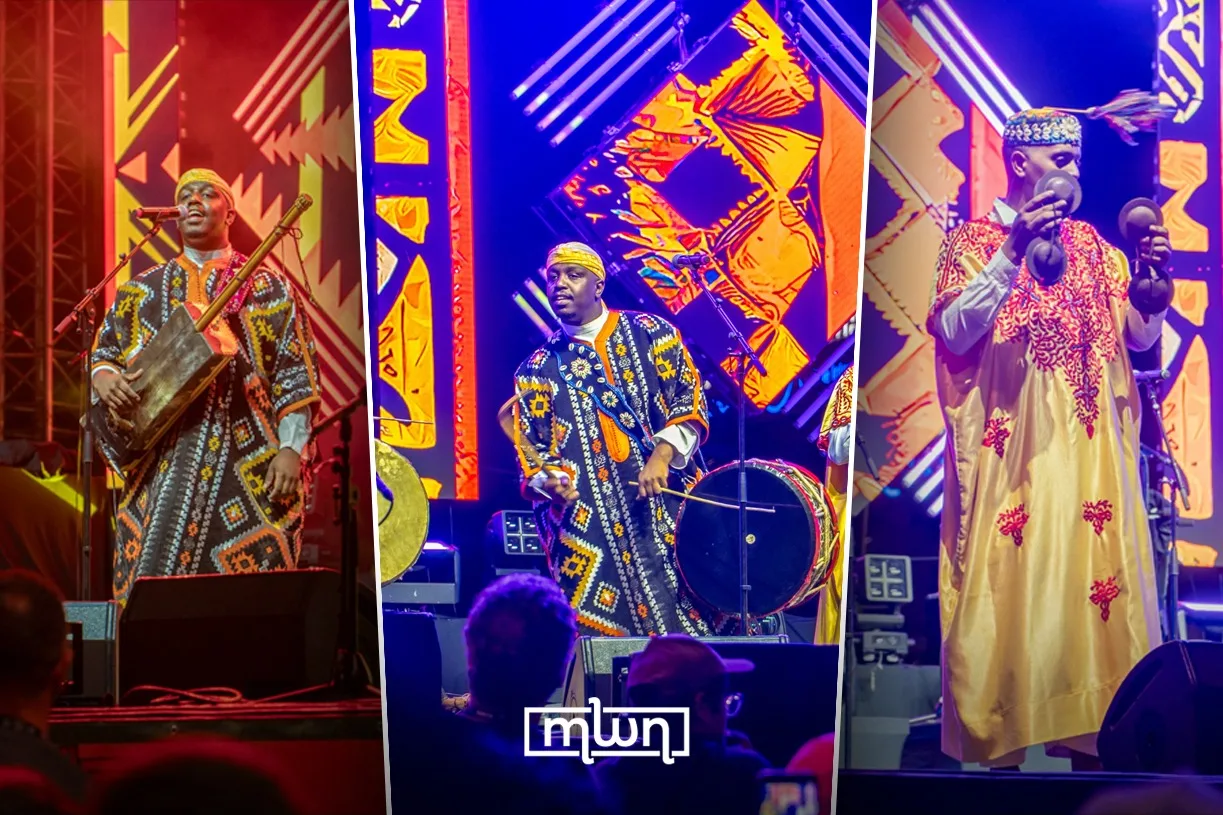
Among the standout performances of the evening were sets by Maalem Amine Daoud, whose hypnotic rhythms kept the crowd moving, and Richard Bona, who delivered a fusion of jazz, African grooves, and soulful improvisation that perfectly matched the spirit of the festival.
The arrival of The Harlem Spirit of Gospel added another powerful dimension, filling the stage with soaring harmonies and emotional depth, while Maalem Houssam Gania brought the ancestral pulse of Gnaoua to the forefront.
Later in the night, 47Soul injected a fresh, modern energy into the lineup, blending electronic beats with Levantine sounds and turning the square into a full dancefloor.
But beyond the performances, one of the most unforgettable moments of the night came in a deeply emotional tribute to the late Maalem Mustapha Baqbou, one of the most respected and influential figures in Gnaoua music.
Held on the Moulay Hassan stage, the tribute brought together some of the genre’s most powerful voices, including Maalem Abdeslam Alikkane and Tyour Gnaoua, alongside Hamza Baqbou, Maalem Abdelkbir Merchane, and Mohamed Kouyou.
Together, they honored Baqbou’s legacy through a moving performance that blended nostalgia, spirituality, and celebration.
The tribute resonated deeply with the audience, many of whom stood in silence before breaking into applause, chants, and dance.
It was a reminder of the roots of Gnaoua, a tradition built on storytelling, healing, and spiritual connection, and of the masters who have carried it across generations.
What made day two especially striking was the diversity of the crowd. Visitors from Europe, Africa, the Middle East, and beyond filled the city, joining Moroccan festivalgoers in a celebration that felt truly global.
Different languages could be heard between songs, different styles of dance emerged in the crowd, and yet everyone seemed to move to the same rhythm.
In that moment, the festival once again proved its power to unite people of different nationalities, ethnicities, and backgrounds through music.
As the night stretched into the early hours, Essaouira remained alive with energy. Cafés stayed full, streets remained crowded, and the sound of impromptu jam sessions echoed through the medina.
On its second day, the Gnaoua and World Music Festival showed exactly why it remains one of Morocco’s most powerful cultural gatherings: not just for its music, but for its ability to create moments of connection, remembrance, and pure collective joy.