

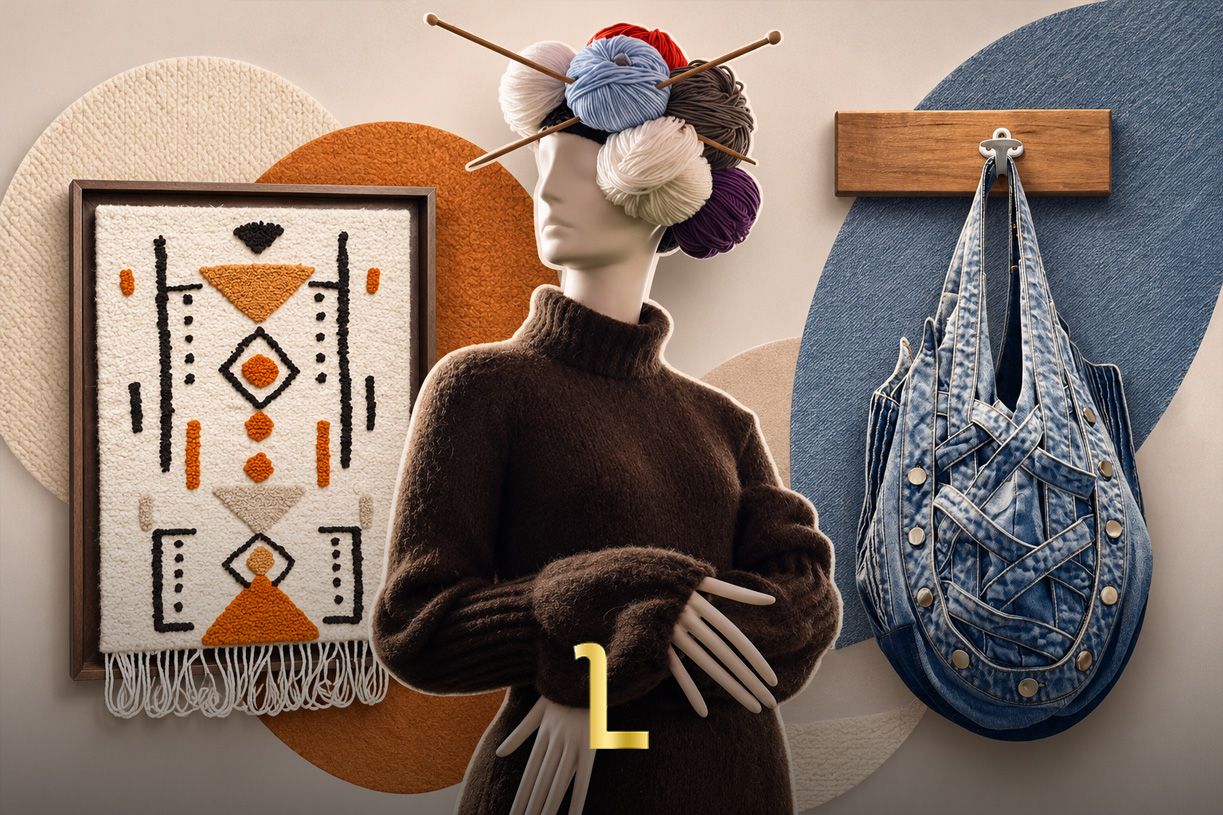
Casablanca – The 23rd edition of Maroc in Mode kicked off today at Casablanca’s OFEC, bringing together Moroccan and international players from across the fashion and textile industries.
Organized by the Moroccan Association of Textile and Clothing Industries (AMITH) in partnership with CEMS-Global USA, this year’s edition also marks AMITH’s 66th anniversary.
At the opening ceremony, AMITH President Anas Ansari reflected on the association’s role since its establishment in 1960, describing Moroccan textiles as a potential driver of industrial sovereignty and a stronger presence in regional and international value chains.
‘Bridging Europe, Africa & the World’
Under the theme “Bridging Europe, Africa & the World: Sourcing Starts Here,” this year’s edition looks to strengthen Morocco’s position as a sourcing destination connecting international markets.
As fashion brands rethink their supply chains amid changing global conditions and growing demands for more responsible production, Morocco is looking to build on its manufacturing expertise, geographical proximity to Europe, and established textile ecosystem.
With more than 200 exhibitors from 25 participating countries, including China, India, Turkey, and Tunisia, the three-day exhibition offers a look at the different stages of the textile and clothing industry.
The opening ceremony brought together government representatives, including Abderrahim Chahid, Minister of Employment and Social Dialogue; Omar Hejira, Minister Delegate in charge of Foreign Trade; and Salah-Eddine Abkari, Minister Delegate in charge of Youth, alongside industry leaders.
A different take on Moroccan rugs
Fashion wasn’t the only part of the exhibition. Moroccan rugs also had a place, with local brands presenting handmade pieces that bring traditional weaving into contemporary interiors.
Speaking to Lifestyle Magazine, Ibtissam Sbaoui, founder of Moroccan handmade rug brand Layers of Morocco, explained how the brand works with women weavers in the Azilal region to preserve traditional techniques while introducing new ways to use wool and weaving.
The brand creates custom rugs tailored to clients’ interiors, from their preferred colors and dimensions to the overall design. Each piece uses 100% wool and comes from the Asbuq Maj Valley in the Azilal region.
For Sbaoui, however, the work goes beyond creating decorative pieces. Fair trade sits at the heart of the brand, with a focus on ensuring that the women behind the rugs receive fair compensation and gain international recognition for their work.
Layers of Morocco also looks beyond the traditional use of rugs as floor coverings. The brand experiments with wall rugs, turning woven textiles into decorative art pieces that incorporate symbols and personalized designs.
A fashion designer’s journey to Morocco
For some of the people at MIM, Morocco is also a place to pursue new opportunities. Mariia, a fashion designer who moved from Spain to Morocco, spoke to Lifestyle Magazine about finding her place in the country’s knitwear industry.
She now works with Montepull, a knitwear company that supplies clients in markets including the UK, Spain, and Portugal. After studying fashion and completing internships in knitwear, Mariia saw the opportunity to develop her technical skills while staying close to the industry she had wanted to join since childhood.
Although moving to Morocco and building a new life here was not something she had imagined five years ago, she described the move as an opportunity to pursue her ambitions and remain connected to the world of fashion.
A broader vision for Moroccan fashion
From handmade rugs that take on new forms to knitwear connecting Morocco with international fashion markets, the exhibition offers different perspectives on how textiles continue to evolve. These examples show how traditional skills, contemporary design, and individual creative journeys can all find a place within the industry.
By bringing traditional weaving into new settings and forms, the brand explores how Moroccan textile heritage can find a place in contemporary interiors without losing its connection to the people and techniques behind it.
Read Also: The Tiny Moroccan Button Behind Amina Yabis’s Fight for Fairer Pay