Long before modernity softened traditions, Moroccan households turned life’s quiet milestones into moments of pride.
Fez – Across Morocco, coming-of-age moments for young girls have long been shaped by family customs and local traditions.
Though many of these rituals have faded with time, they reveal how Moroccan society once celebrated milestones such as a girl’s first menstrual cycle or her first Ramadan fast, transforming what might be seen as private changes into occasions of joy, pride, and cultural affirmation.
In some households, a girl’s first period was a reason to gather family members and mark her transition into a new stage of life.
Normalizing menstruation and encouraging confidence
The ceremony could be simple yet symbolic: serving dates and milk, with the girl instructed to look at her reflection in a bowl of milk before drinking it; a gesture believed to bring clarity and confidence.
Some families added touches of beauty, lining the girl’s eyes with kohl or brushing her lips with the iconic Moroccan “aker fassi,” a crimson pigment made from poppy and pomegranate.
In certain regions, the customs were more elaborate. The young girl might bathe in milk, then wear kohl and seven layered caftans.
In a curious tradition, she would stand at a window and silently count passersby, a playful way of “counting” the days of her monthly cycle.
These rituals, now largely abandoned, once aimed to normalize menstruation, removing shame and encouraging self-esteem at a formative age.
The Fassi way
But in Fez, one of Morocco’s oldest cultural capitals, an entirely different custom flourished: celebrating a girl’s first Ramadan fast.
For families in the imperial city, this spiritual milestone coincided with the most sacred night of the holy month: Laylat al-Qadr, the 27th night of Ramadan, when blessings are believed to descend in abundance.
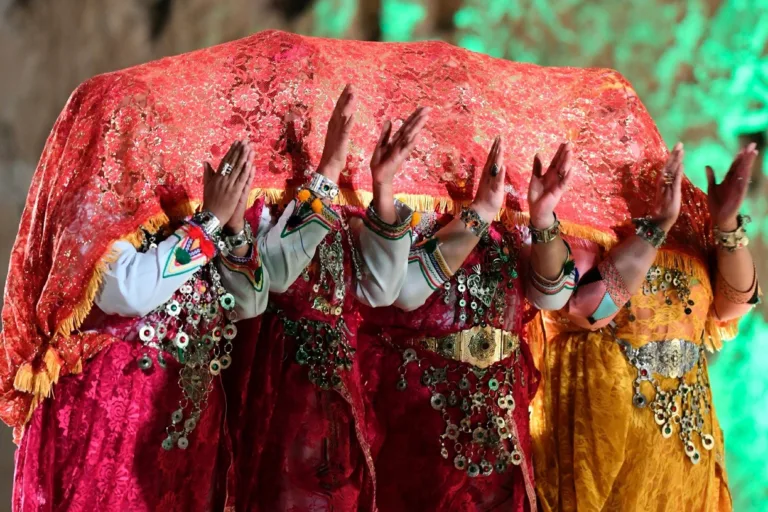
On this night, a young girl who had reached the age of religious responsibility became the “bride of the evening.”
In rich Fassi households, the celebration unfolded with all the splendor of a wedding.
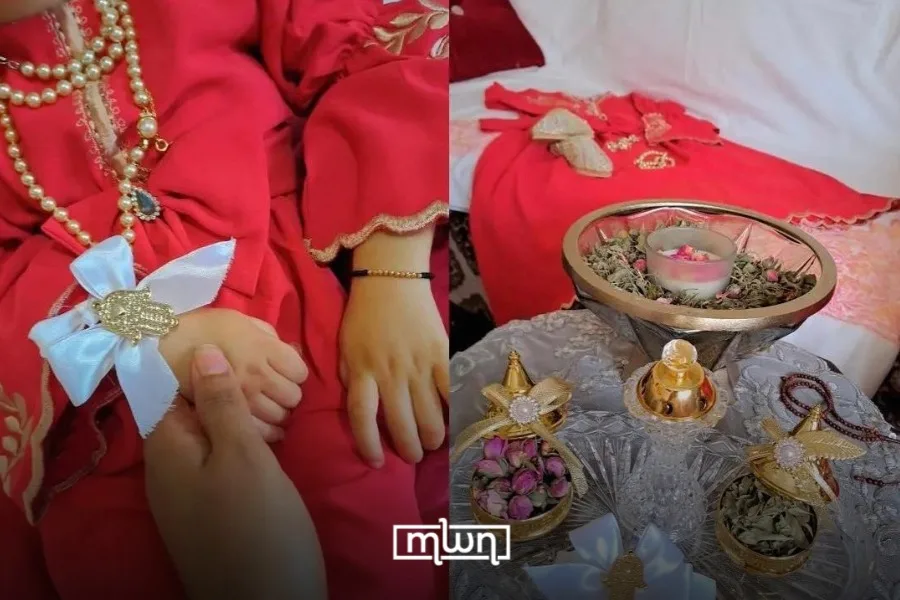
A professional dresser known as a “negafa” prepared the girl in “takhleela” and the famed “keswa deljoher,” the jewel-encrusted bridal attire of Fez, adorning her with traditional gold jewelry.
Before the sunset call to prayer, the girl’s mother would slip a small gold coin, a “louiza,” under her tongue, a gesture thought to bring good fortune.
She then broke her fast with milk scented with orange blossom water and dates, marking both a spiritual achievement and a moment of family pride.
The home filled with incense, from the sweet smoke of “oud qamari” to the fragrant “nedd” used to welcome angels on this holy night.
Guests chanted prayers upon the Prophet, while a “henna” artist decorated the girl’s hands and feet with fine Fassi patterns.
Other young girls, dressed in new caftans, joined the circle, receiving henna as well as small gifts and coins.
The joy was private and intimate, held entirely inside the home, in sharp contrast to modern street celebrations, where processions, photographers, and rented “ammariyas” (bridal litters) have become common.
The morning after, mothers would peel away the dried henna and lead their daughters on a symbolic pilgrimage through the medina, visiting the shrine of Moulay Idriss, founder of Fez.
The girls tossed coins into the donation box for the “chorfa” (descendants of the Prophet) and drank from the sacred fountain of Bab al-Wafa, believed to carry blessings.
Passing through historic squares such as Nejjarine and Bab al-Mrad, the procession reaffirmed the link between personal milestones, faith, and the living heritage of the city.
Although such traditions have waned with urbanization and changing social attitudes, they reflect how Moroccans once framed womanhood not as a quiet burden but as a moment to honor.
Whether through the gentle family rituals marking a first period, or the majestic Ramadan nights of Fez turning a young faster into a ceremonial bride, these customs offered girls a sense of dignity, joy, and belonging.
Today, some families still keep fragments of these rites alive, seeing in them a way to strengthen a daughter’s self-confidence and connect her to her roots.
Far from being outdated curiosities, these practices remind us that cultural heritage is not just in monuments or manuscripts; it lives in the intimate gestures that shape identity, passed from one generation to the next.