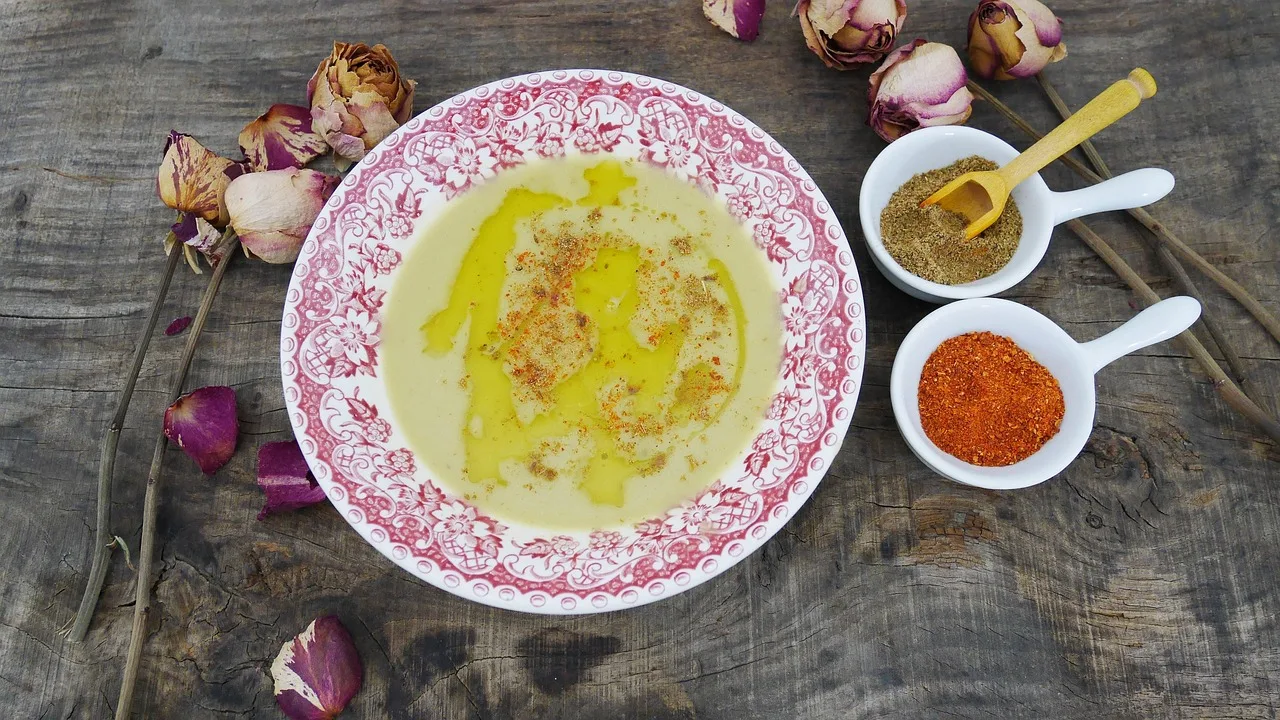
Fez — When cold mornings arrive, cafes and market stalls across Morocco bring out wide pots of bissara. Vendors ladle the thick soup, swirl on generous amounts of olive oil, then set out bowls of cumin and red pepper for each customer to season to taste. Moroccans consistently describe bissara as the season’s essential “anti-cold” dish and a reliable breakfast or mid-day pick-me-up in the north.
Food writers trace the dish’s lineage to the western Mediterranean of the Middle Ages. Coverage this autumn revisited a 13th-century Andalusi cookbook that lists a preparation called “bayssar,” a smooth porridge of dried broad beans that reads like an early version of today’s Moroccan bissara. The continuity is striking, since the core pantry remains the same: fava beans, garlic, olive oil, and warm spices.
The bowl itself is simple. Many cooks use dried, peeled fava beans, while others favor split peas which produce a similarly creamy texture. A finishing trio has become standard, namely extra-virgin olive oil, ground cumin, and a mild red pepper. At the counter, “khobz” is the utensil of choice, which turns the soup into a complete meal at low cost. Guides and recipes note that bissara functions both as a spoonable soup and as a thick dip — a versatility that explains its place at home tables and in street stalls.
In the north, bissara has long been tied to daily working life. Tangier features show morning queues at small storefronts and family kitchens that send customers home with jars or take-away cups. During the pandemic, local businesses switched to takeaway to keep regulars fed, a reminder of the dish’s role in community routines. The custom travels beyond the Rif and Jbala region, yet the north remains the reference point many Moroccans cite when they describe “good” bissara.
Popularity rises when the temperature drops in interior cities as well. Fassi people experience a winter rush for bissara, with diners ordering extra olive oil and spices to heighten the warmth. The appeal is both practical and cultural at once, since a single pot can feed many and the flavor deepens as the beans simmer. That combination of affordability, nourishment, and conviviality keeps bissara in the same seasonal canon as snail broth and slow-cooked chickpeas.
Broad beans help explain the dish’s endurance. The fava is among Europe’s principal historic legumes, and it thrives in cool winters across the southern Mediterranean. This agricultural fit placed the bean at the center of older North African diets, which in turn gave Moroccan cooks a dependable basis for soups and purées through the cold months.
What bissara represents goes beyond ingredients. The bowl stands for economy without deprivation, skill without complication, and a social ritual built on sharing bread and passing the spice shaker down the counter. Media coverage and everyday customs both point to the same conclusion. A dish that began in medieval recipe books and rural kitchens now belongs to city streets, family breakfasts, and restaurant menus across the country, with the same quiet promise on a cold day.