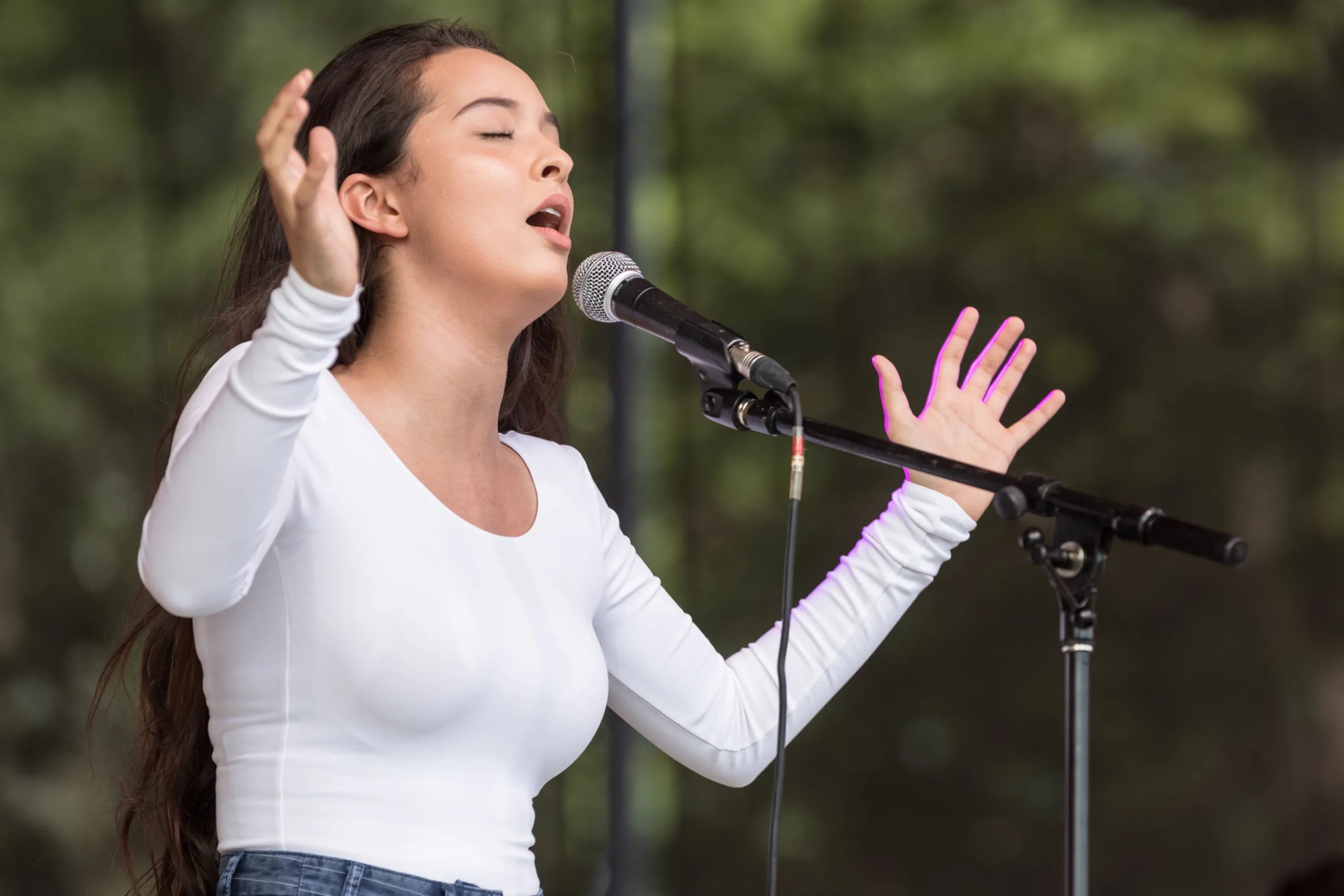
Fez — Faouzia performed live on December 1 at an exclusive Valentino gala dinner in Marrakech, hosted on the sidelines of the 22nd Marrakech International Film Festival.
The event, built around Valentino’s Cruise 2026 collection, gathered invited guests inside the sculptural showroom of carpet designer and dealer Soufiane Zarib in the Sidi Ghanem district.
Marrakech craft in a dark-romantic frame
The dinner unfolded in a space often described as temple-like, where monumental walls and stacked carpets form a gallery for contemporary Moroccan craft. For the gala, the showroom was transformed with hundreds of candles and glowing installations that traced the outlines of tables, textiles, and arches, creating a low, cinematic light around the performance area.
Taking the stage in a long black gown that played on dark-romantic codes, Faouzia performed an intimate set for guests seated among carpets and design pieces. Short clips shared from the night show the singer delivering her song “Ornament” to a quiet room, her vocals carrying over the soft murmur of the dinner rather than a traditional concert crowd.
In a post shared after the event, Valentino described the evening as “an evening suspended between dream and performance,” noting that the gala’s immersive staging, glowing installations, and live music were conceived as a single experience in celebration of Valentino Cruise 2026. The collection itself has been present on the festival’s red carpet, with actor Jodie Foster among the international names wearing Valentino looks during this year’s edition.
A return to Morocco, under festival lights
The gala coincided with the 22nd Marrakech International Film Festival, which runs from November 28 to December 6 and turns the city into a meeting point for filmmakers, actors, and industry guests from around the world. Hosting the Valentino dinner in Sidi Ghanem, a district known for workshops and galleries, the festival’s reach extended beyond the main square and palace venues, drawing fashion and music into a space built around Moroccan craftsmanship.
For Faouzia, the performance also marked a personal milestone. Born Faouzia Ouihya in Casablanca in 2000 and raised in Manitoba, Canada, the singer has often navigated between her Moroccan roots and a career built in North America. In a message posted after the gala, she wrote that she “still can’t believe” she was performing for Valentino “for the first time” in her home country, calling it a night she would never forget.
Global collaborations, Moroccan roots
The Marrakech appearance adds a fashion-house collaboration to a path already marked by high-profile musical pairings. In 2020, Faouzia released “Minefields,” a duet with John Legend whose video, released in early 2021, helped introduce her voice to a wider global audience. She had previously appeared on “Battle,” the second track on David Guetta’s album 7, and on “Money,” a platinum-certified single from French rapper Ninho’s 2019 album “Destin.”
Those collaborations, combined with her own releases, have positioned Faouzia as one of the most prominent young Moroccan-heritage artists working in pop and R&B, with a sound that blends Western pop structure and emotional ballad writing. Her debut album “FILM NOIR,” released in 2025, has further cemented that trajectory, framing her songs in a cinematic, mood-driven palette.
A stage that mirrors a wider shift
Bringing Faouzia into a candlelit rug gallery for a Valentino Cruise event during Morocco’s flagship film festival reflects a broader pattern taking shape in Marrakech. The city has become a setting where cinema, luxury fashion, and contemporary music increasingly intersect, giving Moroccan creatives new ways to appear on global platforms without leaving local spaces behind.
At Soufiane Zarib’s showroom that night, the elements lined up: Moroccan textiles, an Italian couture house, a festival that draws international juries and talent, and a singer whose story moves between Casablanca, Canada, and a global stage. The result was more than a one-off performance — it was a snapshot of how Moroccan voices are threading themselves through the fabric of major cultural events.